

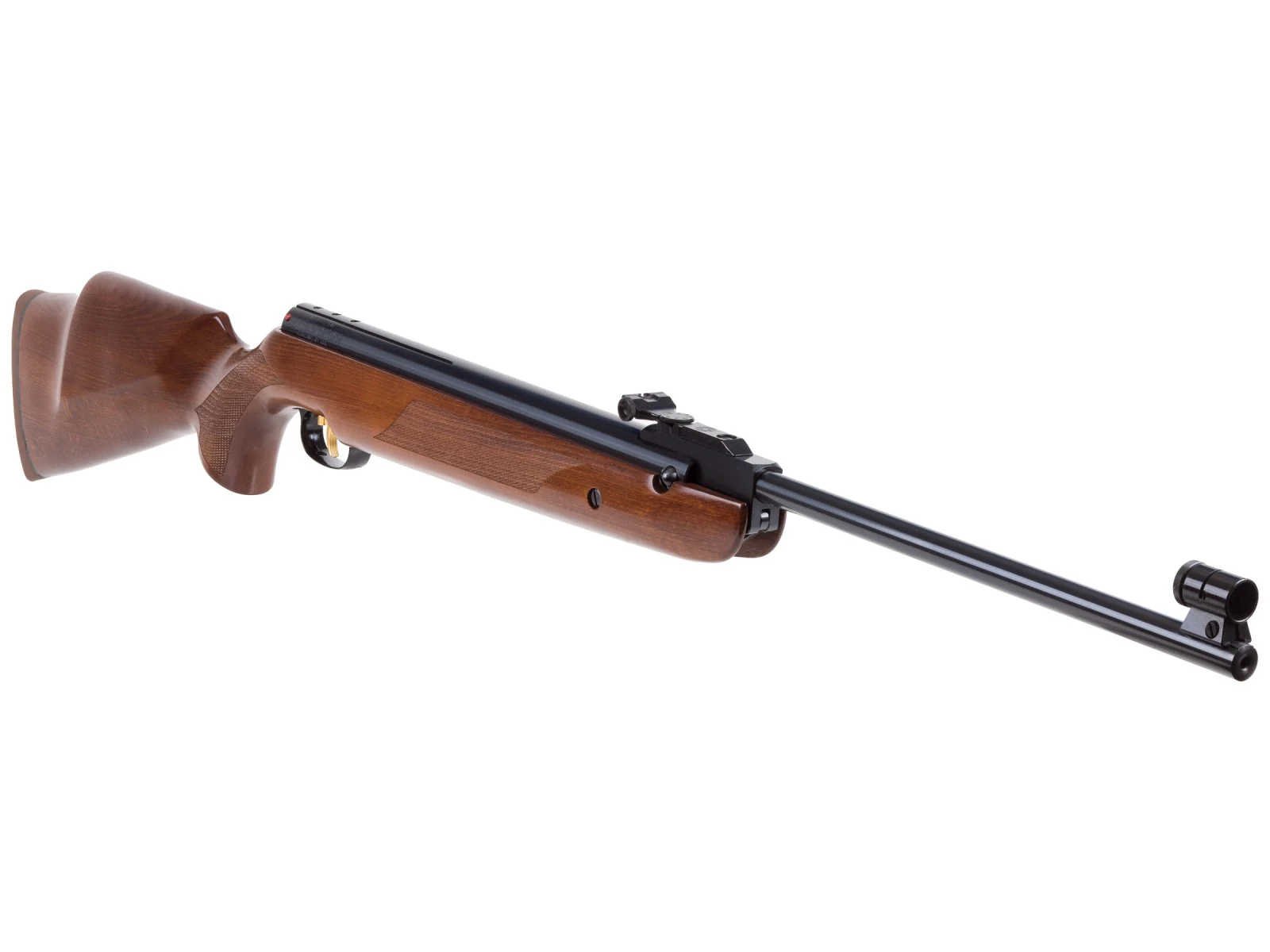
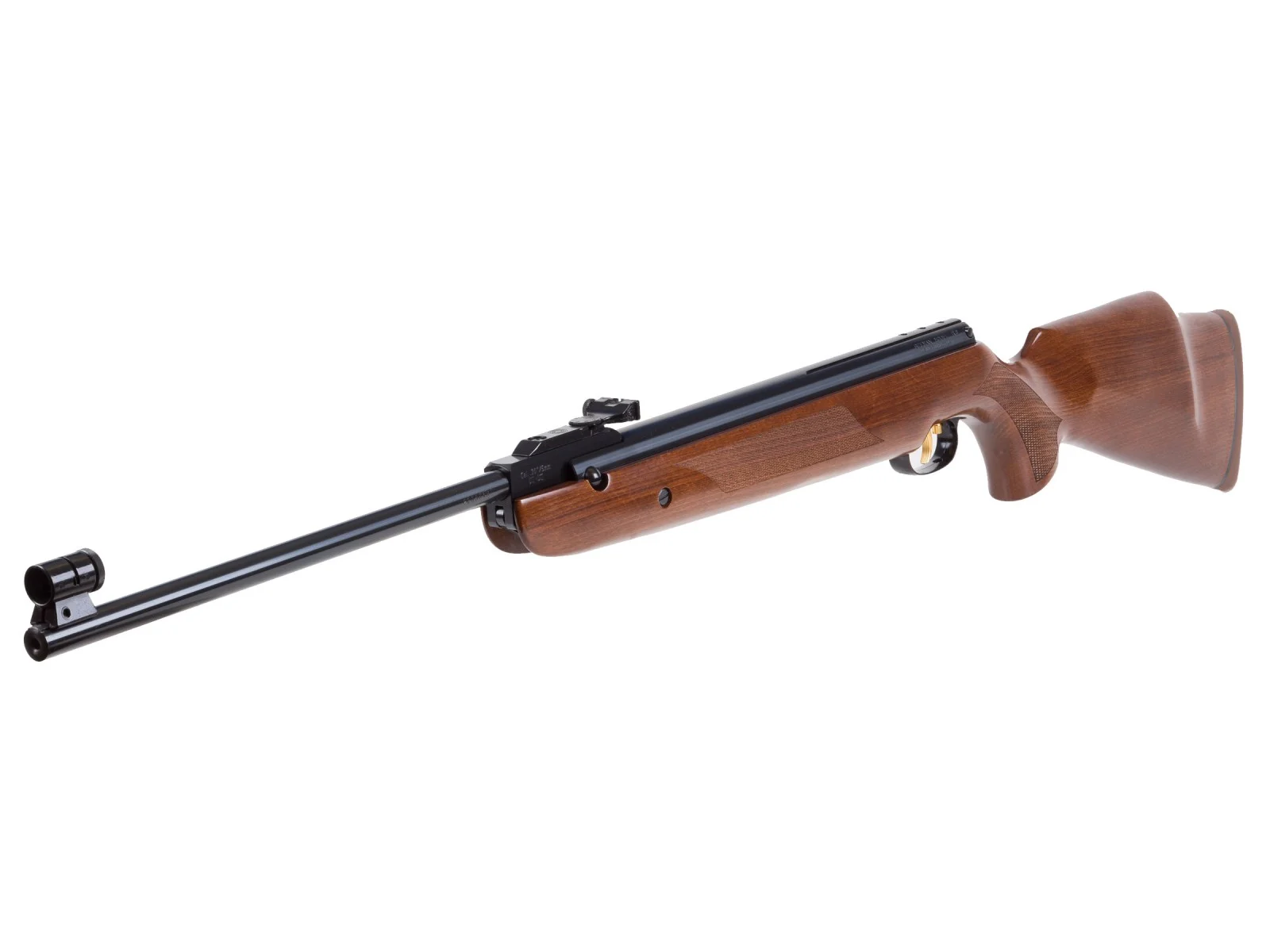
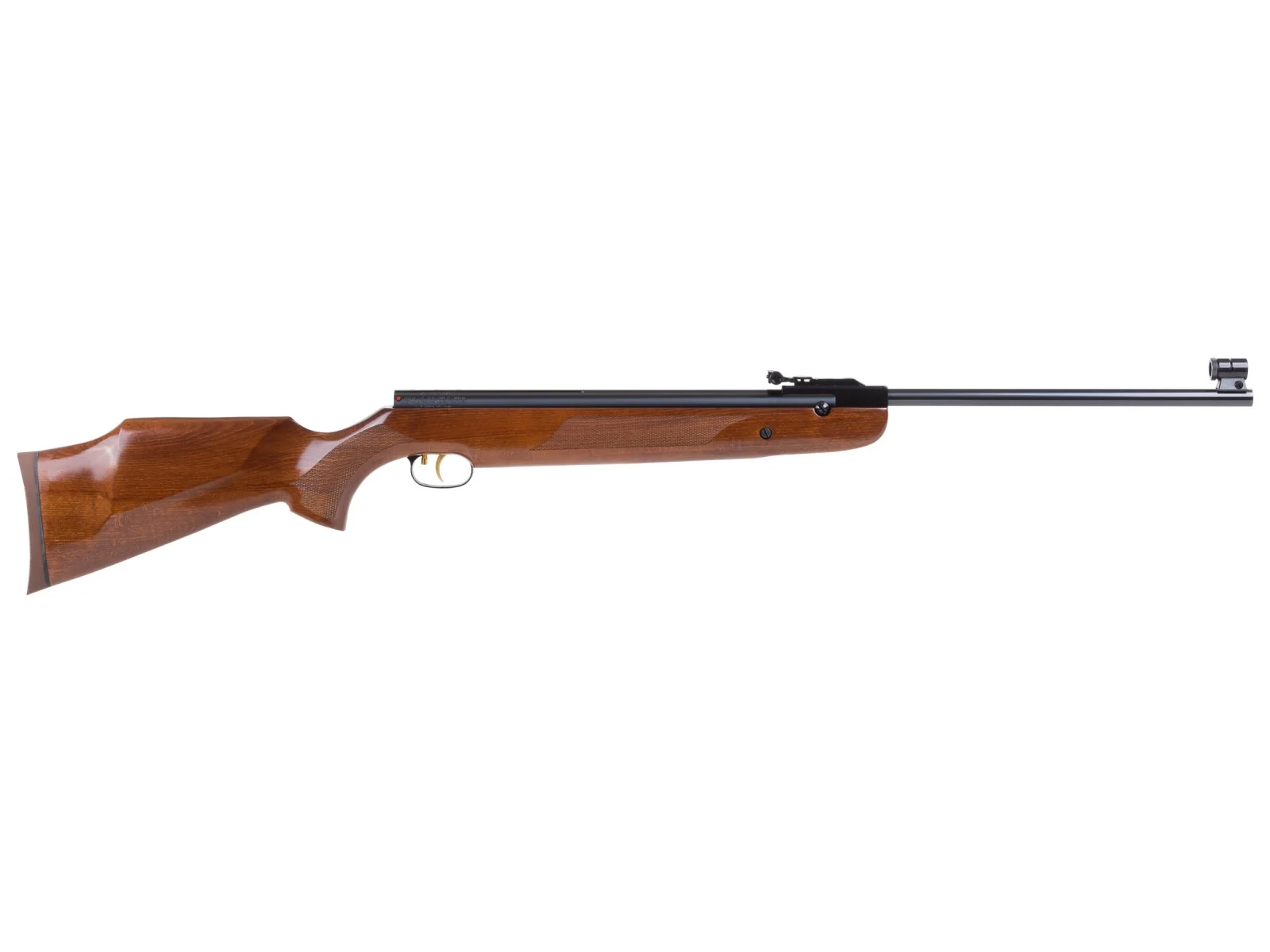
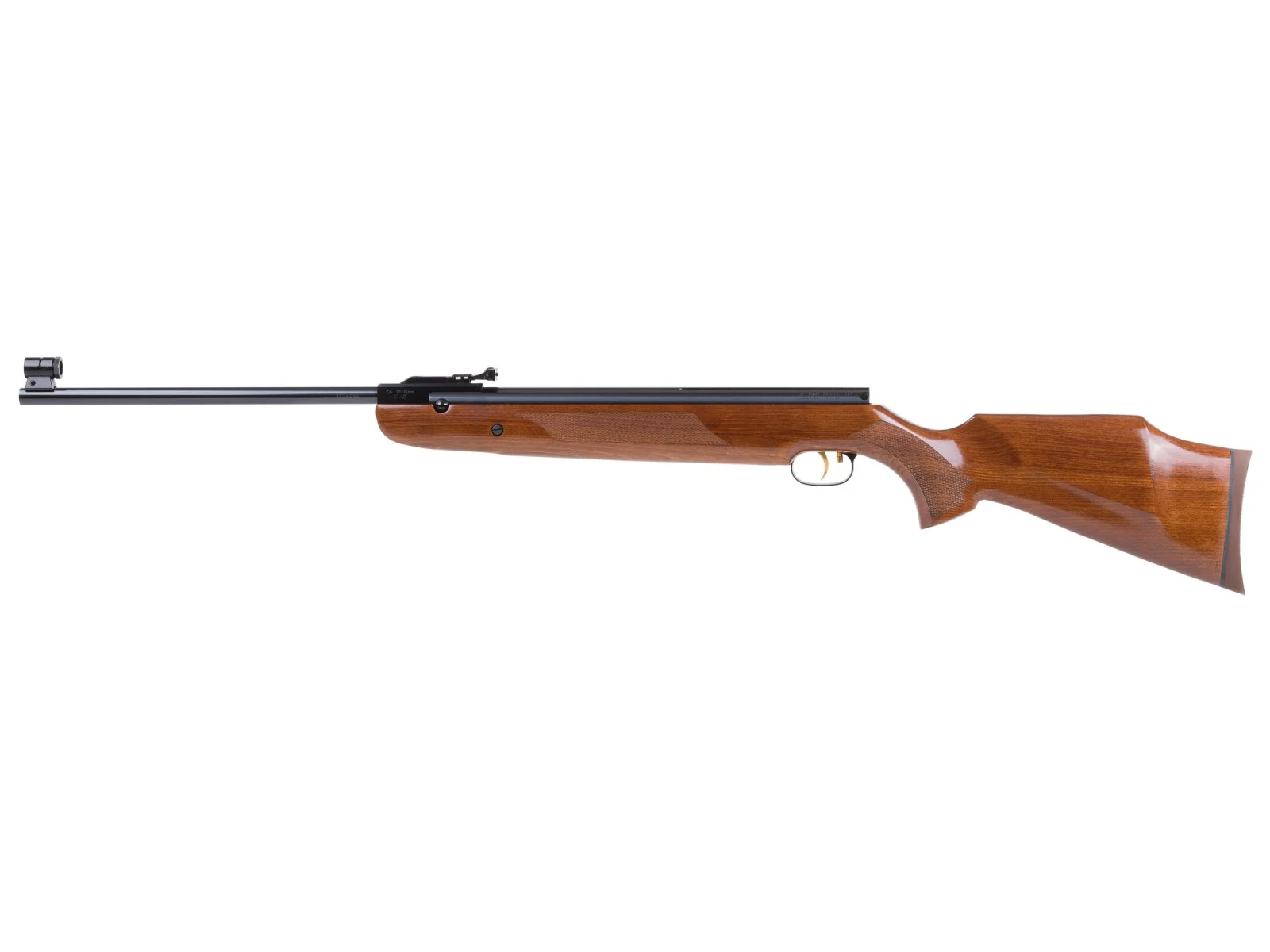



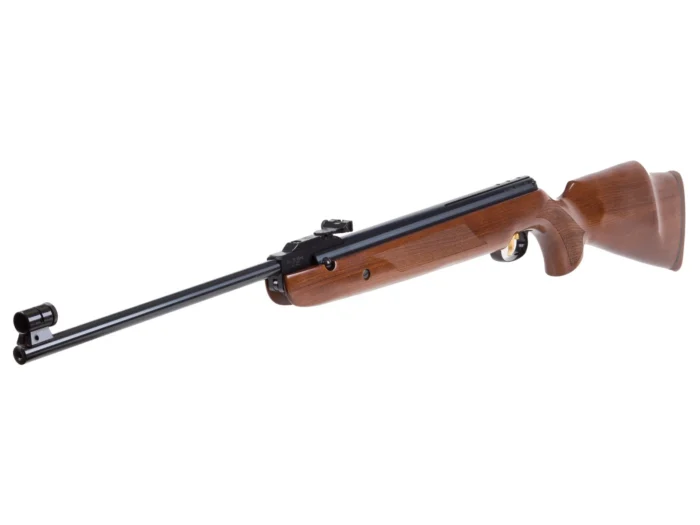
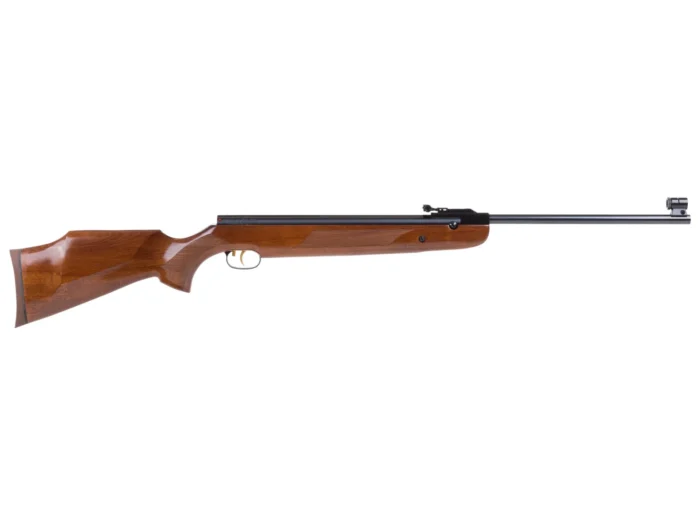
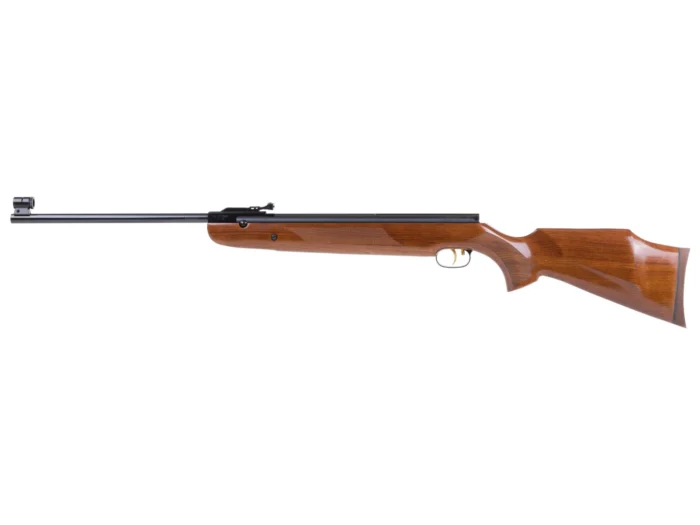

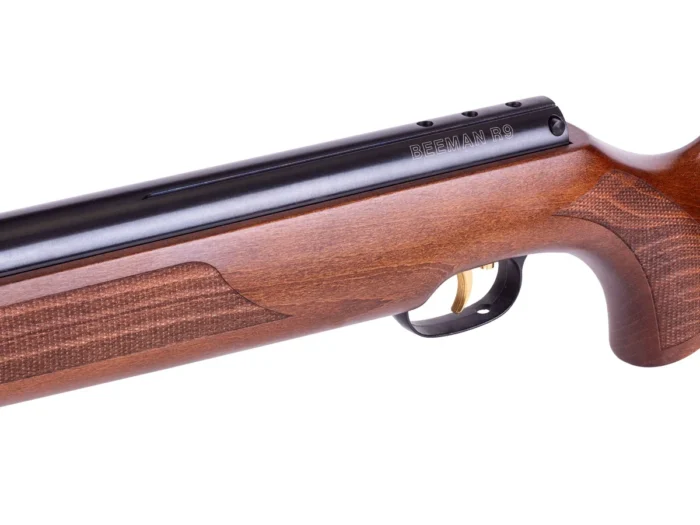
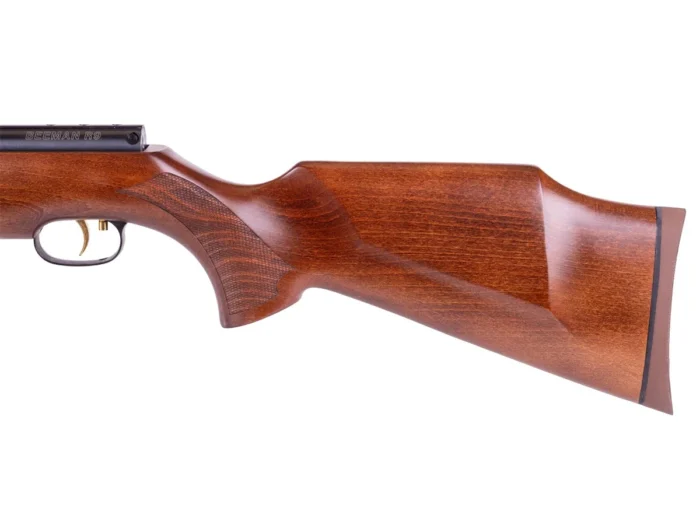
Beeman R9 Air Rifle
€395.00
Description
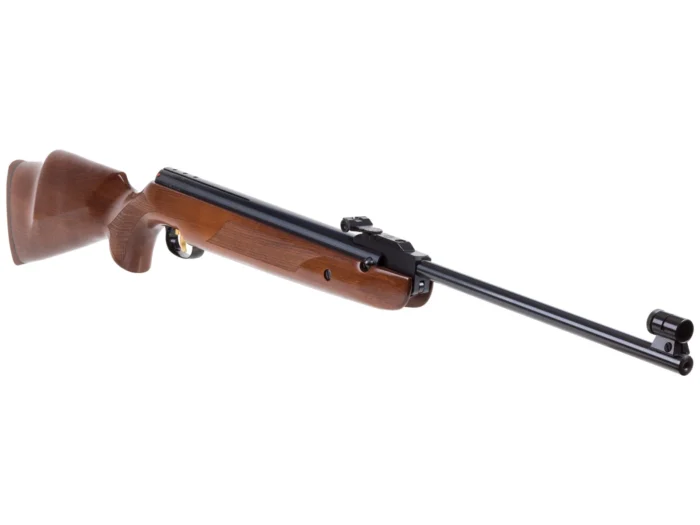
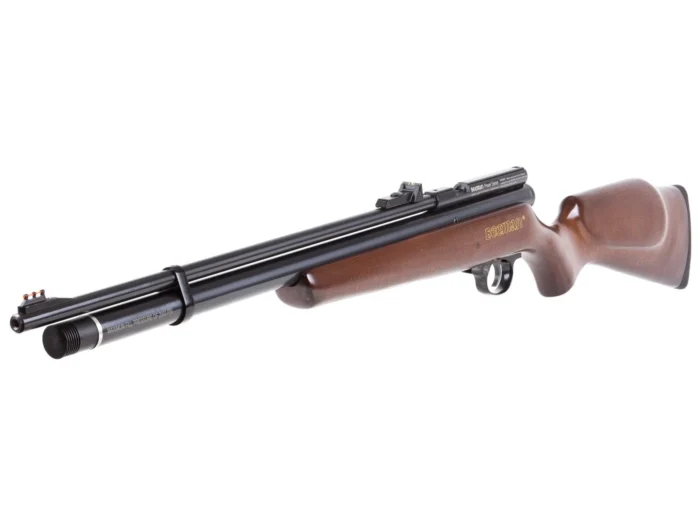
German quality, hand-assembled and ready to accept any task you give it! At only 7.3 lbs., this breakbarrel marvel will delight you with spot-on accuracy. The R9 begs to be shot all day long, and you’ll have a hard time refusing.
Repeatable accuracy is built into the gun at the factory, and you won’t outgrow it. The B9 performs flawlessly for hunting, pest elimination, paper targets, field targets, or plinking. If you plan to shoot field target, .177 is the optimum caliber. If hunting small game and pest elimination are in your plans, .22 caliber is a better choice.
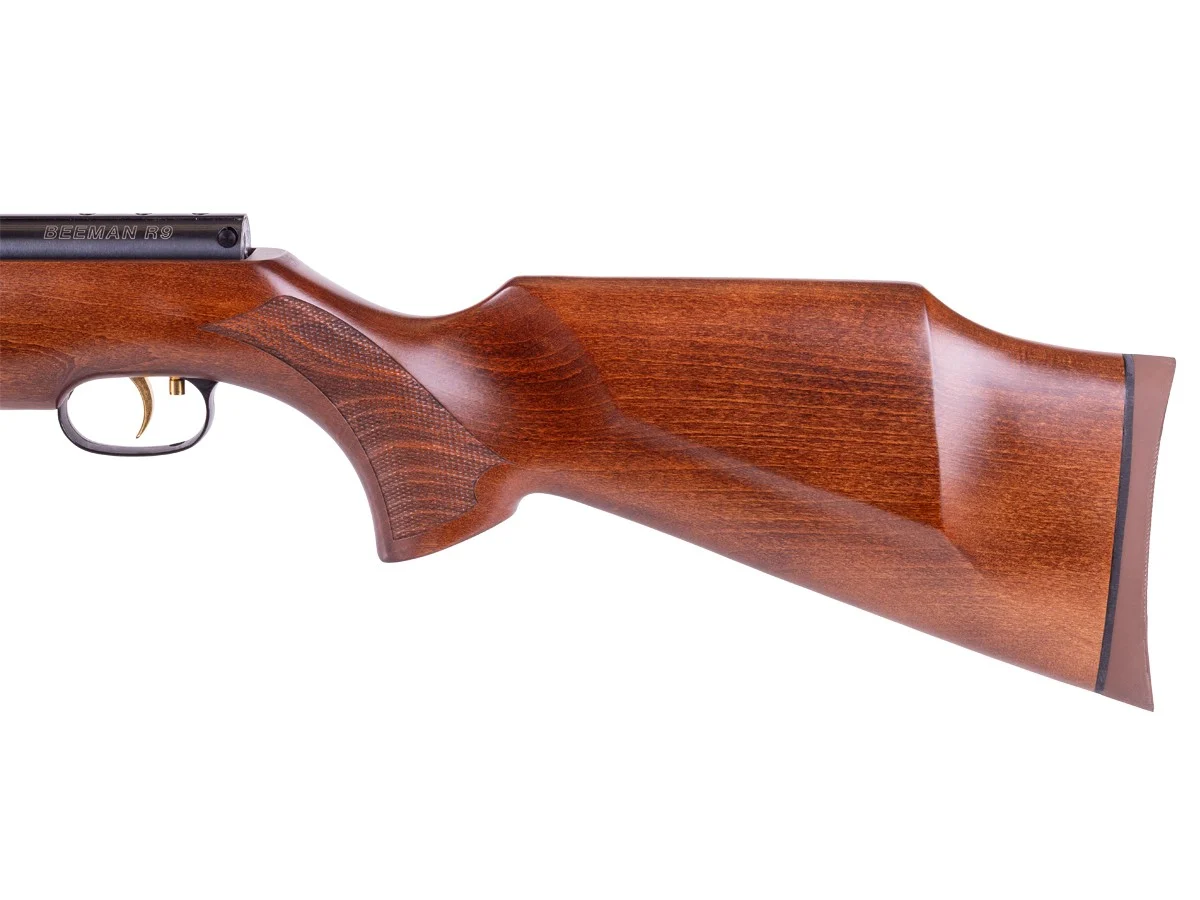
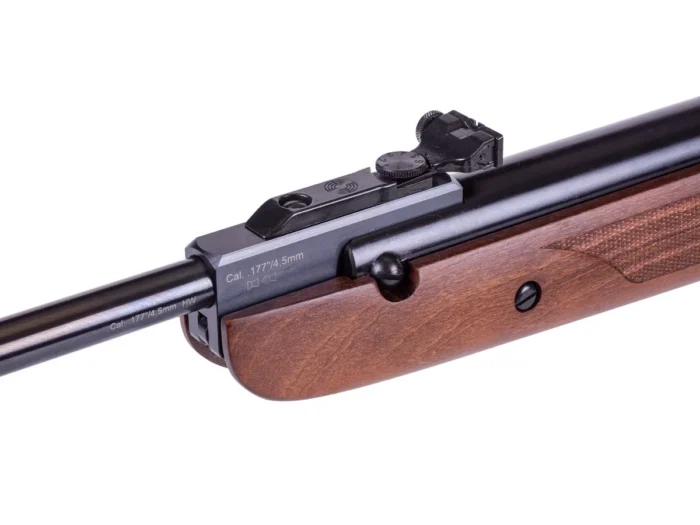
The hardwood Monte Carlo stock includes a slightly raised cheekpiece that is so unobtrusive that it’s ambidextrous! The dependable breakbarrel mechanism is smooth and easy to cock. The famous Rekord trigger is the standard by which all other triggers are measured and can be adjusted to suit your needs. Easily add a scope on the 11mm dovetails; accepts a vertical scope stop pin.
Don’t forget to pick up a variety of recommended pellets, which are listed in the AMMO link. Select appropriate accessories, including scopes and targets, by clicking on the ACCESSORIES link.
Helpful resources:
- Learn about hunting with air rifles
- Tips for picking the right airgun for hunting game & pests
- Learn about airgun hunting laws in your state
- Shop related categories: pellet guns, pellet rifles
Beeman R9 Air Rifle
- Breakbarrel
- Spring-piston
- 11mm Dovetail rail
- 2-stage adjustable Rekord trigger
- Checkered hardwood stock
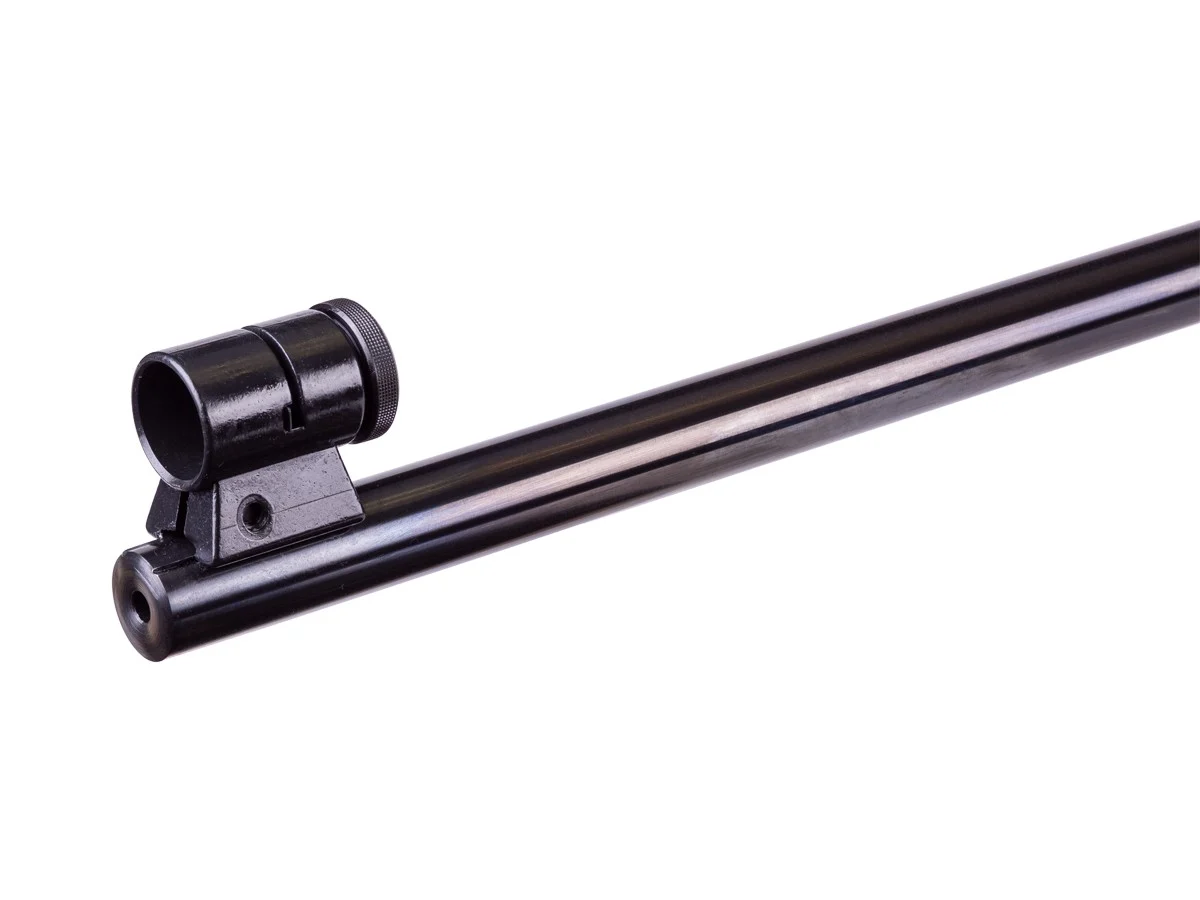
- Includes open sights
- 14.25″ Length of Pull
- Fully-adjustable rear sight
Specifications
BrandBeeman
Caliber.177 (4.5mm)Max Velocity935 fpsSuggested forSmall game hunting/target practicePowerplantSpring-pistonLoudness3-MediumNoise Level84.36 dB Weight7.3 lbsFunctionSingle-shotActionBreak barrelScopeable11mm dovetailFront SightsGlobe w/Aperture InsertsRear SightsAdjustable for windage & elevationSafetyAutomaticTrigger Pull2.1 lbsBarrelRifledBarrel Length16.33″Overall Length42.25″Capacity1 round(s)Cocking Effort40 lbsBody TypeRifleStockBeechButtplateRubberColorBrownGrip OrientationAmbidextrous
Beeman R9 Air Rifle – Technical Spring-Piston Break-Barrel Overview
Beeman R9 Engineering, Brand Terminology, Caliber Architecture, Accuracy, and Related Air-Rifle Platforms
Beeman
beeman represents a long-established airgun brand encompassing spring-piston, gas-ram, CO₂, and PCP platforms. The R9 belongs to its traditional precision spring-piston category.
Beeman Company
The phrase beeman company generally refers to the wider Beeman Precision Airguns organization and product catalog.
Beeman Air Rifles
beeman air rifles cover several mechanical systems, so individual model specifications should never be transferred automatically from one rifle to another.
Beeman Air Rifle
The beeman air rifle category includes recreational, target-oriented, and higher-performance designs.
Beeman Airguns
beeman airguns includes both rifles and pistols using several different propulsion systems.
Beeman Precision Airguns
The phrase beeman precision airguns reflects the broader brand identity rather than one specific operating system.
Beeman Pellet Rifle
The R9 is correctly described as a beeman pellet rifle because it uses lead airgun pellets rather than conventional BB ammunition.
Beeman Pellet Gun
beeman pellet gun is broader terminology frequently used when searching for the same category of equipment.
Beeman R9 Air Rifle
The beeman r9 air rifle uses a single-shot break-barrel spring-piston mechanism, rifled barrel, hardwood stock, automatic safety, open sights, and adjustable two-stage Rekord trigger.
Beeman Break Barrel Air Rifle
The R9 is a beeman break barrel air rifle because cocking is accomplished through articulation of the barrel assembly.
Beeman Gas Ram Air Rifle
A beeman gas ram air rifle uses a sealed gas strut rather than the conventional steel spring arrangement associated with the R9. Current Beeman models demonstrate that these are separate powerplant categories.
Beeman .177 Air Rifle
The beeman .177 air rifle category includes the R9 .177 configuration.
Current listings identify both .177 and .22 R9 variants.
Beeman .22 Air Rifle
The beeman .22 air rifle version uses 5.5 mm pellets and retains the same basic spring-piston architecture.
Beeman Air Rifle .177 Caliber
The phrase beeman air rifle .177 caliber identifies the smaller-bore configuration and should not be confused with specifications for the .22 version.
Beeman Air Rifle .22 Caliber
The phrase beeman air rifle .22 caliber refers to the larger currently listed R9 caliber.
.22 Air Rifle
A .22 air rifle uses approximately 5.5 mm pellets, although output varies considerably according to the individual platform and ammunition.
22 Caliber Pellet Gun
The phrase 22 caliber pellet gun is another common description for .22-caliber air-powered equipment.
22 Cal Air Rifle 1400 FPS
The phrase 22 cal air rifle 1400 fps does not accurately describe the R9. Current R9 specifications should be used instead of applying generic high-velocity search terms to this model.
Beeman Air Rifle Accuracy
beeman air rifle accuracy depends on barrel quality, pellet consistency, trigger control, sight alignment, spring-piston technique, and mechanical condition.
Air Rifle Marksmanship
air rifle marksmanship with a spring-piston platform requires repeatable technique because piston movement creates a different recoil impulse from recoilless pneumatic systems.
Beeman Air Rifle Performance
beeman air rifle performance should be evaluated through consistency, trigger behavior, barrel condition, fit, and mechanical health rather than velocity alone.
Beeman Air Rifle Features
Important beeman air rifle features on the R9 include its break-barrel action, hardwood stock, automatic safety, open sights, 11 mm mounting interface, and Rekord trigger.
Beeman Air Rifle Construction
beeman air rifle construction varies significantly across the catalog. The R9 emphasizes traditional mechanical construction rather than an onboard pressure reservoir.
Beeman Air Rifle Quality
beeman air rifle quality should be assessed through stock condition, barrel lockup, trigger consistency, mechanical alignment, finish, and long-term maintenance.
Beeman Air Rifle Specifications
Current beeman air rifle specifications for the R9 include approximately 42.25 inches overall length, 16.33-inch barrel, 7.3-pound weight, single-shot capacity, and 11 mm dovetail mounting.
Beeman Air Rifle Review
A beeman air rifle review should distinguish measured specifications from subjective impressions and should identify the caliber being reviewed.
Beeman Air Rifle Comparison
A meaningful beeman air rifle comparison should first separate spring-piston, gas-ram, PCP, and CO₂ designs because their operating characteristics differ substantially.
Beeman Air Rifle Calibers
Current R9 listings show .177 and .22 configurations. Historically, .20-caliber R9 examples also exist, but current availability differs.
Beeman Air Rifle Scope
The phrase beeman air rifle scope is relevant because the R9 includes an 11 mm dovetail mounting interface.
Any optic installed on a spring-piston rifle should be compatible with that recoil environment.
Beeman 1521 Scope
The beeman 1521 scope is separate sighting equipment and should not be treated as a standard defining component of every R9.
Beeman 66RL Scope
Likewise, the beeman 66rl scope belongs to accessory terminology rather than the core R9 powerplant.
Beeman Air Rifle Accessories
beeman air rifle accessories may include appropriate optics, protective cases, maintenance equipment, and manufacturer-compatible components.
Beeman Air Rifle Manual
A beeman air rifle manual should remain the primary reference for model-specific handling and maintenance instructions.
Beeman Air Rifle Parts
beeman air rifle parts should be selected according to the exact model because components from unrelated Beeman families may not be interchangeable.
Beeman Air Rifle Maintenance
beeman air rifle maintenance should focus on external preservation, barrel condition, stock care, correct fastener condition, and professional servicing when internal mechanical problems develop.
PCP Air Rifle
A pcp air rifle uses a pre-charged compressed-air reservoir and operates fundamentally differently from the spring-powered R9.
PCP Rifle
The same distinction applies to the term pcp rifle.
Precharged Pneumatic
precharged pneumatic describes reservoir-based airgun architecture rather than the R9’s self-contained mechanical spring system.
PCP Air Rifle 22 Cal
A pcp air rifle 22 cal may share the R9’s .22 bore size while using an entirely different propulsion system.
22 Cal PCP Air Rifle
The phrase 22 cal pcp air rifle therefore should not be used as a technical description of the R9.
Beeman PCP Air Rifle
A beeman pcp air rifle belongs to another section of the manufacturer’s catalog.
Beeman PCP Underlever Air Rifle
The beeman pcp underlever air rifle category combines reservoir-based propulsion with another cocking architecture.
Beeman PCP Under Lever
beeman pcp under lever is a spelling variation of that separate configuration.
Beeman Underlever
A beeman underlever uses a separate cocking lever rather than the barrel itself.
Big Bore Air Rifle
A big bore air rifle generally uses substantially larger projectile diameters than the R9.
High Power Pellet Gun
The phrase high power pellet gun is broad and should not replace verified R9 specifications.
Beeman Commander
The beeman commander belongs to another Beeman product family rather than the R9 series.
Beeman Commander Air Rifle
The beeman commander air rifle should therefore be evaluated using its own technical data.
Beeman Commander .22
beeman commander .22 refers to another .22-caliber configuration and not an R9 variant.
Beeman Commander .177
Likewise, beeman commander .177 belongs to another family.
Beeman Chief Air Rifle
The beeman chief air rifle belongs to Beeman’s PCP-oriented catalog rather than the spring-piston R9 category.
Beeman Chief II
The beeman chief ii is another distinct platform.
Beeman Chief II PCP Air Rifle
The phrase beeman chief ii pcp air rifle correctly identifies its different pressure-based propulsion architecture.
Beeman QB Chief
beeman qb chief is another model-family term and should not be confused with the R9.
Beeman QB Chief PCP Air Rifle
The beeman qb chief pcp air rifle uses compressed-air reservoir technology instead of a spring-piston powerplant.
Beeman QB78
The beeman qb78 belongs to Beeman’s CO₂-powered rifle family. Historical Beeman catalog material lists it as a bolt-action CO₂ single-shot design.
Beeman QB78S
The beeman qb78s likewise belongs to another platform family and should not be treated as an R9 designation.
Beeman Teton Air Rifle
The beeman teton air rifle represents another model family.
Beeman Teton PCP
The phrase beeman teton pcp relates to pressure-reservoir architecture rather than the mechanical R9 design.
Beeman Kodiak X2
The beeman kodiak x2 belongs to another Beeman family and should be evaluated separately.
Beeman Gas Ram Dual
beeman gas ram dual refers to gas-ram technology rather than the conventional R9 spring-piston arrangement.
Beeman Black Cub
The beeman black cub is another Beeman model designation.
Beeman Black Bear Air Rifle
The beeman black bear air rifle likewise belongs to a separate product family.
Beeman Longhorn Air Rifle
The beeman longhorn air rifle should not be treated as another R9 name.
Beeman Wolverine Carbine
The beeman wolverine carbine represents another configuration and should be described from its own verified specifications.
Beeman R7 Air Rifle
The beeman r7 air rifle belongs to the same broader traditional precision-springer category but is a different model with different dimensions and output.
Beeman RS2
The beeman rs2 and beeman rs2 sportsman series belong to a separate Beeman platform family.
Sportsman RS2 Series
The sportsman rs2 series should therefore not be used as another designation for the R9.
Sportsman RS2 Series Beeman
sportsman rs2 series beeman is a search variation of the same separate family.
Beeman Sportsman RS2
The beeman sportsman rs2 belongs to that platform rather than the R9 line.
Beeman Sportsman RS2 Series
Likewise, beeman sportsman rs2 series identifies another model family.
Sportsman RS2 Series Price
The phrase sportsman rs2 series price concerns a different product’s commercial pricing and is not an R9 specification.
Beeman Sportsman RS2 Series Price
Similarly, beeman sportsman rs2 series price should remain separate from technical R9 information.
Beeman Sportsman Air Rifle
The phrase beeman sportsman air rifle covers other recreational products rather than one exact configuration.
Beeman 1783 Silver Bear
The beeman 1783 silver bear is another model designation unrelated to R9 engineering.
1783 Silver Bear Beeman
1783 silver bear beeman is simply a reversed search variation of the same product name.
Beeman BP50
The beeman bp50 represents a different platform.
Beeman BP50 Black
The phrase beeman bp50 black refers to another configuration rather than the R9.
Beeman P17
The beeman p17 is an air-pistol platform and is not technically comparable with the R9 rifle architecture.
.177 Air Pistol
A .177 air pistol belongs to another equipment category from the shoulder-fired R9.
Marksman
marksman is historically associated with Beeman/Marksman products but should not be treated as an R9 model name.
Marksman Rifle
The phrase marksman rifle is general terminology rather than an R9 specification.
Marksman Pistol
A marksman pistol belongs to another equipment category.
Marksman Slingshot
A marksman slingshot is not an airgun and has no mechanical relationship to the R9.
Marksman Folding Slingshot
The marksman folding slingshot likewise belongs to a separate sporting-products category.
Marksman Slingshot Band Replacement
The phrase marksman slingshot band replacement concerns slingshot maintenance rather than air-rifle servicing.
Beeman Marksman Laserhawk III Slingshot
The beeman marksman laserhawk iii slingshot belongs to another product category entirely.
Classic Slingshot
A classic slingshot is mechanically unrelated to spring-piston air rifles.
Crosman Slingshot
A crosman slingshot belongs to another manufacturer and equipment category.
Beeman Jungle M16
The beeman jungle m16 is another historical or search-oriented Beeman product term and should not be substituted for R9 specifications.
10613
The term 10613 corresponds to another current Beeman model. Beeman’s current 10613-22 listing identifies it as a .22-caliber break-barrel rifle approximately 46.3 inches long and 7.2 pounds, demonstrating why specifications should remain model-specific.
1019X Gun
The phrase 1019x gun relates to another model/search term and should not be applied to the R9 without dedicated model documentation.
Beeman Repeater Rifle Sights Magazine
The phrase beeman repeater rifle sights magazine describes features associated with repeating systems. The R9 is currently specified as a single-shot rifle rather than a magazine-fed repeater.
Beeman Broward
The phrase beeman broward does not represent a defining R9 mechanical specification and should remain contextual rather than being treated as a model feature.
Why the R9 Architecture Matters
The R9’s defining engineering characteristic is its self-contained spring-piston system. It does not require a pre-charged reservoir, CO₂ capsule, or external air supply for ordinary operation.
Why the Rekord Trigger Matters
The current R9 listing identifies a two-stage adjustable Rekord trigger, while Weihrauch also continues to list the Rekord mechanism on the closely related HW95 platform.
A consistent trigger contributes to predictable control, although accuracy still depends on the complete mechanical system and user technique.
Why Mechanical Condition Matters
A break-barrel rifle depends on consistent barrel lockup, sound stock mounting, healthy seals, stable sights, and predictable spring-piston operation.
Any developing looseness, unusual noise, damaged stock areas, or change in mechanical behavior deserves inspection.
Precision Considerations
Practical precision comes from barrel quality, pellet consistency, sight stability, trigger control, repeatable hold technique, and mechanical condition.
The R9’s rifled barrel and Rekord trigger provide a precision-oriented foundation, but no single component guarantees accuracy.
Overall Technical Perspective
The Beeman R9 Air Rifle is best understood as a traditional German-built, single-shot, break-barrel spring-piston platform with a rifled barrel, hardwood ambidextrous stock, automatic safety, open sights, 11 mm dovetail mounting interface, and adjustable two-stage Rekord trigger. Current listings identify .177 and .22 caliber versions, with an overall length of approximately 42.25 inches and a weight of about 7.3 pounds.
Its engineering character differs substantially from Beeman PCP, gas-ram, CO₂, repeater, pistol, and underlever families. For accurate technical content, each platform should therefore retain its own specifications rather than having generic Beeman search terms presented as R9 features.
Engineering Quality, Mechanical Design, Handling Characteristics, Precision, Build Quality, and Long-Term Reliability
The second part of this product overview focuses entirely on the engineering characteristics that define this traditional German-made spring-powered platform. Rather than relying on compressed-air cylinders, disposable cartridges, batteries, or external charging equipment, the design uses a self-contained mechanical powerplant. This straightforward architecture has remained attractive because it combines traditional craftsmanship with a relatively uncomplicated operating system. Its overall character emphasizes consistency, mechanical refinement, solid construction, and a shooting experience that rewards careful technique.
Traditional Spring-Piston Engineering
At the heart of the design is a conventional spring-piston powerplant. Mechanical energy is stored during cocking and subsequently released through the internal piston system.
This arrangement keeps the rifle self-contained. Once the equipment is in suitable operating condition, an external pressure source is unnecessary for ordinary use.
The simplicity of the concept is one of its defining characteristics.
Break-Barrel Architecture
The barrel serves an important mechanical role within the cocking system.
Its movement allows the internal powerplant to be prepared while simultaneously providing access for loading.
Once returned to its normal position, secure and repeatable lockup becomes particularly important.
Barrel Lockup
Consistency depends partly on the barrel returning to the same alignment after each cocking cycle.
A well-maintained locking mechanism helps preserve repeatability.
Developing looseness, abnormal movement, or inconsistent closure should therefore receive attention rather than being ignored.
Rifled Barrel Construction
The barrel contains internal rifling designed to stabilize the appropriate projectile during flight.
Manufacturing consistency, bore condition, cleanliness, and suitable ammunition all influence practical results.
A quality barrel provides an important foundation, although it cannot compensate for poor technique or mechanical problems elsewhere.
Mechanical Consistency
Mechanical consistency is especially important in a spring-powered design.
The piston, spring, seals, trigger, barrel assembly, and stock mounting points operate as an interconnected system.
Changes in one area can influence the overall feel of the equipment.
Trigger Characteristics
The two-stage trigger system is one of the platform’s notable mechanical features.
A defined first stage allows controlled movement before the second stage is reached.
This arrangement can provide a predictable release when correctly adjusted and maintained.
Trigger Predictability
A predictable trigger helps reduce unnecessary disturbance immediately before discharge.
However, the mechanism should always remain within appropriate manufacturer specifications.
Internal alterations should be left to suitably qualified professionals.
Automatic Safety
The incorporated safety system provides an additional mechanical safeguard during normal handling.
Nevertheless, a mechanical safety should never replace disciplined handling.
Every air rifle should be treated as capable of discharge whenever it is handled.
Hardwood Stock
The hardwood stock gives the rifle its traditional appearance while providing a stable interface between the mechanical action and the user.
Wood naturally varies in grain and appearance, giving individual examples subtle visual differences.
Proper storage also helps preserve the finish.
Stock Ergonomics
The stock geometry is intended to provide comfortable shoulder placement and consistent access to the controls.
Ergonomic quality becomes particularly noticeable during extended recreational or target sessions.
Individual body proportions can naturally influence perceived comfort.
Grip Design
A well-shaped grip provides a stable connection without requiring excessive hand pressure.
Spring-powered equipment generally benefits from consistent handling.
For that reason, comfortable geometry contributes indirectly to repeatability.
Fore-End Design
The fore-end provides the forward support area while maintaining the traditional profile of the rifle.
A comfortable supporting position can help the user maintain a repeatable stance.
Excessive gripping pressure is generally unnecessary.
Overall Balance
Balance influences how naturally a rifle settles when supported.
The combination of the steel action, barrel, and wooden stock creates a substantial traditional feel rather than the extremely light character found in some modern synthetic designs.
Some users particularly appreciate this solid construction.
Weight Distribution
Weight distribution affects stability and perceived handling.
A balanced configuration can feel easier to hold consistently than an equally heavy design with poorly concentrated mass.
Personal preference remains important because users have different physical proportions and experience levels.
Spring-Powered Recoil Character
Spring-piston systems produce a distinctive mechanical movement.
The internal piston accelerates and stops during the firing cycle, creating movement that differs from the behavior of many pneumatic systems.
Understanding this characteristic is important when evaluating practical precision.
Technique Sensitivity
Consistent technique matters considerably.
Small changes in support pressure, shoulder contact, grip, or follow-through can influence results.
Therefore, the platform tends to reward users who develop a repeatable approach rather than attempting to overpower the rifle physically.
Precision Potential
Precision depends on the interaction between mechanical condition, ammunition consistency, sighting equipment, environmental conditions, and user technique.
A quality barrel and predictable trigger provide a strong mechanical foundation.
However, realistic performance should always be judged through consistent results rather than isolated shots.
Ammunition Consistency
Different pellet designs can produce different results from the same barrel.
Manufacturing tolerances, weight, head dimensions, and aerodynamic shape can influence consistency.
Only ammunition of the correct caliber should be used.
Open Sight System
Traditional open sights provide a straightforward aiming arrangement without requiring an optic.
They also preserve the classic appearance of the rifle.
Their usefulness depends on the user’s eyesight, intended application, and personal preference.
Optical Sight Compatibility
The receiver provides an interface for compatible optical equipment.
Any sighting equipment installed on a spring-powered platform should be suitable for the particular recoil characteristics involved.
Correct compatibility is more important than magnification alone.
Accuracy Versus Velocity
Velocity should not be treated as the sole measurement of quality.
A faster projectile does not automatically produce better precision.
Consistency, appropriate ammunition, barrel quality, trigger behavior, and repeatable technique are often more meaningful when evaluating real-world performance.
Mechanical Refinement
Refinement can be recognized through several characteristics rather than one specification.
Smooth cocking behavior, consistent barrel closure, predictable trigger operation, secure stock fit, and stable sighting components all contribute to the overall impression of quality.
Cocking Feel
Cocking should feel controlled and mechanically consistent.
A noticeable change in effort, grinding sensation, abnormal resistance, or unusual noise may indicate that inspection is appropriate.
Problems should not be addressed through improvised internal modifications.
Seal Condition
Internal seals contribute directly to consistent operation.
Like other mechanical components, seals can gradually deteriorate with age and use.
Changes in performance may therefore justify professional assessment.
Spring Condition
The mainspring experiences repeated compression cycles.
Its condition influences the behavior of the powerplant.
Unusual vibration, mechanical noise, or significant changes in performance should be evaluated by someone familiar with spring-powered equipment.
Fastener Condition
Stock and action fasteners should remain appropriately secure.
Repeated mechanical cycling can make periodic inspection worthwhile.
Incorrect tightening can also create problems, so manufacturer guidance should be followed.
Exterior Metal Finish
Metal surfaces should be protected from prolonged moisture and corrosive contamination.
After handling, basic exterior care can help preserve the finish.
Storage in a consistently damp environment should be avoided.
Wood Preservation
The wooden stock should be protected from excessive moisture, extreme heat, and harsh chemicals.
Ordinary careful handling is generally preferable to aggressive cleaning.
Any product applied to the stock should be appropriate for its existing finish.
Storage
Long-term storage should occur in a dry and secure environment.
Extreme humidity, excessive heat, and prolonged moisture exposure can negatively affect both metal and wooden components.
The rifle should also be stored responsibly according to applicable local requirements.
Transportation
A suitable protective case can help prevent scratches and impact damage during transportation.
The equipment should remain unloaded and secured appropriately.
Local transportation requirements should always be followed.
Routine Inspection
Periodic inspection can identify developing issues before they become significant.
The stock, barrel assembly, sights, safety mechanism, trigger behavior, exterior surfaces, and visible fasteners can all be monitored.
Any questionable internal condition should receive professional attention.
Long-Term Reliability
A mechanically straightforward design can provide long service when maintained appropriately.
Reliability depends on correct use, sensible storage, periodic inspection, and timely professional servicing when wear develops.
Neglect can compromise even well-manufactured equipment.
Ownership Experience
The platform particularly emphasizes traditional mechanical interaction.
Its wooden furniture, steel construction, manual cocking system, single-shot configuration, and distinctive firing cycle provide a substantially different experience from reservoir-powered designs.
That traditional character remains one of its strongest distinguishing qualities.
Overall Engineering Assessment
This rifle combines established spring-piston engineering with a traditional wooden stock, rifled barrel, two-stage trigger system, mechanical safety, open sights, and a robust break-barrel action. Its strongest qualities are found in mechanical simplicity, construction quality, predictable operation, and the potential for consistent precision when equipment condition and user technique are both maintained.
Long-term performance depends on sensible maintenance rather than unnecessary modification. Appropriate ammunition, careful storage, exterior preservation, periodic inspection, and professional attention to internal mechanical problems can help preserve its original characteristics. For recreational target use where legally permitted, the design offers a traditional and mechanically engaging alternative to more complex pneumatic systems while retaining the solid construction and refined handling expected from a well-developed spring-powered platform.
Practical Performance, Accuracy Consistency, Shooting Comfort, Durability, Care, and Everyday Ownership
A traditional spring-powered rifle provides a distinctly mechanical experience that differs considerably from compressed-air platforms. Its appeal comes from the combination of self-contained operation, substantial construction, a wooden stock, a rifled barrel, and a refined trigger mechanism. For recreational target shooting where legally permitted, these characteristics can create an enjoyable platform that rewards patience and consistent technique. Long-term satisfaction, however, depends on understanding how the mechanical system behaves and maintaining the equipment appropriately.
Real-World Performance
Practical performance should be evaluated through consistency rather than a single specification.
Velocity figures may attract attention, but they provide only one measurement of overall capability. Reliable mechanical operation, repeatable barrel alignment, predictable trigger behavior, suitable ammunition, and proper maintenance contribute more meaningfully to everyday performance.
Accuracy Characteristics
Accuracy begins with a mechanically sound platform.
The rifled barrel provides the foundation for projectile stability, while the trigger allows controlled release. Nevertheless, the person using the rifle also contributes significantly to the results.
Repeatable technique is particularly important with spring-powered equipment.
Consistency Between Shots
A quality mechanical system should behave predictably from one cycle to the next.
Major unexplained changes in sound, vibration, cocking effort, or performance should not be considered normal.
Such changes can indicate that inspection or servicing is appropriate.
Importance of Technique
Spring-powered designs can respond noticeably to differences in handling.
Changing grip pressure, shoulder contact, supporting position, or follow-through can affect results.
Therefore, developing a comfortable and repeatable approach is generally more valuable than applying excessive physical pressure.
Comfortable Shooting Position
Good ergonomics can make recreational sessions more enjoyable.
The stock should settle naturally against the shoulder, while the grip and fore-end provide stable contact points.
Individual proportions naturally affect how comfortable a particular stock feels.
Trigger Control
A predictable two-stage trigger provides useful feedback.
The initial stage allows controlled movement before reaching the final release point.
This separation can support consistent operation when the mechanism remains correctly maintained.
Follow-Through
Maintaining a stable position through the complete firing cycle is particularly relevant with a spring-powered system.
The internal piston moves during discharge, so prematurely changing the rifle’s position can influence consistency.
Smooth handling generally produces better repeatability.
Mechanical Feedback
One characteristic of traditional spring-powered equipment is the amount of mechanical feedback provided to the user.
Cocking resistance, trigger movement, piston behavior, and recoil sensation all communicate information about the condition and operation of the system.
Becoming familiar with normal behavior makes unusual changes easier to identify.
Balance and Stability
A substantial steel action combined with a wooden stock creates a reassuring sense of solidity.
Weight can help stabilize the platform when appropriately supported.
However, perceived balance remains subjective because different users have different strength, proportions, and preferences.
Stock Comfort
Wood provides both structural support and traditional appearance.
The shape of the stock influences cheek placement, shoulder contact, grip comfort, and overall balance.
Consistent contact can contribute to repeatable positioning.
Barrel Alignment
The break-barrel mechanism requires the barrel to return consistently to its operating position after each cocking cycle.
Secure lockup is therefore an important part of mechanical consistency.
Developing movement or looseness should receive appropriate professional attention.
Sight Stability
Regardless of whether open sights or a compatible optic is used, the sighting system should remain securely installed.
Loose components can create apparent accuracy problems that may be incorrectly attributed to the barrel or ammunition.
Periodic inspection can help identify simple mechanical issues.
Ammunition Selection
Correctly sized ammunition is essential.
Even within the correct caliber, variations in projectile weight, dimensions, and manufacturing consistency can produce different results.
Users should follow manufacturer recommendations and applicable local requirements.
Pellet Quality
Damaged or visibly inconsistent projectiles can introduce unnecessary variation.
Uniform ammunition provides a better foundation for evaluating the rifle’s actual consistency.
Projectiles should be stored appropriately to prevent contamination or deformation.
Recreational Target Use
The platform is particularly suited to deliberate recreational target sessions where permitted.
Its single-shot mechanical operation naturally creates a slower rhythm than magazine-fed systems.
For some users, that deliberate pace forms an important part of the traditional experience.
Training Value
A mechanically consistent platform can help reinforce disciplined habits such as stable positioning, careful sight alignment, controlled trigger operation, and attention to follow-through.
Any training should occur in an appropriate controlled environment with suitable supervision when necessary.
Appropriate Environment
Air-powered equipment should only be used where lawful and where an appropriate target environment exists.
The shooting area should be selected responsibly, with adequate safeguards for the intended recreational activity.
Local laws and facility rules should always take priority.
Noise Considerations
Although air-powered equipment differs from conventional firearms, it should not automatically be assumed to be silent.
Mechanical operation and projectile discharge still produce audible sound.
Appropriate hearing and facility considerations should therefore be observed.
Mechanical Durability
Traditional construction can provide excellent longevity when treated appropriately.
The steel action, barrel assembly, stock, trigger components, spring, piston, seals, and fasteners all contribute to the complete mechanical system.
Each component benefits from sensible maintenance.
External Metal Care
Metal surfaces can be affected by moisture, fingerprints, and corrosive environmental conditions.
Basic exterior preservation after handling can help maintain the finish.
Aggressive chemicals should be avoided unless specifically recommended.
Stock Care
Wood should be protected from prolonged moisture and extreme environmental conditions.
Minor surface marks may develop naturally with use.
However, cracks, significant swelling, or structural damage deserve closer attention.
Barrel Care
Unnecessary aggressive cleaning can be counterproductive.
Maintenance should follow manufacturer guidance rather than assumptions borrowed from conventional firearms.
Any suspected internal barrel problem should be approached carefully.
Fastener Inspection
Repeated mechanical cycling can gradually influence fasteners.
Visible components should remain appropriately secure.
Incorrect tightening should be avoided because excessive force can potentially damage threads, wood, or mounting areas.
Internal Servicing
The spring-piston powerplant stores significant mechanical energy.
Internal disassembly should therefore not be approached casually.
When servicing becomes necessary, professional assistance is the safer and more appropriate option.
Recognizing Changes
Owners should become familiar with the normal sound and feel of their equipment.
A significant increase in vibration, unusual noise, inconsistent cocking behavior, damaged safety operation, or sudden performance change deserves investigation.
Early attention can prevent additional wear.
Storage Environment
A dry and reasonably temperature-stable environment is preferable for long-term storage.
Persistent humidity can affect metal surfaces, while extreme environmental changes can influence wooden components.
Secure storage should also comply with applicable requirements.
Protective Case
A protective case can reduce scratches and accidental impact during transportation.
However, equipment should not remain indefinitely inside a damp case.
Moisture should always be considered before long-term storage.
Transportation
The rifle should be unloaded and appropriately secured during transportation.
Local requirements can differ substantially between jurisdictions.
Owners should therefore understand the rules applying wherever the equipment is transported.
Periodic Professional Inspection
Professional inspection can be useful when equipment has received substantial use, remained unused for a long period, or developed unusual mechanical behavior.
A knowledgeable technician can evaluate concerns that are not visible externally.
Long-Term Ownership Cost
A self-contained spring-powered system avoids the need for external filling equipment during ordinary operation.
However, maintenance should still be considered part of ownership.
Seals, springs, sights, stock components, and other mechanical parts may eventually require attention.
Preserving Original Condition
Unnecessary modification can reduce reliability or alter the characteristics that made the original design appealing.
Keeping the equipment close to its intended configuration can simplify maintenance and preserve its traditional character.
Any significant mechanical work should remain within appropriate technical and legal limits.
Overall Practical Assessment
The platform’s practical appeal comes from the combination of mechanical simplicity, substantial construction, traditional styling, and a firing cycle that rewards deliberate technique. Its single-shot arrangement creates a measured recreational experience, while the rifled barrel and refined trigger system provide a strong foundation for consistent target performance.
Long-term reliability depends on appropriate ammunition, sensible handling, dry and secure storage, periodic inspection, and professional servicing when mechanical problems develop. Rather than judging quality through velocity alone, users should consider consistency, trigger behavior, barrel lockup, ergonomics, construction, maintenance history, and overall mechanical condition. When properly cared for and used responsibly in a lawful recreational environment, this traditional spring-powered design can provide a durable and engaging ownership experience for many years.
Long-Term Ownership, Maintenance Planning, Storage, Inspection, Reliability, and Overall Product Value
Long-term ownership of a traditional spring-powered rifle is shaped by more than its original specifications. Mechanical condition, storage environment, handling habits, exterior care, periodic inspection, and appropriate professional servicing all influence how well the equipment retains its original characteristics. Because the powerplant is mechanically self-contained, routine ownership does not depend on external compressed-air equipment. However, simplicity does not mean maintenance can be ignored. Responsible care remains important for preserving the barrel assembly, wooden furniture, trigger system, safety mechanism, internal powerplant, sights, and exterior finish.
Long-Term Mechanical Reliability
A well-constructed mechanical platform can provide a long service life when it is treated appropriately.
Its operating system contains relatively few external dependencies, which contributes to straightforward ownership.
Nevertheless, moving components experience normal mechanical stress over time.
Establishing a Maintenance Baseline
Owners should become familiar with the normal behavior of the equipment while it is operating correctly.
Normal cocking resistance, trigger feel, barrel closure, safety operation, vibration, and sound provide useful reference points.
Unexpected changes can then be recognized more easily.
Routine Visual Inspection
A basic visual inspection can identify obvious concerns before they become larger problems.
Exterior metalwork, wooden surfaces, visible fasteners, sights, barrel alignment, and accessible mechanical areas should remain in appropriate condition.
Anything unusual deserves closer attention.
Barrel Assembly Condition
The barrel assembly is particularly important because it performs both an aerodynamic and mechanical function.
Its exterior should remain free from significant corrosion or physical damage.
The locking area should also maintain consistent alignment.
Barrel Lockup Monitoring
Repeated cocking cycles place regular demands on the locking mechanism.
A properly maintained system should close consistently.
Developing looseness, unexpected lateral movement, or abnormal closure should be professionally investigated.
Exterior Metal Preservation
Steel surfaces can gradually develop corrosion when repeatedly exposed to moisture.
Basic exterior care helps preserve the original finish.
Equipment should not be stored while unnecessarily wet or contaminated.
Moisture Control
Humidity deserves attention during long-term storage.
Persistent moisture can affect metal surfaces and may also influence wooden components.
A clean, dry, reasonably temperature-stable environment is generally preferable.
Wooden Stock Preservation
Natural wood contributes substantially to the traditional appearance and feel of the rifle.
However, it should be protected from excessive moisture, harsh chemicals, and extreme heat.
Ordinary careful handling is generally preferable to aggressive refinishing.
Protecting the Stock Finish
The existing finish acts as an important protective surface.
Cleaning products should therefore be compatible with the material.
Unapproved solvents can potentially discolor or damage the finish.
Recognizing Structural Stock Damage
Minor cosmetic marks are different from structural damage.
Cracks around mounting points or other heavily stressed areas deserve particular attention.
Structural concerns should be professionally evaluated before continued use.
Trigger-System Condition
A refined trigger contributes strongly to the overall mechanical experience.
Its behavior should remain predictable and consistent.
Sudden changes in movement, resistance, or release characteristics can indicate that professional inspection is appropriate.
Safety-System Inspection
The safety mechanism should operate correctly whenever the equipment is used.
A mechanical safety remains a secondary safeguard rather than a replacement for responsible handling.
Any malfunction deserves immediate professional attention.
Internal Spring Condition
The mainspring performs repeated compression and release cycles throughout the equipment’s service life.
Gradual wear is therefore possible.
Abnormal vibration, unusual mechanical noise, or major performance changes can justify inspection.
Piston-System Health
The piston is another central component of the powerplant.
Because it operates internally under considerable mechanical forces, diagnosis and servicing should be performed by someone familiar with this type of equipment.
Casual disassembly should be avoided.
Seal Condition
Internal seals contribute to consistent mechanical operation.
Age, use, and environmental conditions can eventually affect them.
A noticeable performance change may justify professional assessment rather than immediate assumptions about the cause.
Fastener Condition
Mechanical cycling can place repeated stresses on stock and action mounting points.
Visible fasteners should remain appropriately secure.
Excessive tightening should be avoided because it can damage components rather than improve reliability.
Sight Maintenance
Open sights should remain securely mounted and physically undamaged.
A loose sight can create apparent consistency problems.
Periodic inspection helps separate sighting issues from more complicated mechanical concerns.
Optical Equipment
When compatible optical equipment is installed, its mounting system should remain secure.
Spring-powered recoil characteristics should be considered when selecting appropriate equipment.
Loose or unsuitable accessories can reduce consistency.
Cleaning Philosophy
Routine care should focus on preservation rather than excessive intervention.
Not every component requires constant cleaning.
Manufacturer guidance provides a better maintenance reference than aggressive routines developed for unrelated equipment categories.
Avoiding Excessive Lubrication
More lubricant does not automatically mean better mechanical protection.
Incorrect products or excessive quantities can create problems.
Internal lubrication should therefore follow appropriate technical guidance.
Storage Preparation
Before extended storage, the equipment should be clean, dry, unloaded, and appropriately secured.
The storage environment should protect it from moisture, unauthorized access, and accidental physical damage.
Applicable local requirements should always be followed.
Storage Temperature
Moderate and reasonably stable conditions are preferable.
Extreme heat and repeated temperature changes can create unfavorable conditions for both wooden and metal components.
Long-term storage in a vehicle is generally undesirable.
Protective Cases
A protective case is useful during transportation because it reduces scratches and impact damage.
However, a case that contains trapped moisture can create poor long-term storage conditions.
Equipment should therefore be dry before being enclosed for extended periods.
Transportation Care
During transportation, the rifle should remain unloaded and secured against unnecessary movement.
A protective case can prevent contact with other objects.
Transportation should always comply with applicable laws and facility requirements.
Protecting Against Impact
Accidental impact can damage more than the exterior finish.
Sights, stock sections, barrel components, and mounting interfaces can potentially be affected.
Careful transportation is therefore part of mechanical preservation.
Periods of Inactivity
Equipment that remains unused for a long time should not automatically be assumed to be unchanged.
Storage conditions and age can influence mechanical components.
A careful inspection is appropriate before returning it to normal recreational use.
Professional Servicing
Professional servicing becomes particularly valuable when internal mechanical concerns appear.
A qualified technician can evaluate the powerplant without unnecessary experimentation.
This approach also reduces the possibility of accidental damage during disassembly.
Replacement Components
When components eventually require replacement, compatibility matters.
Parts should correspond to the exact model and configuration.
Visually similar components from another platform should not automatically be assumed interchangeable.
Maintaining Original Engineering
One advantage of preserving the original mechanical configuration is predictability.
Unnecessary alterations can change reliability, mechanical stress, or handling characteristics.
Keeping the system within its intended specifications generally simplifies future servicing.
Used-Example Evaluation
A previously owned example should be assessed according to actual condition rather than age alone.
Stock integrity, corrosion, barrel lockup, trigger behavior, safety operation, sights, visible fasteners, and maintenance history can provide useful information.
Maintenance Documentation
Records of professional servicing can add useful context.
Documentation helps establish what work has already been completed and which components may have been replaced.
It can also improve confidence during future ownership changes.
Cosmetic Condition Versus Mechanical Condition
An attractive exterior does not guarantee excellent internal condition.
Likewise, minor cosmetic marks do not automatically indicate poor mechanical health.
A complete assessment should distinguish appearance from structural and functional condition.
Long-Term Ownership Value
Value should be considered through durability, mechanical quality, maintenance requirements, condition, and expected service life rather than purchase price alone.
A carefully maintained example may offer stronger long-term value than equipment requiring immediate restoration.
Responsible Recreational Ownership
Responsible ownership includes secure storage, lawful transportation, suitable recreational facilities, appropriate maintenance, and disciplined handling.
These practices protect both the equipment and the people around it.
Overall Long-Term Assessment
A traditional spring-powered rifle can provide an appealing combination of mechanical simplicity, solid construction, refined operation, and long-term durability. Its self-contained architecture reduces dependence on external charging equipment, while its wooden furniture and substantial metal construction preserve the character associated with classic precision air-powered designs.
Long-term quality ultimately depends on care. Keeping the equipment dry, protecting exterior surfaces, monitoring barrel lockup and trigger behavior, maintaining secure mounting components, avoiding unnecessary internal modifications, and obtaining professional servicing when problems develop can help preserve its original characteristics. When maintained responsibly and used only in lawful, appropriate recreational environments, this type of mechanically refined platform can remain dependable and enjoyable throughout an extended service life.
Be the first to review “Beeman R9 Air Rifle”
Related products

Beeman Air Rifle


Beeman Air Rifle
Beeman Air Rifle


Beeman Air Rifle
Reviews
There are no reviews yet.