








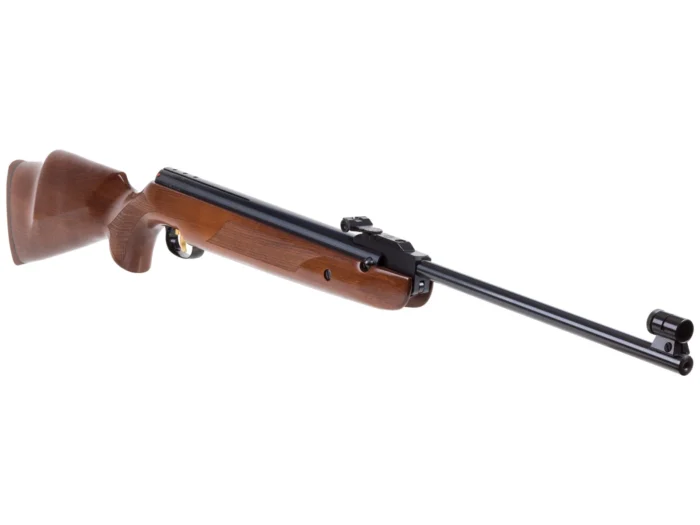
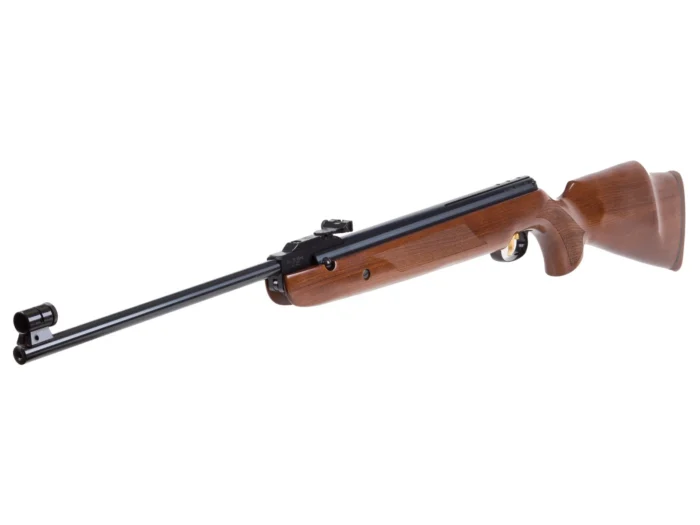
Beeman Chief II Synthetic PCP Air Rifle
€130.00
Description
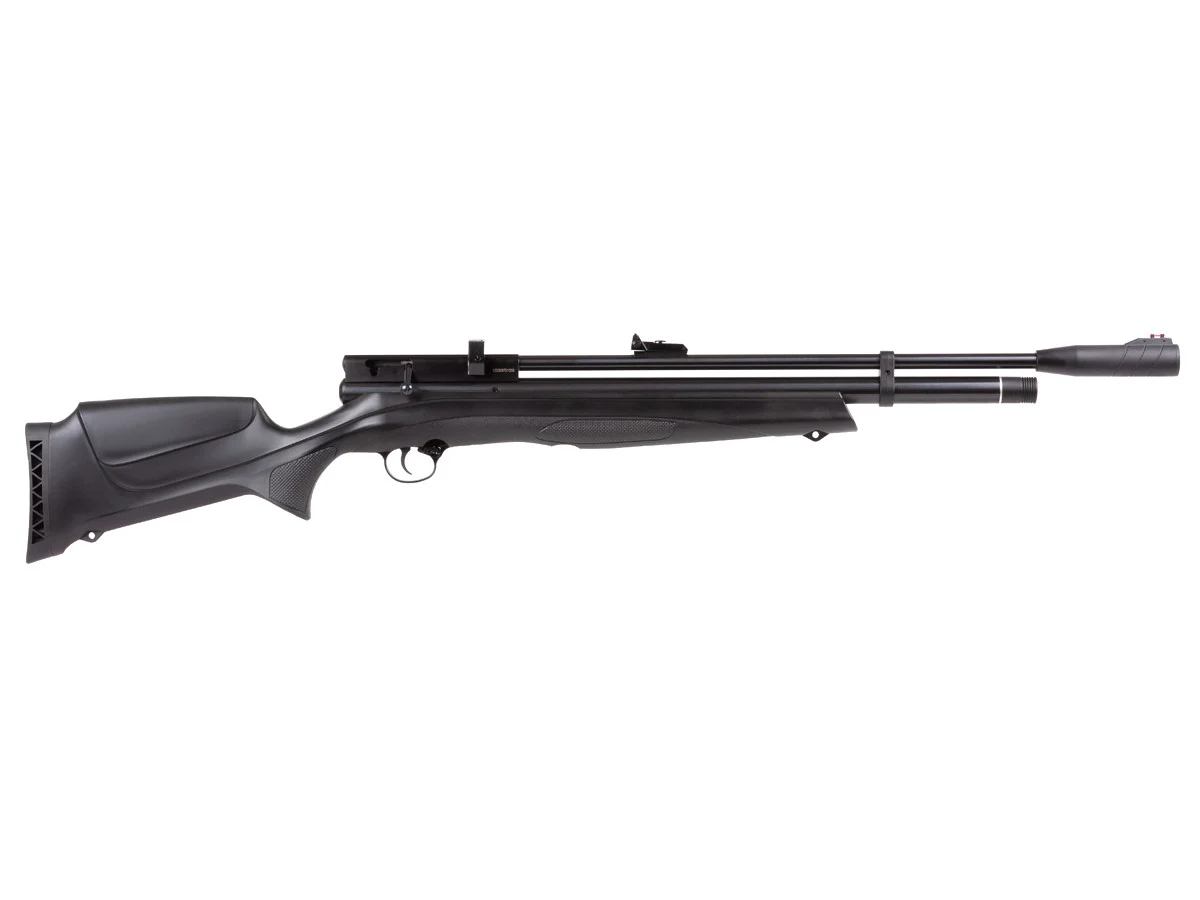
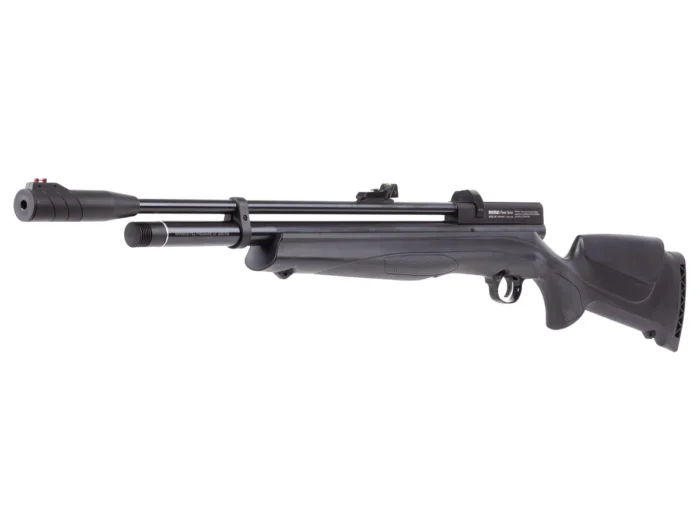
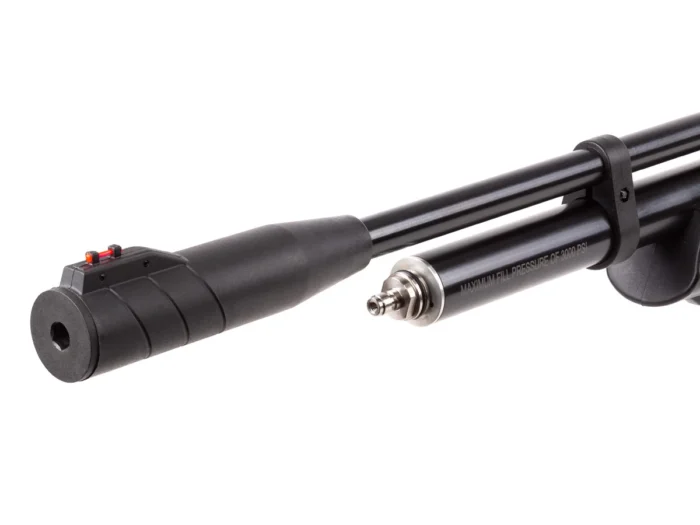
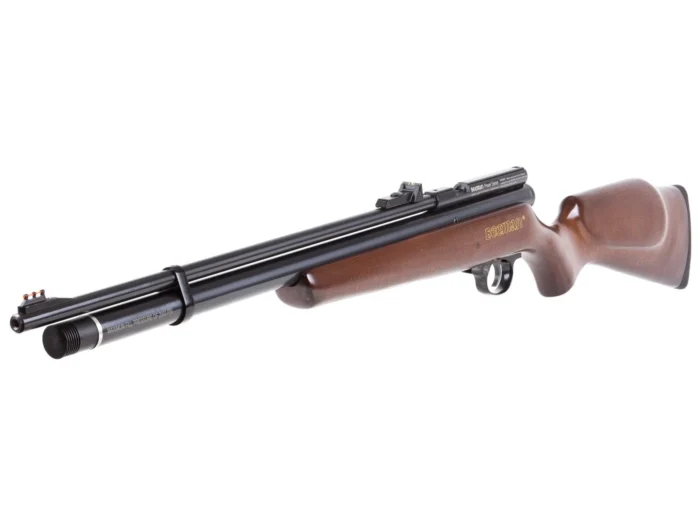
The Beeman Chief II Synthetic PCP Air Rifle adds a new and improved variation of one of their most successful and admired models to the lineup. This bolt-action repeater now comes with a black synthetic stock and is capable of velocities up to 1000 FPS in .177 and 830 FPS in .22, making it an affordable option for plinking, pest control, or small-game hunting.
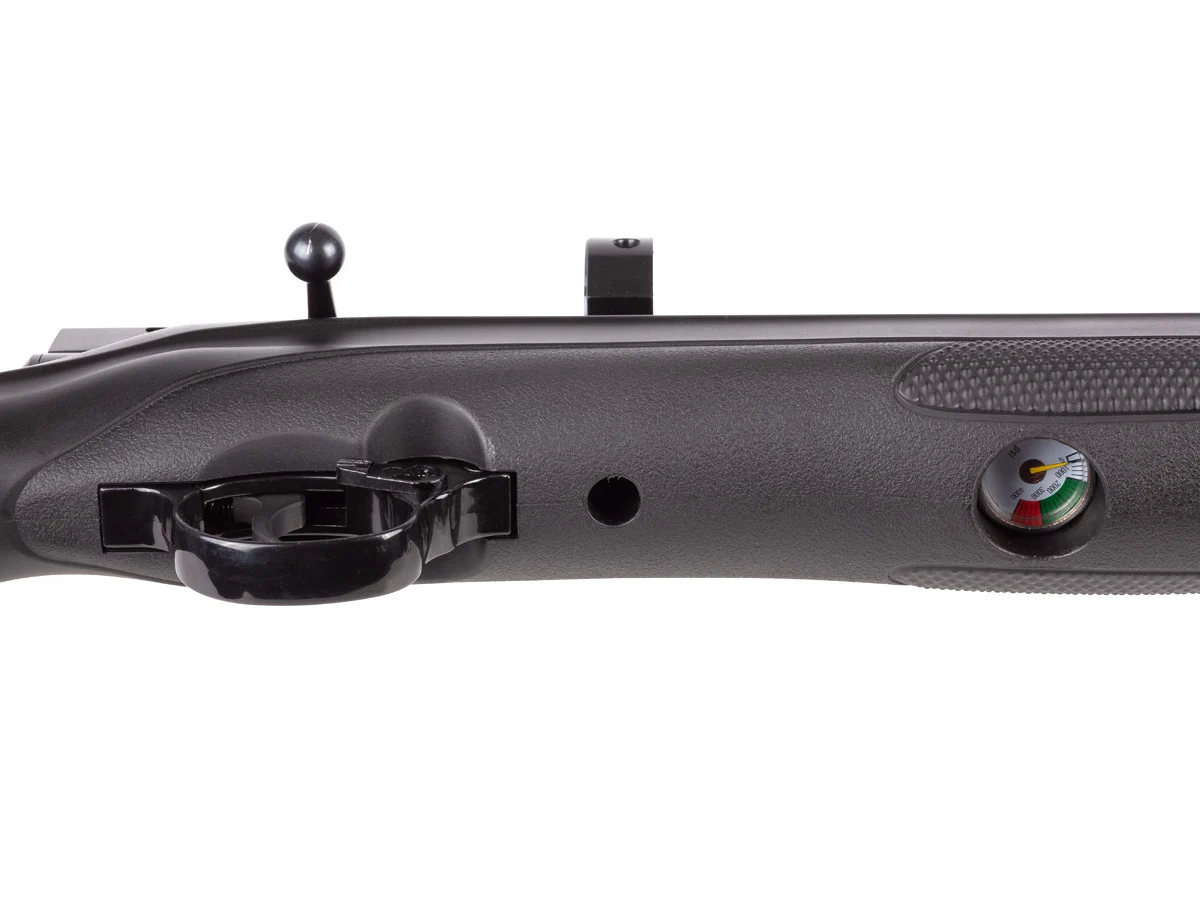
Powered by a 3000 PSI (206 BAR) air cylinder, the airgun can get up to 100 shots per fill in .177, and the moderator at the end of the barrel means the shot will be quieter than a comparable air rifle without sound suppression. The synthetic stock features texturing on the grip and forearm for a firm hold even in the presence of moisture, a rubber buttpad for control and comfort, and holes in the front and rear for sling swivels.
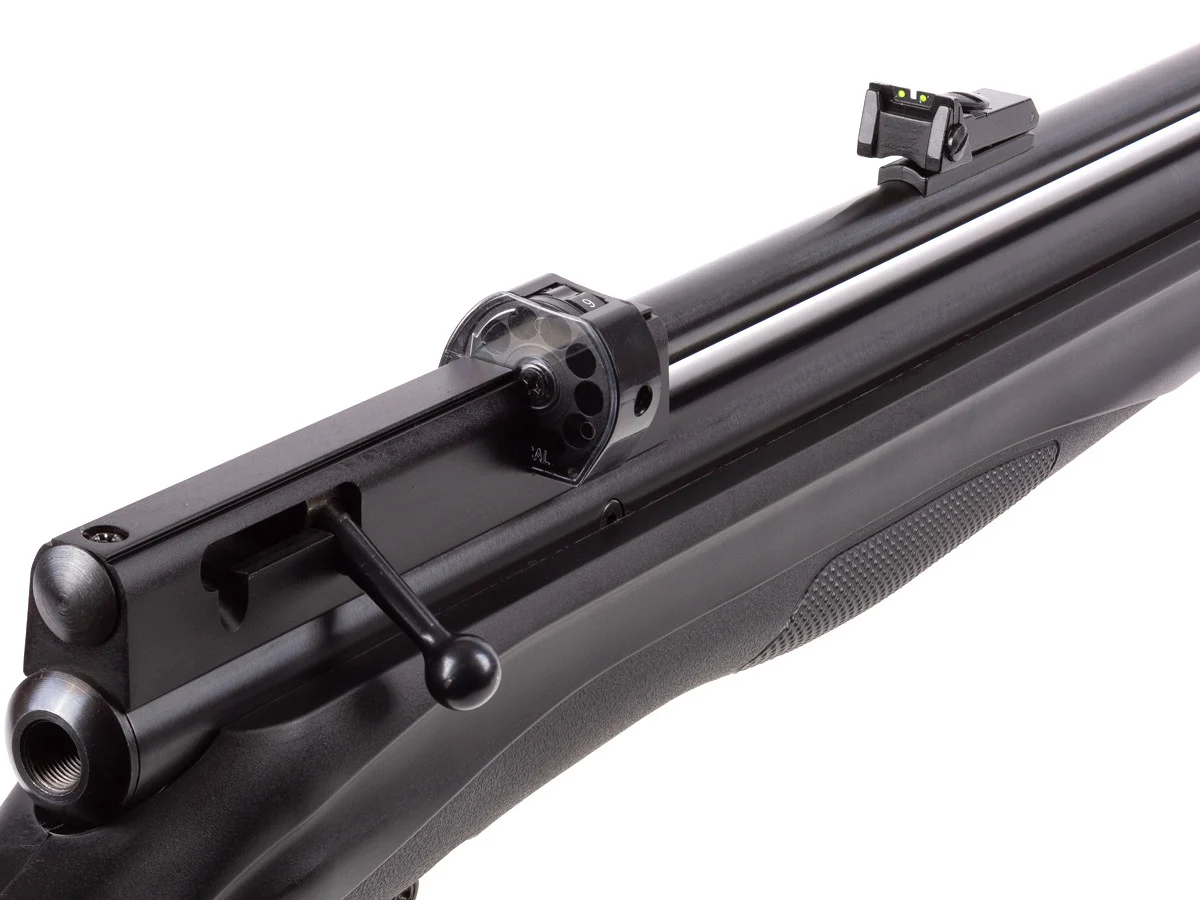
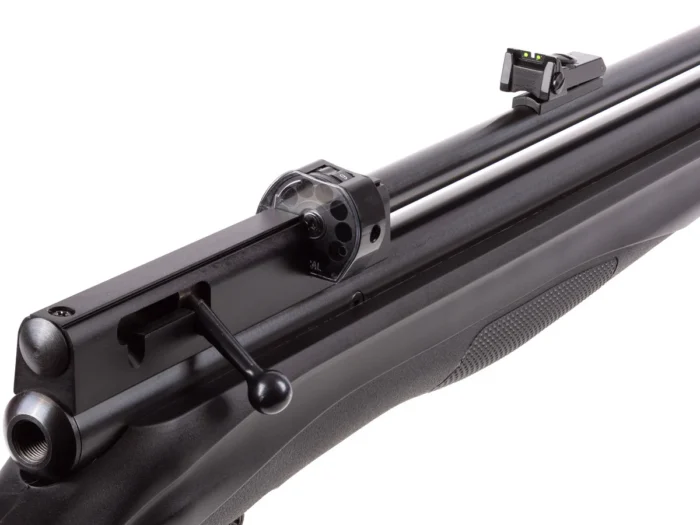
Shooters will enjoy the accuracy and dependability of the 2-stage adjustable trigger that provides the desired clean and predictable break. For additional accuracy, this air rifle features a fixed fiber optic front sight and an adjustable two-dot rear fiber-optic sight. For those that want to scope this rifle, there is an 11mm dovetail rail for mounting the optic of your choice.
To get a budget-friendly airgun for pest control, small-game hunting, or plinking, now with a convenient synthetic stock, buy a Beeman Chief II Synthetic PCP Air Rifle today from Pyramyd AIR.
Helpful resources:
- Learn about hunting with air rifles
- Tips for picking the right airgun for hunting game & pests
- Learn about airgun hunting laws in your state
- Shop related categories: pellet guns, pellet rifles
Beeman Chief II Synthetic PCP Air Rifle
- Precharged pneumatic
- Bolt-action
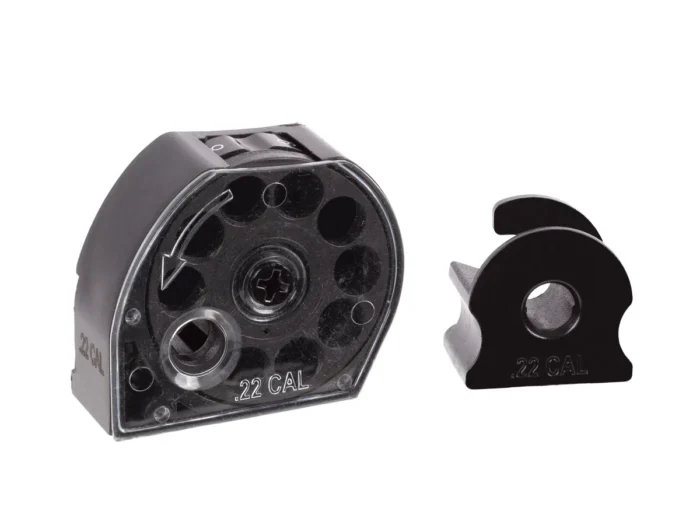
- Repeater
- Synthetic stock
- Moderator
- Fill pressure: 3000 PSI (206 BAR)
- Male Quick Disconnect Fill Fitting
- 12-shot magazine in .177, 10-shot magazine in .22
- Up to 100 shots per fill (.177)
- Max. velocity: 1000 FPS (.177), 830 FPS (.22)
- 2-stage adjustable trigger
- Fixed fiber optic front sight
- Adjustable two-dot rear sight
- Textured grip and forearm
- 11mm Dovetail for mounting optics
- Holes for sling swivels in forearm and buttstock
- Rubber buttpad
- Overall length: 39″
- Weight: 6.8 lbs.
- Includes two magazines
Specifications
BrandCaliber.177 (4.5mm)Max Velocity1000 fpsSuggested forSmall game hunting/target practicePowerplantPre-charged pneumaticLoudness3-MediumNoise Level81.16 dB Weight6.8 lbsFunctionRepeaterCylinder Size136 ccActionBolt-actionShroudedYesScopeable11mm dovetailFront SightsFiber OpticRear SightsFiber OpticSafetyManualBarrelRifledOverall Length39.0″Capacity12 round(s)Body TypeRifleStockSyntheticButtplateRubberColorBlackOperating Pressure3000 PSI / 206 BARGrip OrientationAmbidextrousRegulatedNoIs Safe To Dry FireYes
Beeman Model 1085 QB II CO2 Repeater Air Rifle – Technical CO₂ Repeater Overview
CO₂ Architecture, Beeman Model Relationships, Precision Factors, and Related Airgun Terminology
Beeman
beeman represents a broad airgun brand encompassing spring-piston, gas-ram, CO₂, PCP, rifle, pistol, and accessory products. The QB II belongs specifically to Beeman’s CO₂-powered Power Series.
Beeman Company
The phrase beeman company generally refers to Beeman Precision Airguns and its broader association with Marksman Products.
Beeman Air Rifles
beeman air rifles span several operating systems. Therefore, specifications from one model should not automatically be applied to another.
Beeman Air Guns
The term beeman air guns includes rifles and pistols using different propulsion systems and mechanical layouts.
Beeman Model 1085 QB II
The Model 1085 uses a bolt-action CO₂ system, pellets, 10-shot magazine, synthetic stock, fiber-optic sights, and manual safety.
CO₂ Repeater Architecture
The repeating system distinguishes this platform from traditional single-shot CO₂ models. A magazine holds multiple pellets while the bolt controls the loading sequence Beeman Chief II Synthetic PCP Air Rifle.
10-Shot Magazine
Beeman specifies a 10-shot magazine for both the .177 and .22 versions.
Dual 12-Gram CO₂ Power Source
Retail documentation states that the rifle uses two standard 12-gram CO₂ cartridges. This makes its propulsion architecture fundamentally different from both spring-powered and refillable high-pressure pneumatic systems.
.177 Configuration
The .177 configuration is model 1085 and is manufacturer-rated at up to approximately 650 fps.
.22 Air Rifle
The .22 configuration is model 1085-22 and is manufacturer-rated at approximately 500 fps.
22 Caliber Pellet Gun
The phrase 22 caliber pellet gun broadly describes the .22 version, although it does not uniquely identify the QB II.
22 Cal Air Rifle 1400 FPS
The phrase 22 cal air rifle 1400 fps does not describe this model. Beeman currently lists the .22 version at about 500 fps.
High Power Pellet Gun
The phrase high power pellet gun is broad marketing terminology. Verified manufacturer specifications provide a more accurate technical description.
Beeman Repeater Rifle Sights Magazine
The phrase beeman repeater rifle sights magazine is relevant because this model combines a 10-shot magazine with factory fiber-optic sights.
Fiber-Optic Sights
The factory sighting system uses fiber-optic front and rear sights. These provide a straightforward sighting arrangement without requiring an additional optic.
11 mm Dovetail Interface
Retail specifications identify an 11 mm dovetail mounting interface for compatible sighting equipment.
Rifled Barrel
Retail documentation identifies a rifled barrel, providing rotational stabilization to the appropriate pellet.
Air Rifle Marksmanship
air rifle marksmanship depends on stable sight alignment, ammunition uniformity, trigger control, environmental conditions, and repeatable handling.
The smooth CO₂ firing cycle removes some of the mechanical disturbance associated with spring-powered systems.
Precision Factors
Practical precision depends on more than velocity. Barrel condition, ammunition consistency, sight stability, temperature, gas pressure, and trigger control all influence repeatability.
Pyramyd AIR reports that Beeman has cited approximately 0.20-inch center-to-center groups at 10 yards under controlled conditions, but this should be treated as a manufacturer performance claim rather than a guarantee.
Temperature Sensitivity
CO₂ pressure changes with ambient temperature. Cold conditions can reduce available pressure, while excessive heat should be avoided.
This temperature dependence is an important technical difference between cartridge-powered CO₂ and high-pressure air systems.
PCP Air Rifle
A pcp air rifle uses a refillable compressed-air reservoir rather than disposable carbon-dioxide cartridges.
PCP Rifle
The phrase pcp rifle therefore does not technically describe the QB II.
Precharged Pneumatic
precharged pneumatic refers to a reservoir-based compressed-air system and should remain separate from CO₂ terminology.
PCP Air Rifle 22 Cal
A pcp air rifle 22 cal may use the same projectile diameter as the .22 QB II while relying on a very different pressure system.
Beeman PCP Underlever Air Rifle
A beeman pcp underlever air rifle belongs to another Beeman family using a refillable high-pressure reservoir and underlever architecture.
Beeman Underlever
The phrase beeman underlever refers to another mechanical layout and does not describe the QB II bolt-action system.
Beeman Commander
The beeman commander belongs to Beeman’s PCP family rather than its CO₂ Power Series.
Beeman Chief 2
The phrase beeman chief 2 generally refers to another PCP-oriented family and should not be confused with the QB II.
Beeman QB78
The beeman qb78 is historically related to Beeman’s CO₂ rifle family. Current Beeman information lists the QB78 as a single-shot bolt-action CO₂ rifle, making the QB II’s magazine-fed repeater system one of its clearest distinctions.
Beeman RS2
The beeman rs2 belongs to another air-rifle platform family.
Sportsman RS2 Series
The sportsman rs2 series is separate from the CO₂-powered QB II.
Sportsman RS2 Series Beeman
The phrase sportsman rs2 series beeman is simply another search variation of the same separate product family.
Beeman RS2 Sportsman Series
beeman rs2 sportsman series should not be used as a technical description of the QB II.
Beeman Sportsman RS2 Series
The beeman sportsman rs2 series belongs to another operating architecture.
Sportsman RS2 Series Price
The phrase sportsman rs2 series price concerns another platform rather than QB II specifications.
Beeman Sportsman RS2 Series Price
Likewise, beeman sportsman rs2 series price should remain separate from QB II technical information.
Beeman 1521 Scope
The beeman 1521 scope is an optic-related search term rather than a defining component of the Model 1085.
Beeman 66RL Scope
The beeman 66rl scope likewise belongs to accessory terminology rather than the core rifle specification.
10613
The term 10613 identifies another Beeman model family and should not be treated as a Model 1085 designation.
1019X Gun
The phrase 1019x gun relates to another product or search term rather than a verified QB II specification.
Beeman Jungle M16
The beeman jungle m16 belongs to unrelated historical or search-oriented terminology.
Beeman Broward
The phrase beeman broward does not represent a technical feature of the QB II.
Beeman 1783 Silver Bear
The beeman 1783 silver bear is another distinct model designation.
1783 Silver Bear Beeman
1783 silver bear beeman is simply a reversed version of that unrelated model search term.
Beeman BP50
The beeman bp50 belongs to another Beeman platform family.
Beeman P17
The beeman p17 is an air pistol and should not be confused with a repeating CO₂ rifle.
.177 Air Pistol
A .177 air pistol belongs to another equipment class even though it may use the same nominal projectile diameter as the .177 QB II.
Marksman
marksman is historically associated with Beeman/Marksman sporting products but does not identify the QB II itself.
Marksman Rifle
The phrase marksman rifle is general terminology rather than a verified Model 1085 feature.
Marksman Pistol
A marksman pistol belongs to another equipment category.
Marksman Slingshot
A marksman slingshot uses elastic propulsion and is mechanically unrelated to the QB II.
Marksman Folding Slingshot
The marksman folding slingshot likewise belongs to another category.
Beeman Marksman Laserhawk III Slingshot
The beeman marksman laserhawk iii slingshot is unrelated to the compressed-gas mechanism of this rifle.
Classic Slingshot
A classic slingshot does not share the pneumatic architecture of an air rifle.
Crosman Slingshot
A crosman slingshot belongs to another manufacturer and another equipment class.
Why the CO₂ System Matters
The cartridge-powered design avoids the refillable high-pressure reservoir associated with PCP platforms and the large moving piston used by spring systems.
This creates relatively simple operation and low mechanical recoil, although temperature becomes a more important performance variable.
Why the Repeater System Matters
The 10-shot magazine gives the rifle a repeating architecture while retaining manual bolt operation.
This distinguishes it from single-shot models within the same broader CO₂ family.
Why the Synthetic Stock Matters
The synthetic stock reduces sensitivity to ordinary humidity changes compared with natural wood and requires relatively straightforward exterior maintenance.
Why Mechanical Condition Matters
Magazine alignment, bolt movement, seals, valve health, sight stability, barrel condition, and cartridge interfaces all contribute to reliable operation.
Persistent leakage or abnormal mechanical behavior should receive qualified inspection.
Overall Technical Perspective
The Beeman Model 1085 QB II CO2 Repeater Air Rifle is best understood as a compact, bolt-action, magazine-fed CO₂ pellet rifle offered in .177 and .22 caliber. Beeman currently specifies a 10-shot magazine, synthetic stock, fiber-optic sights, manual safety, approximately 38.6-inch overall length, about 6.2-pound weight, and maximum velocities of 650 fps in .177 and 500 fps in .22.
Retail documentation further identifies two 12-gram CO₂ cartridges, a rifled barrel, and an 11 mm dovetail rail.
Its defining engineering characteristics are the cartridge-powered gas system, low mechanical recoil, repeating 10-shot magazine, traditional bolt operation, synthetic furniture, and compact overall dimensions. For technically accurate content, those features should remain clearly separated from unrelated PCP, spring-powered, underlever, pistol, slingshot, and other Beeman product terms.
Engineering Design, CO₂ Performance, Precision, Handling, Reliability, and Practical Ownership
The overall quality of a carbon-dioxide-powered repeating platform depends on the interaction between its propulsion system, barrel, loading mechanism, trigger, magazine, sights, stock, seals, and external hardware. Instead of relying on a large spring-driven piston or a refillable high-pressure reservoir, the system receives its operating energy from replaceable compressed-gas cartridges. Consequently, the firing cycle contains relatively little internal mechanical movement. This creates a smooth operating character while keeping the general architecture straightforward. However, consistent recreational performance still depends on mechanical condition, ammunition quality, environmental temperature, maintenance, and responsible handling.
CO₂ Propulsion Design
Compressed carbon dioxide provides the energy required by the operating system.
The gas remains stored until it is released through the internal valve arrangement.
This design provides a different ownership experience from both spring-powered and high-pressure reservoir systems.
Smooth Firing Cycle
A major characteristic of compressed-gas propulsion is reduced internal movement.
There is no heavy piston rapidly moving through a compression chamber during discharge.
Therefore, the firing cycle generally feels smooth and controlled.
Low Mechanical Recoil
Reduced mechanical movement also results in relatively little recoil.
This characteristic can provide a stable foundation for recreational target activities.
Nevertheless, low recoil alone does not determine precision.
Gas Pressure Behavior
Carbon dioxide has temperature-dependent pressure characteristics.
Consequently, environmental conditions can influence how consistently the system behaves.
Understanding this relationship helps distinguish normal temperature-related variation from potential mechanical problems.
Cold-Weather Performance
Lower temperatures can reduce available gas pressure.
As a result, performance may change when equipment is used in colder environments.
This should be considered when comparing results from different sessions.
Warm-Weather Considerations
Moderate temperatures generally support more predictable gas behavior.
However, excessive heat should always be avoided.
Compressed-gas cartridges and associated equipment should never be intentionally exposed to extreme temperatures.
Valve Operation
The internal valve regulates gas release.
Its ability to operate consistently contributes significantly to predictable performance.
Because it forms part of the pressure-handling system, major valve servicing should receive qualified technical attention.
Seal Integrity
Seals help contain gas at important interfaces throughout the system.
Repeated use, age, contamination, and environmental exposure can gradually influence their condition.
Persistent leakage can indicate that maintenance is necessary.
Gas Efficiency
Efficient operation depends on several components working correctly.
Healthy seals, proper valve behavior, suitable environmental conditions, and sound cartridge interfaces all contribute.
Therefore, efficiency should be evaluated as a system characteristic rather than through one component alone.
Repeating Mechanism
The repeating architecture provides convenience compared with a basic single-shot arrangement.
Multiple projectiles can be held within the dedicated magazine while the mechanical action manages the loading sequence.
Reliable operation depends on correct alignment and component condition.
Magazine Construction
The magazine should remain clean, physically sound, and free from significant deformation.
Wear or contamination can interfere with normal operation.
Damaged components should be replaced with appropriate compatible alternatives.
Loading Consistency
A healthy loading mechanism should provide predictable mechanical movement.
Unexpected resistance, scraping, or excessive looseness can indicate wear or contamination.
Abnormal movement should be investigated rather than overcome with excessive force.
Bolt Operation
The bolt provides direct mechanical control over the loading process.
Its movement should remain smooth and familiar during normal operation.
Significant changes in resistance can provide an early indication that inspection is required.
Breech Condition
The breech contributes to both loading and sealing.
Its surfaces should remain clean and physically sound.
Damage around important sealing interfaces can potentially affect gas efficiency and overall consistency.
Barrel Construction
A rifled barrel provides rotational stabilization to the appropriate projectile.
Manufacturing quality establishes the foundation, while maintenance and physical protection help preserve it.
The barrel should remain secure and free from significant damage.
Bore Condition
The internal bore should remain unobstructed and protected from corrosion.
However, unnecessary cleaning can be counterproductive.
Maintenance should be performed only when appropriate and according to suitable guidance.
Muzzle Integrity
The muzzle is an important part of the barrel assembly.
Physical damage in this area can influence projectile behavior.
Careful transportation and storage can help protect it from accidental impact.
Practical Precision
Precision results from multiple interacting factors.
Barrel condition, ammunition consistency, trigger behavior, sight alignment, temperature, gas pressure, and user technique all contribute.
Therefore, a single performance figure cannot describe complete real-world capability.
Consistency Over Repeated Use
Repeatability provides a more meaningful measure than one unusually good result.
When environmental conditions remain similar, a mechanically healthy platform should behave predictably.
Significant unexplained changes can indicate that inspection is appropriate.
Ammunition Uniformity
Consistently manufactured ammunition provides a stronger foundation for evaluating performance.
Variations in dimensions, weight, cleanliness, and physical condition can influence results.
Only the correct caliber and appropriate type should be used.
Projectile Storage
Ammunition should remain clean and dry.
Physical deformation can create unnecessary inconsistency.
Suitable storage therefore contributes indirectly to predictable recreational performance.
Trigger Characteristics
A predictable trigger helps support controlled operation.
Consistent movement allows the user to become familiar with normal mechanical behavior.
Unexpected changes should receive inspection rather than improvised modification.
Safety Mechanism
The safety system provides an additional mechanical safeguard.
However, it should never replace responsible handling practices.
The equipment should always be treated as capable of discharge regardless of safety position.
Stock Construction
Synthetic furniture provides a durable and relatively low-maintenance exterior structure.
Unlike natural wood, it is generally less sensitive to ordinary humidity variations.
Nevertheless, extreme heat and substantial impact should still be avoided.
Stock Stability
The stock supports the mechanical action and contributes to overall handling.
Mounting areas should remain structurally sound.
Cracks, deformation, or excessive movement can influence stability and should receive attention.
Grip Ergonomics
Grip geometry affects comfort and control.
A natural hand position can reduce unnecessary muscular tension.
Individual hand size and preference naturally influence perceived fit.
Shoulder Comfort
Stock dimensions influence shoulder placement and general handling.
Comfort becomes especially noticeable during longer recreational sessions.
A stable position can contribute to more repeatable handling.
Weight Distribution
Balance can influence handling more noticeably than total weight.
The relationship between the barrel, action, gas system, and stock determines how the platform settles when supported.
Good distribution can provide a stable feel.
Factory Sighting System
An integrated sighting arrangement provides a straightforward method of alignment.
The sights should remain securely positioned.
Loose or damaged components can create inconsistent results.
Accessory Mounting
Compatible optical equipment can be installed when appropriate.
The mounting system should fit correctly and remain secure.
Improvised installation can create alignment problems or damage mounting surfaces.
Environmental Conditions
Wind, lighting, temperature, and humidity can influence recreational performance.
Temperature deserves particular attention because of its relationship with gas pressure.
Performance comparisons should therefore consider surrounding conditions.
Exterior Maintenance
Routine maintenance should focus on preservation rather than unnecessary disassembly.
Exterior surfaces can be kept clean and dry using products appropriate for the materials involved.
Aggressive chemicals should generally be avoided.
Corrosion Prevention
Metal surfaces can gradually deteriorate when exposed to persistent moisture.
Dry storage and periodic inspection help reduce this risk.
Developing corrosion should be addressed before it becomes extensive.
Routine Inspection
Regular observation can identify developing concerns.
The barrel, stock, sights, magazine, loading mechanism, safety, and accessible gas-system areas can all be visually checked.
Routine inspection does not require complete internal disassembly.
Storage
Secure, dry, and reasonably temperature-stable storage supports long-term preservation.
The equipment should remain unloaded and protected from unauthorized access.
Gas-system storage procedures should follow manufacturer guidance.
Transportation
A protective case can reduce accidental impact and surface damage.
The equipment should remain unloaded and appropriately secured during transportation.
Applicable regulations should always be followed.
Maintenance Planning
Maintenance should respond to actual mechanical condition.
Persistent leakage, rough loading movement, damaged components, or unexpected changes in operation can indicate that servicing is required.
Unnecessary intervention should be avoided.
Professional Servicing
Internal gas-handling components require appropriate technical knowledge.
Major valve repairs, significant seal work, or other internal pressure-system procedures should therefore be handled by qualified personnel.
Improvised repairs can create additional problems.
Long-Term Reliability
Reliability depends on both original engineering and subsequent ownership.
Healthy seals, predictable valve operation, a protected barrel, sound loading components, secure sights, suitable ammunition, and appropriate environmental management all contribute to service life.
Overall Performance Perspective
A well-maintained compressed-gas repeater can provide a smooth, predictable, and mechanically straightforward recreational experience. Reduced internal movement creates a low-recoil firing character, while the repeating mechanism provides practical convenience without requiring the more complex external charging equipment associated with high-pressure reservoir systems.
Long-term quality ultimately depends on consistency rather than one headline specification. Gas retention, valve health, barrel integrity, loading reliability, sight security, ammunition uniformity, temperature management, and maintenance history collectively determine how effectively the complete platform performs. With appropriate storage, periodic inspection, careful transportation, and professional servicing when necessary, the system can remain reliable and mechanically consistent throughout an extended service life.
Durability, Consistent Performance, Ergonomics, Mechanical Condition, Maintenance, and Long-Term Ownership
Long-term ownership of a carbon-dioxide-powered repeating platform depends on more than initial performance. Mechanical components naturally experience wear, seals gradually age, finishes can be affected by environmental exposure, and moving assemblies may eventually require attention. Consequently, the strongest measure of overall quality is how consistently the complete system continues to function when it receives appropriate care. A sound barrel, healthy gas system, reliable loading mechanism, predictable trigger, secure sights, stable stock, and suitable storage practices all contribute to dependable recreational performance throughout the equipment’s service life.
Long-Term Durability
Durability begins with sound materials and appropriate manufacturing tolerances.
However, even robust equipment requires reasonable care.
Physical impact, persistent moisture, excessive temperatures, unsuitable chemicals, and neglected maintenance can gradually reduce serviceability.
Mechanical Consistency
A properly functioning platform should develop a recognizable mechanical feel.
The loading action, trigger, safety, and magazine should generally operate in a predictable manner.
Unexpected changes can provide useful early indications of developing wear.
Consistent Performance
Performance should be evaluated across repeated recreational sessions rather than from one isolated result.
A stable system should behave reasonably predictably when ammunition, temperature, equipment condition, and environmental circumstances remain similar.
Large unexplained changes deserve investigation.
Precision Stability
Practical precision results from several variables interacting simultaneously.
Barrel integrity, ammunition uniformity, sight stability, trigger control, gas pressure, temperature, and handling technique all contribute.
Therefore, no single component should automatically receive credit or blame for every result.
Smooth Mechanical Character
Compressed-gas propulsion involves relatively little internal movement during discharge.
Without a large spring-driven piston accelerating through the action, the firing cycle can remain comparatively smooth.
This characteristic supports stable handling during controlled recreational target activities.
Temperature Awareness
Environmental temperature influences gas pressure.
Consequently, differences between cold and warm conditions can affect operating characteristics.
Users should consider temperature before assuming that every change represents mechanical deterioration.
Cold Conditions
Lower temperatures can reduce available pressure and alter consistency.
This behavior is associated with the physical properties of the propulsion system.
Performance comparisons are more meaningful when environmental conditions are reasonably similar.
Heat Protection
Excessive heat should be avoided.
Compressed-gas equipment should not be left unnecessarily in locations where temperatures can become extreme.
Appropriate storage protects both the cartridges and surrounding components.
Gas-System Health
Reliable operation depends on the complete gas-handling system.
Cartridge interfaces, seals, valve components, and related connections must work together correctly.
Persistent leakage or unusual behavior can indicate that professional inspection is appropriate.
Seal Longevity
Seals can gradually harden, deform, or deteriorate.
Age alone can influence condition even when equipment receives relatively little use.
Therefore, long periods of inactivity do not guarantee unchanged seal performance.
Valve Consistency
The valve regulates gas release and contributes significantly to predictable operation.
A healthy valve should behave consistently within normal operating conditions.
Internal valve problems should be handled by appropriately qualified personnel.
Loading-System Reliability
The loading mechanism contains interacting mechanical surfaces.
These should move predictably without excessive resistance.
Roughness, scraping, or unexpected looseness can indicate contamination, wear, or alignment concerns.
Magazine Condition
The magazine should remain clean and structurally intact.
Deformation can interfere with reliable loading.
Compatible replacement components should be used when significant damage develops.
Breech Integrity
The breech provides an important transition between the loading and barrel systems.
Its physical condition can influence both alignment and sealing.
Visible damage should therefore receive appropriate attention.
Barrel Stability
The barrel should remain securely positioned and protected from impact.
Even a well-manufactured barrel cannot provide consistent performance if its alignment or structural integrity becomes compromised.
Careful transportation helps preserve this condition.
Bore Preservation
The internal bore should remain free from obstruction and serious corrosion.
However, excessive cleaning is not necessarily beneficial.
Maintenance should respond to actual condition rather than an unnecessarily aggressive schedule.
Muzzle Protection
The muzzle deserves particular care because physical damage can influence projectile behavior.
A protective case reduces the likelihood of accidental contact during transportation.
The equipment should also be positioned securely during storage.
Ammunition Condition
Correctly sized, consistently manufactured ammunition provides a better foundation for repeatable performance.
Damaged or contaminated projectiles introduce additional variables.
Ammunition should therefore remain clean, dry, and protected from deformation.
Trigger Predictability
The trigger should maintain reasonably consistent movement throughout normal use.
Familiar mechanical behavior contributes to controlled recreational operation.
Unexpected changes should prompt inspection rather than improvised adjustment.
Safety Reliability
The safety mechanism should remain functional and predictable.
Nevertheless, responsible handling should never depend entirely on a mechanical safeguard.
Any suspected malfunction deserves attention before further use.
Stock Durability
Synthetic furniture generally tolerates normal environmental variation well.
It does not require the same moisture management as unfinished natural wood.
However, significant impact, excessive heat, and aggressive chemicals can still cause deterioration.
Stock Mounting
The action should remain securely supported by the stock.
Mounting points should be periodically observed for damage or unusual movement.
Overtightening should be avoided because excessive force can damage components.
Ergonomic Comfort
Comfort influences how naturally equipment can be supported.
Grip shape, shoulder placement, stock dimensions, and overall balance all contribute.
Individual body proportions naturally affect the perceived fit.
Weight Distribution
Total weight provides only part of the handling picture.
Where that weight is positioned can substantially influence comfort.
Balanced distribution can help the platform feel stable during recreational target sessions.
Sight Security
Sighting components should remain firmly installed.
Loose sights can create inconsistent results that might otherwise be mistaken for barrel or gas-system problems.
Routine inspection can identify these relatively simple concerns.
Mounting-Surface Condition
Accessory mounting areas should remain undamaged.
Compatible equipment should fit without excessive force.
Improvised mounting arrangements can compromise alignment or damage the interface.
Exterior Metal Care
Metal surfaces require protection from persistent moisture.
Handling residue and environmental contamination can gradually affect protective finishes.
Simple routine preservation can help maintain condition.
Corrosion Management
Early corrosion is generally easier to address than advanced deterioration.
Regular visual inspection can reveal changes before they become substantial.
Equipment should never be stored unnecessarily wet.
Routine Cleaning
Routine cleaning should remain proportional to actual need.
Exterior preservation is usually more important than frequent internal disassembly.
Any cleaning products used should be appropriate for the materials involved.
Avoiding Excessive Maintenance
Repeated unnecessary disassembly can create additional wear or alignment problems.
Maintenance should therefore be purposeful.
Internal servicing is best reserved for genuine mechanical requirements.
Storage Environment
A secure, dry, and reasonably temperature-stable location supports long-term preservation.
The equipment should remain unloaded and protected from unauthorized access.
Storage procedures involving the gas system should follow manufacturer guidance.
Protective Case Use
A protective case helps prevent scratches and impact damage during transportation.
However, enclosed cases can trap moisture.
Equipment should therefore be dry before extended enclosure.
Transportation Care
Transportation can expose equipment to vibration and accidental impact.
Secure positioning inside an appropriate case helps protect the barrel, stock, sights, and mechanical components.
Applicable regulations should always be observed.
Extended Periods of Inactivity
Equipment that has remained unused for a long period should be inspected before returning to normal recreational operation.
Seals may have aged, metal surfaces may have changed, and moving components may require evaluation.
External appearance alone cannot establish complete mechanical health.
Recognizing Developing Problems
Owners can benefit from understanding the equipment’s normal operating characteristics.
Changes in loading resistance, trigger feel, gas retention, sound, sight stability, or component fit can provide early warning signs.
These changes should not be ignored.
Replacement Components
Replacement parts should correspond to the exact mechanical configuration.
Visual similarity does not necessarily establish compatibility.
Correct components help preserve intended operation.
Professional Maintenance
Significant internal gas-system work requires specialized knowledge.
Valve repairs, major seal replacement, and pressure-related servicing should therefore be handled by qualified personnel.
Improvised repairs can introduce unnecessary hazards.
Service Documentation
Basic maintenance records can provide useful long-term information.
Professional inspections, component replacements, and significant repairs can be documented.
This becomes increasingly valuable as equipment ages.
Long-Term Serviceability
Serviceability depends on the interaction between construction quality and ownership practices.
Appropriate environmental protection, routine observation, compatible replacement components, and timely servicing can preserve mechanical condition for an extended period.
Neglect can shorten that service life considerably.
Responsible Ownership
Secure storage, lawful transportation, appropriate maintenance, and controlled recreational use are all essential aspects of responsible ownership.
Local regulations and facility requirements should always take priority.
Overall Long-Term Assessment
A well-maintained compressed-gas repeating platform can provide a smooth, predictable, and uncomplicated ownership experience. Its relatively low mechanical recoil, repeating loading architecture, durable furniture, straightforward controls, and cartridge-powered propulsion system create a practical combination for controlled recreational target activities where permitted.
Long-term quality ultimately depends on maintaining the complete system rather than concentrating on one specification. Healthy seals, consistent valve behavior, a protected barrel, reliable loading components, secure sights, stable stock mounting, appropriate ammunition, and sensible temperature management all contribute. Combined with dry storage, careful transportation, periodic inspection, and professional servicing when necessary, these practices can preserve mechanical consistency and dependable operation throughout an extended service life.
Practical Performance, Construction Quality, Handling Comfort, Reliability, Care, and Service Life
A compressed-gas repeating platform combines straightforward mechanical operation with a relatively smooth firing cycle and convenient multi-shot functionality. However, long-term quality cannot be measured through one specification alone. Construction materials, barrel integrity, gas-system condition, loading reliability, trigger consistency, sight stability, stock durability, environmental exposure, and maintenance practices all contribute to the complete ownership experience. When these areas remain properly maintained, the equipment can retain predictable characteristics over an extended period. Responsible care is therefore just as important as original manufacturing quality.
Overall Construction Quality
Construction quality becomes noticeable through the relationship between fixed and moving components.
The barrel, action, stock, sights, loading system, and external hardware should remain securely positioned.
Moving parts should operate predictably without excessive looseness or unnecessary resistance.
Structural Integrity
Structural components should remain free from significant deformation, cracking, or impact damage.
Minor cosmetic wear may develop through normal ownership.
However, structural deterioration deserves greater attention because it can influence stability and serviceability.
Metal Component Quality
Metal components provide strength throughout the mechanical assembly.
Their condition should be assessed periodically for corrosion, unusual wear, or physical damage.
Protective finishes help, but they do not eliminate the need for sensible care.
Exterior Finish Durability
An exterior finish protects underlying surfaces while also providing a consistent appearance.
Small handling marks may gradually appear.
These cosmetic changes should be distinguished from deeper corrosion or structural deterioration.
Synthetic Stock Durability
Synthetic furniture provides useful resistance to many everyday environmental conditions.
Unlike natural wood, it is generally less affected by ordinary humidity fluctuations.
Nevertheless, extreme temperatures, harsh chemicals, and significant impact should still be avoided.
Stock Stability
The stock supports the action while providing the principal ergonomic interface.
Mounting areas should remain structurally sound and securely positioned.
Unexpected movement can indicate that inspection is necessary.
Grip Comfort
A comfortable grip can reduce unnecessary tension during recreational target sessions.
Grip geometry should allow a natural hand position.
However, perceived comfort varies because hand size and personal preference differ.
Shoulder Position
Stock dimensions influence how naturally the equipment settles against the shoulder.
Comfortable positioning can contribute to stable handling.
Individual body proportions remain an important factor when evaluating ergonomics.
Weight Distribution
Overall weight provides only part of the handling picture.
The location of that weight can substantially influence perceived balance.
A well-distributed platform can feel stable without becoming unnecessarily difficult to manage.
Mechanical Smoothness
Mechanical refinement can be evaluated through the behavior of the loading mechanism, trigger, safety, and magazine.
These components should develop a predictable operating feel.
Unexpected changes can provide useful indications of developing maintenance requirements.
Loading Reliability
The loading mechanism should move smoothly through its normal cycle.
Resistance that suddenly increases should not simply be overcome through additional force.
Inspection is more appropriate when mechanical behavior changes unexpectedly.
Magazine Condition
A repeating magazine contains several surfaces that must remain correctly aligned.
Physical deformation or contamination can interfere with operation.
The magazine should therefore remain clean and structurally sound.
Breech Condition
The breech contributes to both loading and gas containment.
Its surfaces should remain free from significant physical damage.
Problems around sealing areas can influence overall efficiency.
Gas-System Reliability
Reliable propulsion depends on controlled gas storage and release.
Cartridge interfaces, seals, valves, and associated components all contribute.
The system should therefore be considered as a complete assembly rather than a collection of unrelated parts.
Seal Condition
Seals naturally age during ownership.
Temperature changes, repeated use, contamination, and extended storage can influence their condition.
Persistent leakage may indicate that servicing is necessary.
Valve Performance
The valve controls gas release and contributes to consistent operation.
Its internal condition cannot always be evaluated through external inspection.
Significant valve concerns should therefore receive qualified technical attention.
Temperature Effects
Environmental temperature influences gas pressure.
Performance can consequently differ between cold and moderate conditions.
This characteristic should be considered when comparing results from different recreational sessions.
Heat Protection
Excessive heat should always be avoided.
Compressed-gas cartridges and the surrounding equipment should remain within appropriate environmental conditions.
Storage inside extremely hot enclosed spaces is undesirable.
Smooth Firing Character
Compressed-gas propulsion creates relatively little internal mechanical movement during discharge.
This produces a smooth operating character compared with systems containing a large moving piston.
Reduced movement can support stable recreational target performance.
Practical Precision
Precision should be understood as the result of several interacting factors.
Barrel condition, ammunition uniformity, sight stability, trigger control, temperature, mechanical condition, and user technique all contribute.
One performance figure cannot represent every real-world circumstance.
Repeatability
Repeatable results provide a stronger indication of mechanical health than occasional exceptional performance.
A well-maintained platform should behave predictably under similar conditions.
Significant unexplained variation deserves investigation.
Barrel Integrity
The barrel should remain securely mounted and protected from physical impact.
Structural damage or suspected misalignment should receive professional assessment.
Proper transportation can help prevent accidental damage.
Bore Condition
Internal rifling should remain free from obstruction and significant corrosion.
Cleaning should be appropriate rather than excessive.
Unnecessary aggressive maintenance can introduce additional wear.
Muzzle Protection
The muzzle area should receive particular protection from accidental contact.
Physical damage can influence consistency.
A suitable case helps reduce risk during transportation.
Ammunition Uniformity
Consistent ammunition provides a better foundation for evaluating performance.
Damaged, dirty, or deformed projectiles can introduce unnecessary variation.
Ammunition should remain clean and properly stored.
Trigger Consistency
The trigger should retain familiar mechanical characteristics.
Unexpected changes in movement or resistance can indicate that inspection is appropriate.
Improvised internal adjustment should be avoided.
Safety-System Condition
The mechanical safety should remain functional.
However, it should never replace disciplined handling practices.
Any suspected malfunction should be addressed before continued recreational use.
Sight Stability
Sighting components should remain securely installed.
Loose sights can produce inconsistent results even when the underlying mechanical system remains healthy.
Routine inspection can identify this straightforward issue.
Mounting Hardware
Accessory mounting components should fit correctly.
Excessive tightening or incompatible hardware can damage mounting surfaces.
Installation should preserve the original structural integrity of the interface.
Routine Inspection
Periodic inspection provides an effective way to identify developing problems.
Visible metal surfaces, the stock, barrel, magazine, loading mechanism, sights, safety, and accessible gas-system components can all be observed.
Complete disassembly is not required for routine inspection.
Exterior Cleaning
Routine cleaning should focus on removing moisture, dust, and handling residue.
Products should be appropriate for the materials involved.
Aggressive solvents are generally unnecessary for ordinary exterior maintenance.
Corrosion Prevention
Persistent moisture can gradually affect metal surfaces.
Equipment should therefore remain dry during storage.
Early signs of corrosion should receive attention before deterioration becomes extensive.
Storage Conditions
A dry, secure, and reasonably temperature-stable environment supports long-term preservation.
The equipment should remain unloaded and inaccessible to unauthorized users.
Gas-system storage should follow manufacturer guidance.
Long-Term Storage
Periods of inactivity still require appropriate preparation.
Seals can age even when the equipment is not frequently used.
Inspection is therefore sensible before returning equipment to normal recreational operation after extended storage.
Protective Case
A properly fitted case helps protect external components against impact.
However, enclosed cases can retain moisture.
Equipment should be dry before being stored inside one for extended periods.
Transportation
Transportation should occur with the equipment unloaded and appropriately secured.
A protective case helps preserve the barrel, sights, stock, and exterior finish.
Applicable regulations should always be followed.
Maintenance Planning
Maintenance should respond to actual mechanical condition.
Persistent leakage, rough loading movement, damaged components, loose sights, or unusual trigger behavior can indicate that servicing is necessary.
Unnecessary internal work should be avoided.
Professional Servicing
Internal gas-handling components require appropriate technical knowledge.
Valve repairs, significant seal work, or other pressure-related servicing should be performed by qualified personnel.
Improvised repair can introduce additional problems.
Replacement Components
Replacement parts should match the exact configuration.
Visual similarity does not guarantee compatibility.
Correct components help preserve intended mechanical operation and reliability.
Avoiding Unnecessary Modification
The original operating system represents a coordinated relationship between gas pressure, valve behavior, mechanical dimensions, and component materials.
Unnecessary alteration can disrupt this relationship.
Maintaining the intended configuration generally supports easier servicing and predictable operation.
Maintenance Documentation
Keeping basic service records can improve long-term ownership.
Professional inspections, component replacements, seal servicing, and significant repairs can be documented.
These records become particularly useful as equipment ages.
Service Life
Long service life depends on both original engineering and subsequent care.
Good construction establishes the foundation, while responsible storage and maintenance preserve it.
Neglected equipment can deteriorate regardless of initial quality.
Overall Ownership Assessment
A properly maintained compressed-gas repeating platform can provide smooth operation, relatively low mechanical recoil, straightforward loading, comfortable handling, and predictable recreational performance. Its practical value comes from the complete system working consistently rather than from any single headline specification.
Long-term reliability ultimately depends on healthy seals, consistent valve behavior, stable barrel construction, sound loading components, secure sights, appropriate ammunition, suitable environmental conditions, and responsible maintenance. Dry storage, careful transportation, routine inspection, compatible replacement components, and qualified servicing when required can preserve these characteristics. When operated responsibly in lawful and controlled recreational environments, the equipment can remain mechanically consistent, practical, and serviceable throughout an extended ownership period.
Be the first to review “Beeman Chief II Synthetic PCP Air Rifle”
Related products

Beeman Air Rifle


Beeman Air Rifle
Beeman Air Rifle


Beeman Air Rifle
Reviews
There are no reviews yet.