
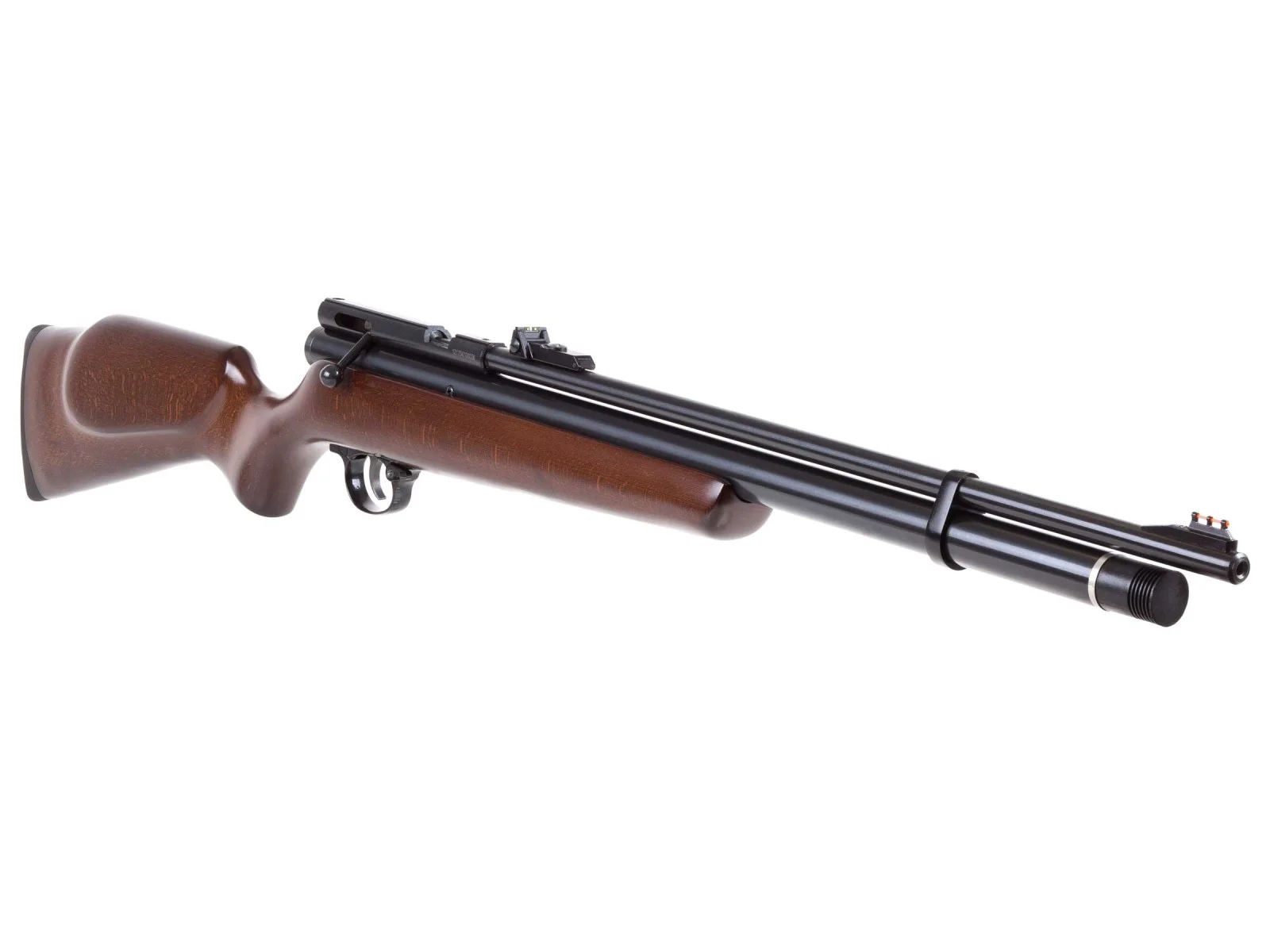
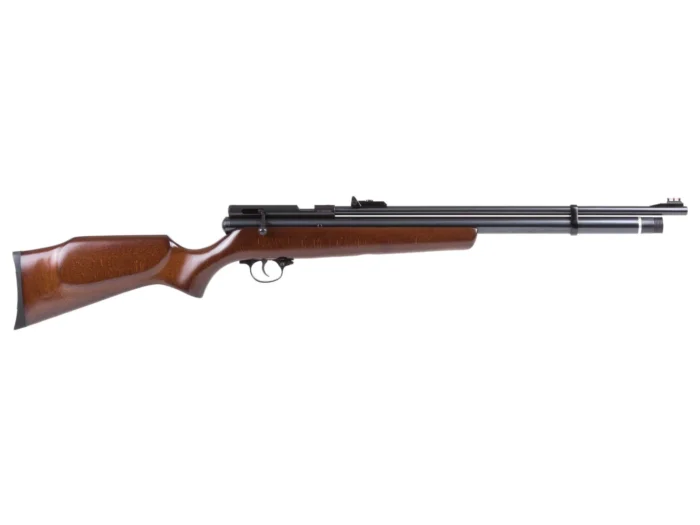
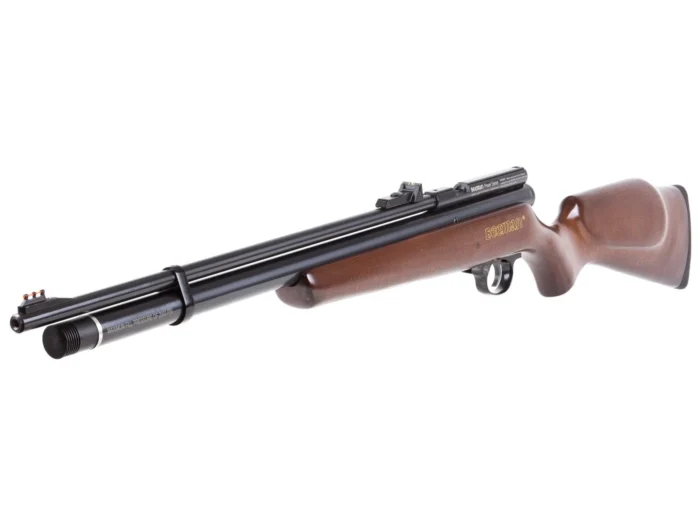
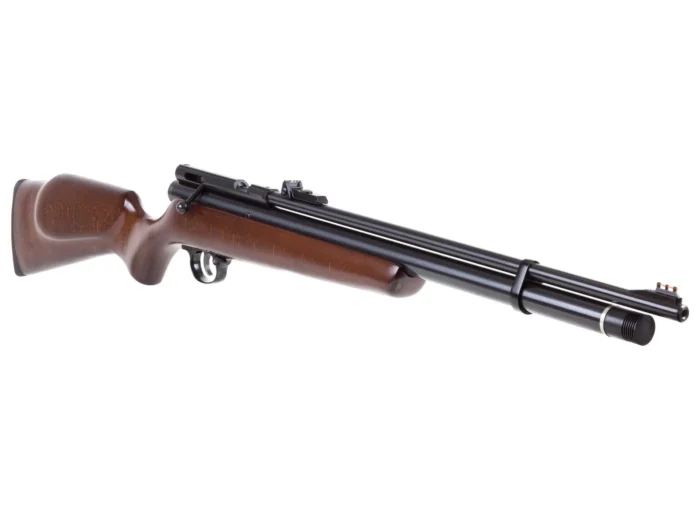
Beeman QB Chief PCP Air Rifle
€113.00
Description
A balance of performance, quality features, and price point, the Chief is Beeman’s first foray into budget-friendly, entry-level PCP guns.
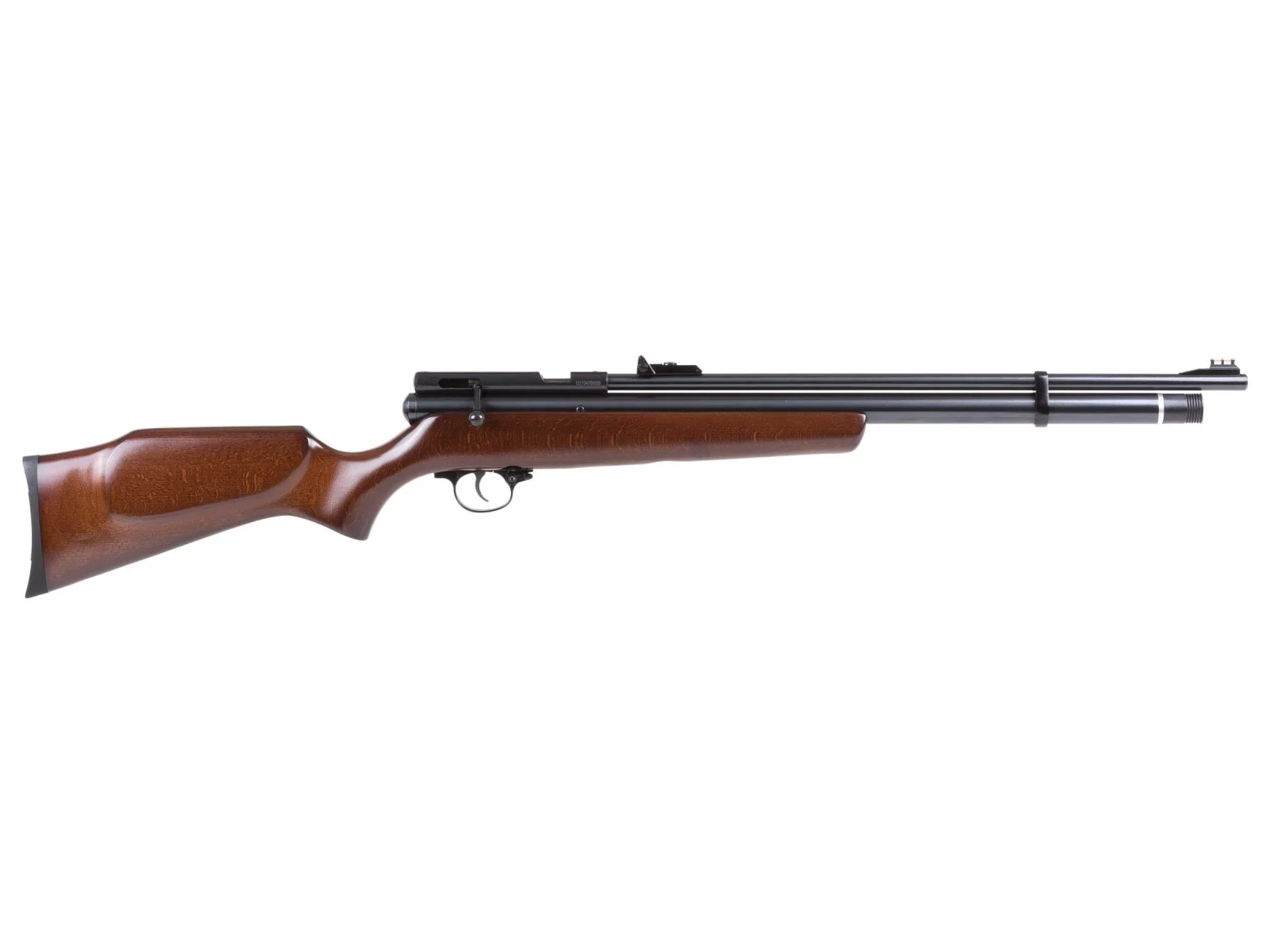
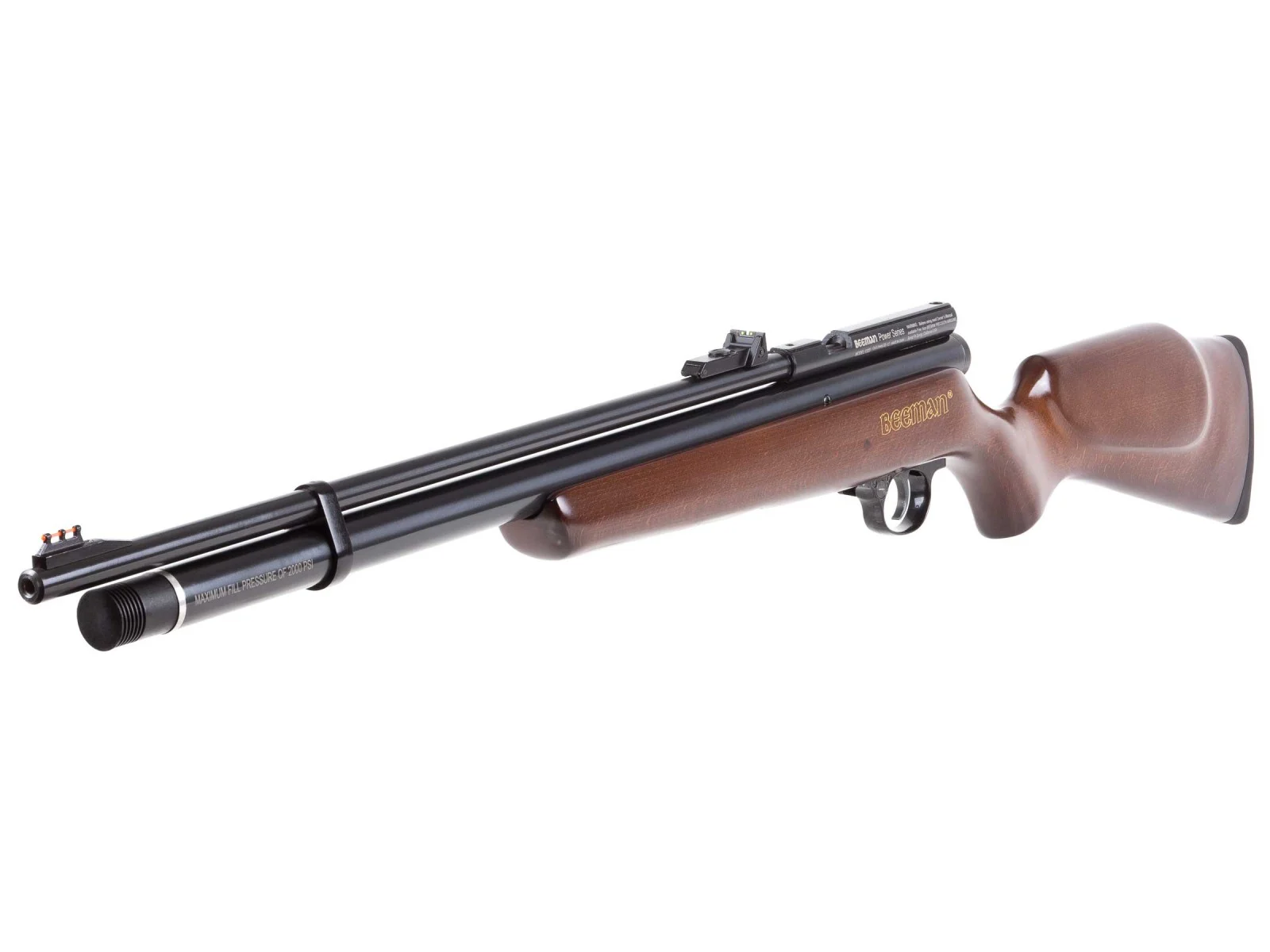
With a look that harkens back to classical styling, the Chief’s hardwood stock offers a lot to love over its synthetic counterparts. Each stock is proudly embossed with yellow-hued Beeman logo. This airgun steps up the game with an adjustable 2-stage trigger—a great feature for an entry level PCP. For sighting, shooters can use the included fiber optic sights or mount their optics to the 11mm Dovetail rail for precision shots.
Filling to 2000 psi, users can easily fill their Chief’s 136cc cylinder with a handpump, or small tank for shot after repeating shot. Load up a pellet and send it spiraling downrange at speeds up to 1000 fps (in .177). Beeman’s specs claim this PCP can shoot up to 50 rounds in .177 or 35 in .22.
If you are looking to break into the exciting world of PCP airgunning, grab the Chief, and be pleased with its performance, quality, and its price!
Helpful resources:
- Learn about hunting with air rifles
- Tips for picking the right airgun for hunting game & pests
- Learn about airgun hunting laws in your state
- Shop related categories: pellet guns, pellet rifles
Beeman QB Chief PCP Air Rifle
- PCP
- Bolt-action
- Single-shot
- Manual safety
- 2-stage adjustable trigger
- Hardwood Stock
- Fiber-optic front and rear sights
- 11mm dovetail
- Rifled barrel
- 2,000 psi fill pressure
- 136cc cylinder
- Up to 50 shots per fill in .177 / 35 shots in .22 caliber
- Air reservoir ends with a male quick-disconnect Foster fitting for fast refills (requires a female Foster quick-disconnect adapter to fill from a scuba tank or hand pump)
Beeman QB Chief PCP Air Rifle – Technical Pre-Charged Pneumatic Overview
Beeman QB Chief Architecture, PCP Engineering, Caliber Options, Accuracy, and Related Beeman Terminology
Beeman
beeman represents a broad airgun brand covering several propulsion systems, including spring-piston, gas-ram, CO₂, and pre-charged pneumatic designs.
Beeman Company
The phrase beeman company refers broadly to Beeman Precision Airguns and its wider catalog rather than one specific model.
Beeman Air Rifles
beeman air rifles include numerous configurations, meaning specifications should always remain model-specific.
Beeman Air Guns
The phrase beeman air guns covers both rifles and pistols using several different power systems.
Beeman QB Chief PCP Air Rifle
The Chief is a single-shot bolt-action PCP platform with a 2,000 PSI operating system, hardwood stock, rifled steel barrel, adjustable trigger, pressure gauge, open sights, and dovetail scope mounting interface.
PCP Air Rifle
A pcp air rifle stores compressed air in an onboard reservoir before use.
This differs fundamentally from spring-powered designs because propulsion energy does not come from a mainspring during each firing cycle.
Precharged Pneumatic
precharged pneumatic describes the Chief’s operating architecture.
Because compressed air drives the projectile, there is little mechanical recoil compared with traditional spring-piston designs.
PCP Rifle
The phrase pcp rifle broadly describes equipment built around the same reservoir-based operating principle.
.22 Air Rifle
The .22 configuration uses 5.5 mm pellets and is currently rated by Beeman at up to 830 fps.
PCP Air Rifle 22 Cal
The phrase pcp air rifle 22 cal accurately describes the .22 version of the Chief.
22 Caliber Pellet Gun
The phrase 22 caliber pellet gun is a broader description of equipment firing .22-caliber airgun pellets.
22 Cal Air Rifle 1400 FPS
The phrase 22 cal air rifle 1400 fps should not be applied to this platform. Beeman currently specifies approximately 830 fps for the Chief .22 configuration.
High Power Pellet Gun
The phrase high power pellet gun is broad marketing terminology and should not replace verified manufacturer specifications.
Beeman Chief 2
The phrase beeman chief 2 generally refers to the Chief II rather than the original Chief.
Beeman Chief II
The beeman chief ii is a separate model family using magazine-fed operation rather than the original Chief’s single-shot architecture. Historical Beeman documentation lists the Chief II as a 10-shot PCP platform.
Beeman Repeater Rifle Sights Magazine
The phrase beeman repeater rifle sights magazine does not accurately describe the original Chief because Beeman currently identifies it as a single-shot bolt-action rifle, not a magazine-fed repeater.
Beeman Commander
The beeman commander belongs to another PCP family.
Historical Beeman documentation lists Commander models with a 10-shot magazine, 3,000 PSI system, and higher manufacturer-rated velocity than the Chief.
Beeman PCP Underlever Air Rifle
The beeman pcp underlever air rifle is another modern Beeman PCP architecture.
Current underlever models operate at 3,000 PSI and use magazine-fed systems, differentiating them clearly from the Chief.
Beeman Underlever
The phrase beeman underlever refers to another cocking configuration rather than the Chief’s traditional bolt action.
Beeman QB78
The beeman qb78 belongs to the CO₂-powered family rather than PCP architecture.
Current Beeman documentation identifies the QB78S as a CO₂-powered, single-shot bolt-action platform.
Beeman RS2
The beeman rs2 belongs to a separate air-rifle family and should not be confused with the Chief.
Sportsman RS2 Series
The sportsman rs2 series likewise represents another platform.
Sportsman RS2 Series Beeman
The phrase sportsman rs2 series beeman is simply an alternative search form for the same separate product family.
Beeman RS2 Sportsman Series
beeman rs2 sportsman series should therefore remain distinct from Chief PCP specifications.
Beeman Sportsman RS2 Series
The beeman sportsman rs2 series is unrelated to the Chief’s compressed-air reservoir system.
Sportsman RS2 Series Price
The phrase sportsman rs2 series price concerns another product’s commercial pricing and does not describe Chief engineering.
Beeman Sportsman RS2 Series Price
Similarly, beeman sportsman rs2 series price should remain separate from technical information about the Chief.
Beeman 1521 Scope
The beeman 1521 scope is an accessory-related search term rather than a defining component of the Chief.
The rifle itself includes dovetail scope mounting provisions.
Beeman 66RL Scope
The beeman 66rl scope likewise belongs to optical-accessory terminology rather than the core rifle configuration.
Air Rifle Marksmanship
air rifle marksmanship with a low-recoil PCP platform emphasizes consistent trigger control, stable sight alignment, appropriate ammunition, and repeatable technique.
Beeman Jungle M16
The beeman jungle m16 is another historical or search-oriented model term and should not be used to describe the Chief.
10613
The term 10613 corresponds to a different Beeman break-barrel model rather than this PCP rifle.
1019X Gun
The phrase 1019x gun is another model-related search term and should not be treated as a Chief specification without dedicated documentation.
Beeman Broward
The phrase beeman broward does not identify a defining technical feature of the Chief and should remain contextual rather than being presented as a product attribute.
Beeman BP50
The beeman bp50 belongs to another Beeman platform family.
Beeman P17
The beeman p17 is an air-pistol design rather than a PCP rifle.
.177 Air Pistol
A .177 air pistol belongs to a different equipment category from the Chief rifle platform.
Marksman
marksman is historically associated with Beeman/Marksman products but should not be treated as another Chief model name.
Marksman Rifle
The phrase marksman rifle is broad terminology rather than a Chief specification.
Marksman Pistol
A marksman pistol belongs to another product category.
Marksman Slingshot
A marksman slingshot has no mechanical relationship to a pre-charged pneumatic rifle.
Marksman Folding Slingshot
The marksman folding slingshot is likewise an entirely different type of sporting product.
Marksman Slingshot Band Replacement
The phrase marksman slingshot band replacement concerns maintenance of elastic-powered equipment rather than air-rifle servicing.
Beeman Marksman Laserhawk III Slingshot
The beeman marksman laserhawk iii slingshot belongs to the slingshot category rather than pneumatic rifles.
Classic Slingshot
A classic slingshot uses elastic propulsion and is unrelated to PCP engineering.
Crosman Slingshot
A crosman slingshot belongs to another manufacturer and equipment category.
Why the 2,000 PSI System Matters
The Chief uses a 2,000 PSI reservoir system, which is lower than the 3,000 PSI operating pressure used by several newer Beeman PCP models.
The actual reservoir, fittings, gauge, and charging equipment should always remain within manufacturer specifications.
Why the Single-Shot Bolt Action Matters
The Chief uses a traditional single-shot bolt system rather than a magazine.
This produces a straightforward mechanical architecture with fewer feeding components.
The current manufacturer specification confirms single-shot operation in both major calibers.
Why the Rifled Steel Barrel Matters
Beeman specifies a rifled steel barrel on the Chief.
Rifling provides rotational stabilization to the pellet, while barrel condition, projectile consistency, sight stability, and pressure consistency contribute to overall precision.
Why the Adjustable Trigger Matters
The manufacturer lists an adjustable trigger, allowing the rifle’s control system to be set within its approved operating range.
The current manual specifically warns against unsafe trigger adjustment and unauthorized mechanism changes, reinforcing the importance of keeping adjustments within manufacturer guidance.
Why the Pressure Gauge Matters
The built-in gauge allows the reservoir condition to be monitored.
Because the rifle depends on compressed air, the gauge, seals, reservoir, and filling interfaces should remain in sound condition.
Persistent leakage or damage deserves professional inspection.
Precision Considerations
Practical precision depends on the complete system rather than pressure alone.
Barrel quality, pellet consistency, sight alignment, trigger control, reservoir pressure behavior, and mechanical condition all influence repeatability.
Because the PCP system avoids the pronounced piston movement found in spring-powered designs, the firing cycle is comparatively low in mechanical recoil.
Overall Technical Perspective
The Beeman QB Chief PCP Air Rifle is best understood as a traditional, lightweight pre-charged pneumatic rifle available in .177 and .22 caliber, using a 2,000 PSI reservoir, single-shot bolt action, European hardwood stock, rifled steel barrel, adjustable trigger, pressure gauge, front and rear sights, and scopeable dovetail mounts. Beeman currently rates the .177 version at approximately 1,000 fps with up to 50 shots per fill, while the .22 version is rated around 830 fps with up to 35 shots per fill.
Its defining characteristics are straightforward PCP construction, light overall weight, traditional wood furniture, single-shot operation, and comparatively low recoil. Accurate technical descriptions should therefore keep the Chief separate from Beeman’s spring-powered, CO₂, magazine-fed, underlever, slingshot, and pistol families rather than presenting unrelated search terms as Chief features.
PCP Engineering, Accuracy Characteristics, Handling, Pressure Management, Build Quality, and Practical Performance
A traditional pre-charged pneumatic rifle provides a very different operating experience from a spring-powered platform. Instead of generating energy through a large moving piston during every shot, compressed air is stored inside an onboard reservoir and released through the firing system. This architecture reduces mechanical movement during discharge and creates a comparatively smooth firing cycle. As a result, the design can provide a stable foundation for recreational target shooting where lawful. However, consistent performance still depends on equipment condition, appropriate ammunition, responsible pressure management, correct maintenance, and disciplined handling.
Pre-Charged Pneumatic Architecture
The compressed-air reservoir forms the foundation of the operating system.
Air is stored before use and subsequently released in controlled quantities during operation.
Because the energy source is already contained within the reservoir, the firing cycle does not require the movement associated with a conventional spring powerplant.
Low-Recoil Firing Character
One noticeable characteristic of this architecture is its relatively low mechanical recoil.
The absence of a heavy spring-driven piston reduces movement during discharge.
This can make the platform feel stable and predictable during controlled recreational target use.
Pressure Reservoir
The reservoir must remain structurally sound throughout its service life.
Damage, corrosion, significant impact, or unexplained pressure loss should never be ignored.
Any questionable pressure-containing component deserves professional assessment.
Pressure Monitoring
An integrated gauge provides information about reservoir pressure.
This allows the condition of the stored air supply to be observed without relying entirely on estimation.
The gauge itself should remain readable and physically undamaged.
Pressure Consistency
Consistency within the pneumatic system contributes to predictable operation.
As stored pressure changes during use, performance characteristics may also change.
Users should follow the manufacturer’s specified operating limits rather than attempting to exceed them.
Seal Integrity
Seals play an important role in retaining compressed air.
A healthy system should not experience abnormal or persistent pressure loss during ordinary storage.
Developing leakage can indicate that professional servicing is required.
Filling-System Condition
Any pressure connection should remain clean and free from obvious damage or contamination.
Correctly compatible equipment is essential whenever compressed-air systems are serviced.
Manufacturer instructions should always take priority.
Single-Shot Architecture
The single-shot arrangement keeps the loading mechanism mechanically straightforward.
Without a multi-shot feeding system, fewer components are required around the loading area.
This contributes to the traditional and deliberate character of the platform.
Bolt Operation
The bolt provides a direct mechanical interface for the loading system.
Movement should feel consistent and controlled.
Unexpected resistance, excessive looseness, or developing irregularities should receive inspection rather than being forced.
Breech Condition
The loading area should remain clean and physically sound.
Damage around sealing surfaces or associated components can affect overall consistency.
Aggressive cleaning tools should be avoided unless specifically recommended.
Rifled Barrel
A rifled steel barrel provides rotational stabilization to the appropriate projectile.
The condition of the bore, crown, and surrounding structure contributes to practical precision.
Barrel quality works together with ammunition consistency and sight alignment.
Accuracy Potential
Accuracy should be evaluated through repeatable results rather than isolated performance claims.
A stable pneumatic firing cycle provides a strong foundation, but the barrel, trigger, ammunition, sights, environmental conditions, and user technique remain important.
No single component determines the final result.
Ammunition Consistency
Different projectiles can behave differently even when they share the correct caliber.
Weight, dimensions, manufacturing quality, and physical condition can influence consistency.
Only appropriate ammunition should be used.
Trigger Characteristics
A predictable trigger can support consistent recreational target use.
Smooth control reduces unnecessary disturbance immediately before discharge.
Any adjustment should remain within manufacturer specifications.
Trigger Consistency
The trigger should behave similarly from one cycle to another.
Unexpected changes in movement, resistance, or release characteristics deserve professional attention.
Internal modifications should not be used as a shortcut for maintenance.
Safety Mechanism
The safety system provides an additional mechanical safeguard.
However, it should never replace responsible handling.
The equipment should always be treated as capable of discharge.
Hardwood Stock
Traditional wooden furniture gives the platform a classic appearance.
The stock also provides the primary interface between the mechanical action and the user.
Its condition contributes to both structural stability and handling comfort.
Stock Ergonomics
Stock geometry influences shoulder placement, cheek position, grip comfort, and overall balance.
A comfortable configuration can make extended recreational sessions more manageable.
Individual proportions naturally influence perceived fit.
Grip Comfort
The grip should allow a natural hand position without excessive pressure.
A comfortable grip can contribute to repeatable handling.
Consistency is generally more useful than unnecessary physical force.
Fore-End Support
The forward stock provides another stable contact area.
Its shape contributes to overall balance and control.
Because the pneumatic firing cycle has relatively little mechanical movement, users may find the platform less technique-sensitive than many spring-powered alternatives.
Weight Distribution
A balanced rifle can feel stable without becoming excessively cumbersome.
The relationship between the barrel, reservoir, action, and stock determines how the mass is distributed.
Personal preference remains an important consideration.
Open Sights
Traditional open sights provide a straightforward aiming system.
They allow recreational use without requiring additional optical equipment.
Sight condition and secure mounting remain important for consistent results.
Optical Compatibility
A mounting interface allows compatible sighting equipment to be installed where appropriate.
Any accessory should fit securely without damaging the mounting surface.
Correct installation is more important than unnecessary complexity.
Practical Precision
Practical precision comes from the complete relationship between barrel quality, ammunition, trigger control, sight stability, pressure consistency, and user technique.
A low-recoil system reduces one source of mechanical disturbance but does not eliminate the need for disciplined operation.
Shot-to-Shot Behavior
A properly functioning pneumatic system should provide reasonably predictable behavior.
Significant unexplained changes in sound or performance deserve investigation.
Persistent irregularity should not simply be accepted as normal aging.
Noise Characteristics
Compressed-air equipment still produces audible sound during operation.
It should not automatically be considered silent.
Facility requirements and appropriate hearing considerations should therefore be respected.
Mechanical Simplicity
A single-shot pneumatic design contains fewer feeding components than many repeating systems.
This simplicity can make routine inspection relatively straightforward.
However, the pressure system introduces its own maintenance requirements.
Exterior Metal Care
Metal surfaces should remain protected from prolonged moisture and corrosive contamination.
Basic exterior preservation can help maintain the original finish.
Aggressive chemicals should be avoided unless specifically approved.
Wood Care
The stock should remain protected from excessive moisture and extreme heat.
Harsh cleaning chemicals can potentially damage the finish.
Ordinary careful handling is generally sufficient for routine preservation.
Storage Considerations
Storage should be secure, dry, and compliant with applicable requirements.
The equipment should remain protected from unauthorized access and accidental physical damage.
Pressure-system storage should follow manufacturer instructions.
Transportation
Transportation should occur with the equipment unloaded and appropriately secured.
A protective case can reduce scratches and impact damage.
Applicable local requirements should always be followed.
Periodic Inspection
Owners should periodically examine the stock, barrel, sights, bolt, pressure gauge, visible seals, exterior surfaces, and accessible fasteners.
Early recognition of developing problems can simplify maintenance.
Professional Servicing
Compressed-air systems operate under substantial pressure.
Reservoir disassembly, valve work, and significant internal servicing should therefore be handled by someone with appropriate technical knowledge.
Improvised repair can create unnecessary risk.
Long-Term Reliability
A well-maintained pneumatic platform can provide a long service life.
Reliability depends on healthy seals, a sound reservoir, consistent mechanical operation, suitable storage, and timely professional servicing.
Preventive care remains preferable to waiting for complete failure.
Overall Practical Assessment
This traditional pre-charged pneumatic platform combines a smooth firing cycle, low mechanical recoil, straightforward single-shot operation, rifled-barrel construction, wooden furniture, pressure monitoring, and uncomplicated handling. These characteristics provide a strong foundation for controlled recreational target use where legally permitted.
Its practical quality should be evaluated through consistency rather than headline velocity alone. Reservoir condition, seal health, barrel integrity, trigger behavior, sight stability, stock condition, ammunition uniformity, and maintenance history all contribute to the overall experience. With responsible pressure management, appropriate storage, regular inspection, and professional servicing when required, the design can provide reliable and predictable performance over an extended service life.
Long-Term Reliability, Precision Consistency, Comfort, Durability, Maintenance, and Everyday Ownership
A well-designed pre-charged pneumatic platform combines mechanical simplicity with a smooth firing cycle and relatively straightforward everyday operation. Its compressed-air system removes the pronounced internal piston movement associated with traditional spring-powered designs, while the single-shot arrangement keeps the loading mechanism uncomplicated. These characteristics can provide a predictable ownership experience, particularly for controlled recreational target use where legally permitted. Nevertheless, long-term performance depends on responsible care, suitable storage, periodic inspection, pressure-system integrity, and professional servicing whenever internal problems develop.
Long-Term Performance
Performance should remain reasonably predictable when the mechanical and pneumatic systems are maintained appropriately.
Gradual wear can occur throughout the service life of any mechanical product. Seals, moving components, fasteners, pressure interfaces, and external finishes can all change with age and use.
Therefore, long-term condition matters just as much as original construction quality.
Consistency Over Time
Consistency is one of the most useful indicators of mechanical health.
The equipment should generally retain a familiar operating feel during ordinary use. Major unexplained changes in sound, trigger behavior, bolt movement, pressure retention, or overall performance deserve attention.
Recognizing changes early can prevent more extensive problems.
Smooth Firing Character
A pneumatic powerplant produces relatively little mechanical movement during discharge.
This gives the platform a smooth character compared with systems containing a large moving piston.
However, low recoil should not be confused with guaranteed precision.
Precision Foundation
Practical precision develops from several factors working together.
Barrel condition, ammunition uniformity, trigger consistency, sight stability, pressure behavior, environmental conditions, and user technique all contribute.
When these elements remain consistent, the equipment provides a stronger foundation for repeatable recreational target performance.
Barrel Integrity
The barrel should remain protected from unnecessary impact and corrosion.
Damage near the muzzle or other critical areas can influence consistency.
Any suspected structural problem should receive appropriate professional evaluation.
Bore Condition
Internal barrel condition also contributes to predictable operation.
Excessive or inappropriate cleaning should be avoided.
Maintenance procedures should follow manufacturer recommendations rather than aggressive routines developed for unrelated equipment.
Trigger Feel
A consistent trigger provides useful mechanical feedback.
The user becomes familiar with its normal movement and release characteristics over time.
Unexpected changes can therefore provide an early indication that inspection may be required.
Sight Stability
Stable sights are essential when evaluating practical consistency.
Loose mounting components can create apparent accuracy problems even when the barrel and pressure system remain healthy.
The sighting arrangement should therefore be included in periodic inspections.
Stock Comfort
The wooden stock provides the primary physical interface between the user and the mechanical action.
Its shape influences shoulder placement, grip position, cheek contact, and overall handling.
Comfortable geometry can make longer recreational sessions more manageable.
Balance
Balance can be just as important as total weight.
A well-distributed platform can feel stable without becoming excessively awkward.
Individual preferences vary, so perceived handling quality should always be considered subjective.
Single-Shot Simplicity
The single-shot arrangement creates a deliberate operating rhythm.
It also eliminates some of the additional feeding components found in repeating systems.
Fewer components can simplify certain aspects of inspection and maintenance.
Bolt Condition
Bolt movement should remain reasonably smooth and consistent.
Unexpected resistance, unusual looseness, or physical damage should not be ignored.
Forcing a component that is behaving abnormally can potentially create additional problems.
Breech Inspection
The loading area should remain clean and free from visible damage.
Sealing surfaces and surrounding components are important to the pneumatic system.
Questionable wear deserves professional attention.
Reservoir Integrity
The pressure reservoir is one of the most important structural components.
It should remain protected from significant impact, corrosion, unauthorized modification, and unsuitable repair.
Any pressure-containing component with questionable condition should be professionally assessed.
Pressure Retention
Healthy seals and valve components help the system retain pressure appropriately.
Persistent unexplained pressure loss may indicate a developing leak.
Repeatedly compensating for leakage without addressing the underlying cause is not a substitute for servicing.
Gauge Condition
The integrated pressure indicator provides useful information about the reservoir.
Its face should remain readable and physically undamaged.
An obviously malfunctioning gauge should be replaced or serviced appropriately rather than relied upon.
Seal Longevity
Seals are wear components.
Age, storage conditions, contamination, and repeated use can gradually affect their condition.
Replacement intervals depend on actual condition rather than one universal timetable.
Environmental Effects
Temperature and storage conditions can influence compressed-air equipment.
Extreme heat, persistent humidity, and corrosive environments should be avoided.
Stable indoor conditions are generally preferable for long-term preservation.
Moisture Protection
Moisture can affect external metal surfaces and other components.
Equipment should not remain unnecessarily wet during storage.
Exterior surfaces should be inspected after exposure to unfavorable conditions.
Exterior Finish
A good exterior finish provides both appearance and protection.
Routine preservation can help prevent corrosion and premature deterioration.
Harsh chemicals should not be used unless they are specifically suitable for the materials involved.
Wooden Furniture Care
Wood should remain protected from excessive moisture, extreme heat, and aggressive cleaning products.
Minor handling marks can occur naturally over time.
Structural cracks or significant swelling deserve more attention than ordinary cosmetic wear.
Fastener Monitoring
Visible mounting components should remain appropriately secure.
However, unnecessary tightening should be avoided.
Excessive force can damage threads, mounting points, or wooden components.
Cleaning Approach
Maintenance should be purposeful rather than excessive.
Not every component requires frequent cleaning.
Following appropriate manufacturer guidance reduces the likelihood of unnecessary intervention.
Pressure-System Maintenance
Compressed-air components require particular respect because they operate under substantial pressure.
Internal valve work, reservoir repair, and other pressure-system servicing should be performed by appropriately qualified personnel.
Improvised modification can create serious hazards.
Storage Preparation
Before extended storage, the equipment should be clean, unloaded, and appropriately secured.
The environment should remain reasonably dry and temperature stable.
Pressure-related storage procedures should follow manufacturer guidance.
Secure Storage
Security is part of responsible ownership.
The equipment should remain inaccessible to unauthorized users and protected from accidental handling.
Applicable local storage requirements should always be observed.
Transportation Protection
A suitable protective case can reduce impact damage and scratches during transportation.
The equipment should remain unloaded and properly secured.
Local transportation requirements should be followed wherever it is carried.
Periods of Inactivity
Long periods without use do not guarantee unchanged condition.
Seals and other components can age even while equipment remains stored.
A careful inspection is appropriate before returning it to normal recreational use.
Professional Inspection
Professional assessment is particularly valuable when unusual pressure loss, damaged components, inconsistent operation, or uncertain maintenance history is present.
A knowledgeable technician can examine areas that cannot be evaluated adequately from the exterior.
Replacement Components
Any replacement component should correspond to the correct model and configuration.
Visual similarity does not guarantee compatibility.
Using appropriate parts helps preserve the original engineering characteristics.
Avoiding Unnecessary Modification
A factory-designed pneumatic system represents a coordinated combination of pressure, valve behavior, mechanical dimensions, and structural components.
Unnecessary alteration can affect reliability or safety.
Preserving the intended configuration generally simplifies future servicing.
Ownership Costs
Long-term ownership includes more than the original equipment itself.
Maintenance, compatible pressure equipment, replacement seals, professional servicing, storage protection, and appropriate sighting equipment may contribute to overall cost.
Planning for these requirements supports responsible ownership.
Recreational Suitability beeman 1783 silver bear
The smooth firing cycle and straightforward operation make this type of platform well suited to deliberate recreational target activities where lawful.
It should always be used within an appropriate controlled environment.
Facility rules and applicable regulations remain important.
Durability
Durability results from both engineering and care.
Strong original construction cannot completely compensate for poor storage, corrosion, physical abuse, or neglected maintenance.
Conversely, sensible care can significantly support long-term serviceability.
Overall Ownership Perspective
The platform’s strongest characteristics come from its smooth pneumatic operation, straightforward single-shot mechanism, traditional stock design, relatively low mechanical recoil, and uncomplicated handling. These qualities create a predictable recreational experience without the distinctive piston movement associated with spring-powered alternatives.
Long-term satisfaction ultimately depends on condition and care. Protecting the reservoir, monitoring pressure retention, maintaining the stock and exterior metalwork, keeping sighting components secure, recognizing unusual mechanical behavior, and obtaining professional servicing when required can help 1783 silver bear beeman preserve reliability. With responsible storage, appropriate maintenance, and lawful use in controlled environments, a well-maintained pneumatic platform can remain consistent and serviceable throughout an extended ownership period.
Be the first to review “Beeman QB Chief PCP Air Rifle”
Related products

Beeman Air Rifle


Beeman Air Rifle
Beeman Air Rifle


Beeman Air Rifle
Reviews
There are no reviews yet.