

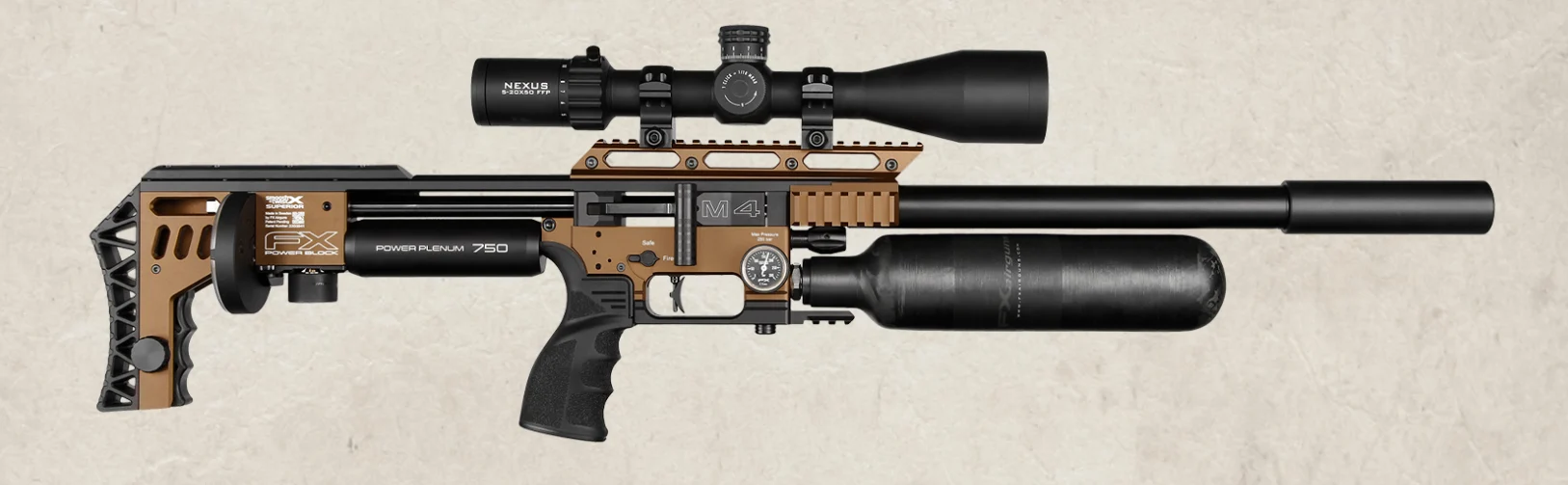
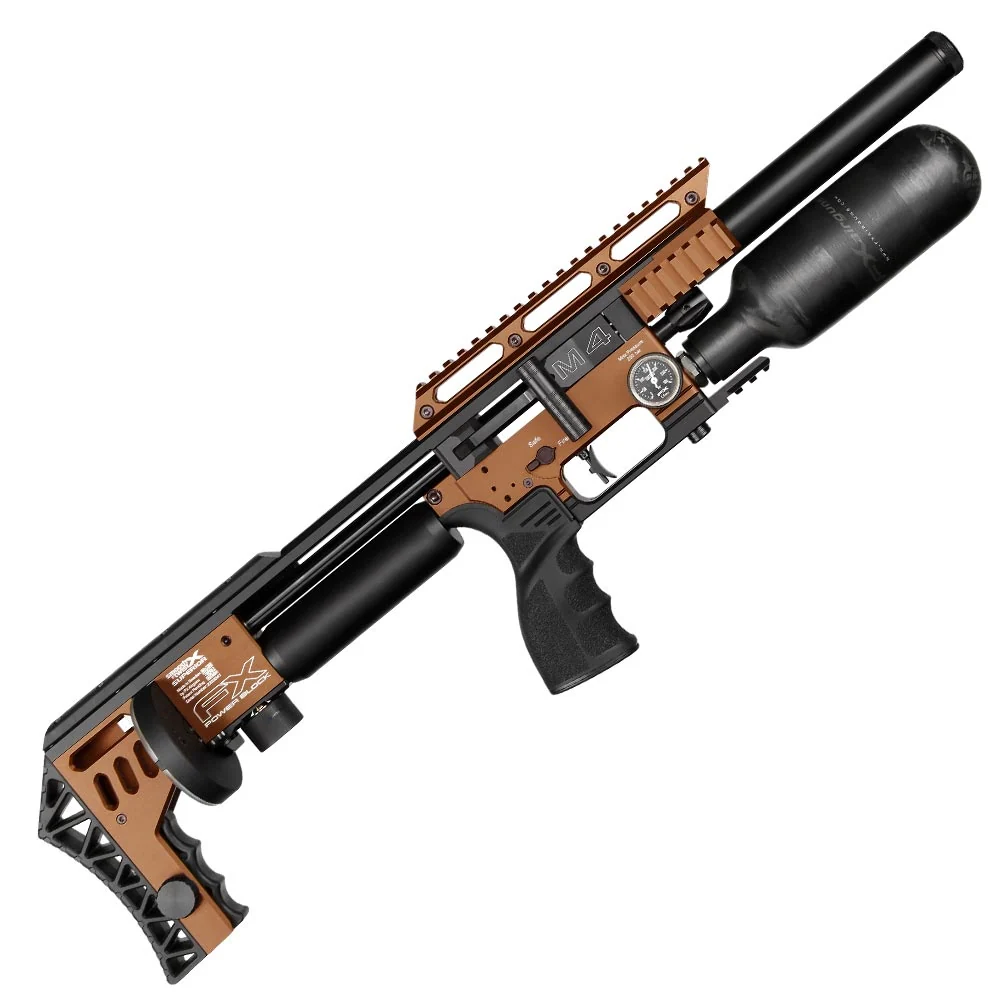

FX Impact M4 Standard Copper
€1,999.00
FX Impact M4 Standard Copper
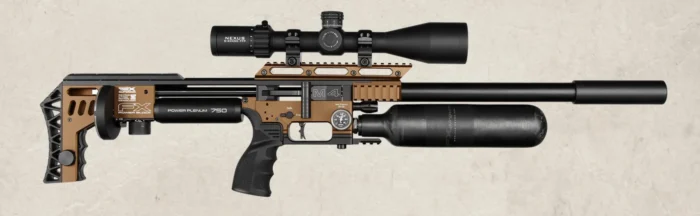
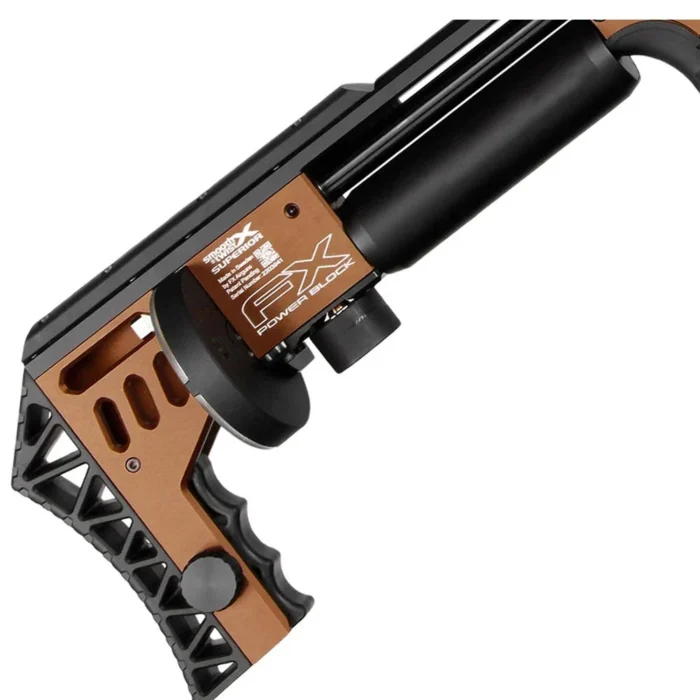
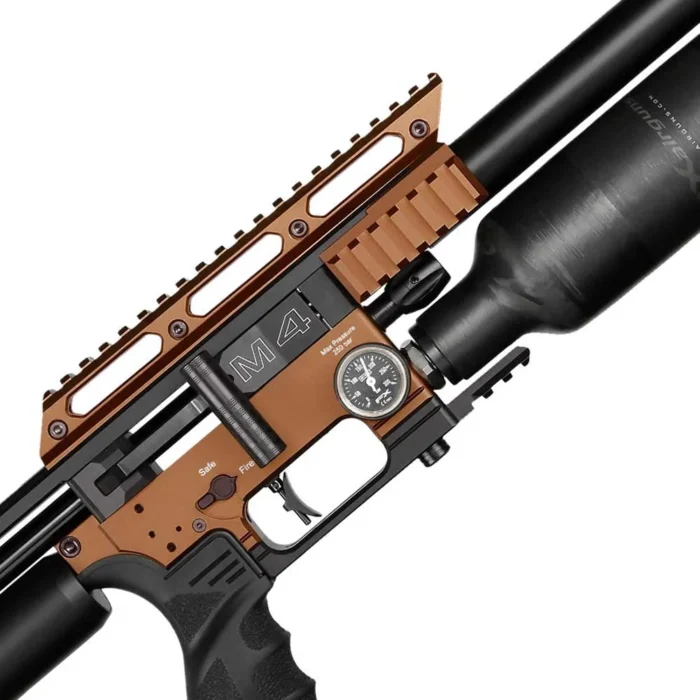
The FX Impact M4 is the latest iteration in the hugely successful Impact series, pushing precision and shooting capability in the airgun industry. This airgun is available in two distinct colours – the original all-black version or the bronze version to give it just that little extra. As well as this, the gun is available in multiple configurations, including a compact and standard version, sniper, or extended for every use.
The Impact has a new design throughout without deviating too far from the M3. This has allowed improvements in all areas without changing the overall aesthetics or feel of the system.
The FX Impact M4 has a completely redesigned high-capacity magazine which are now made from much stronger materials and include a new internal mechanism to ensure the inner drum will rotate smoother even when loading the heaviest slugs available on the market. The Impact M4 also now comes standard with a new brass piston regulator that is stronger and has faster refresh rates. A far more consistent and easily handled higher bottle pressures with a max pressure of 170bar.
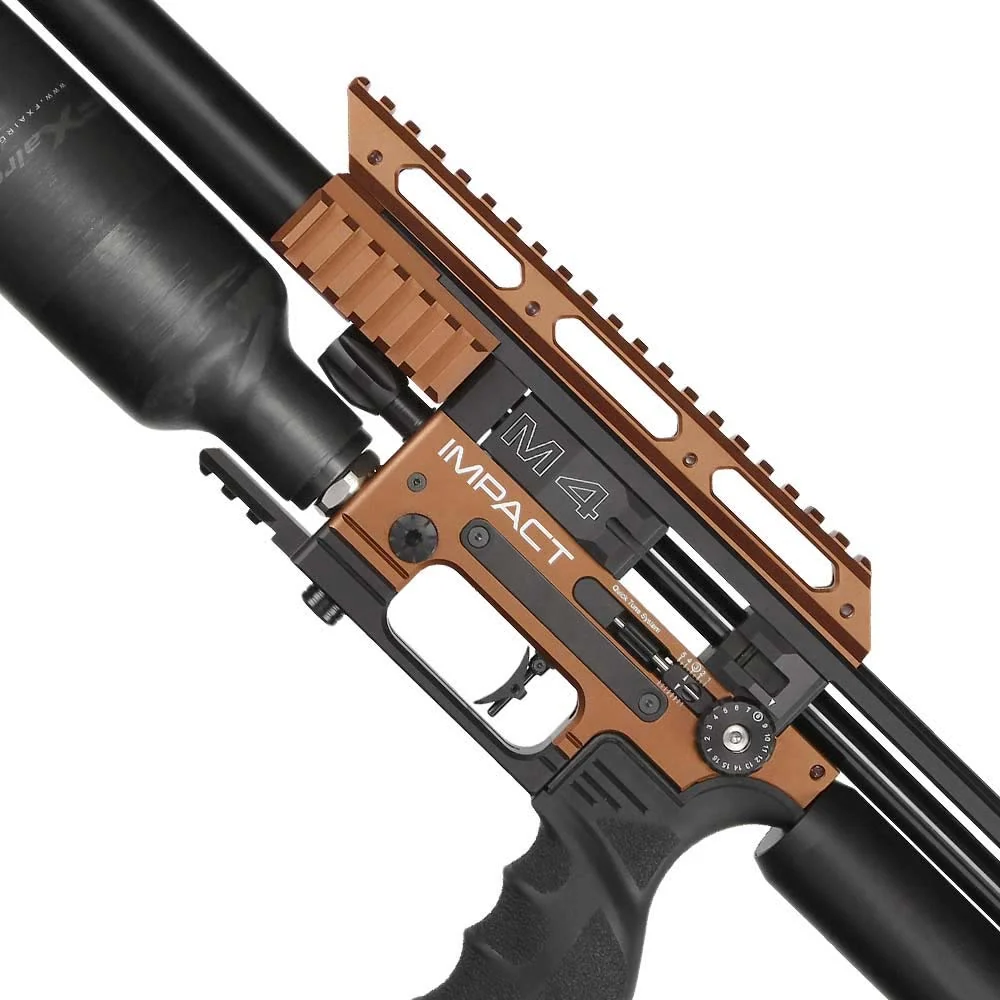
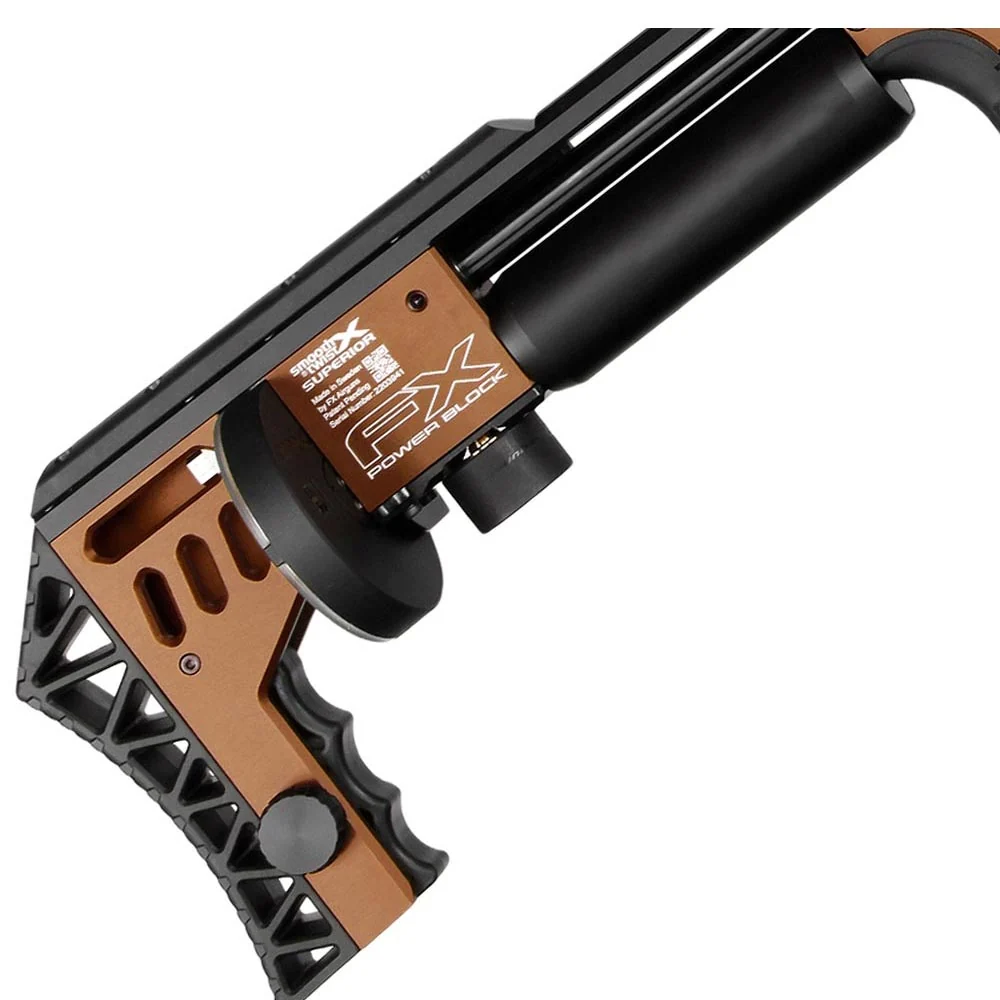
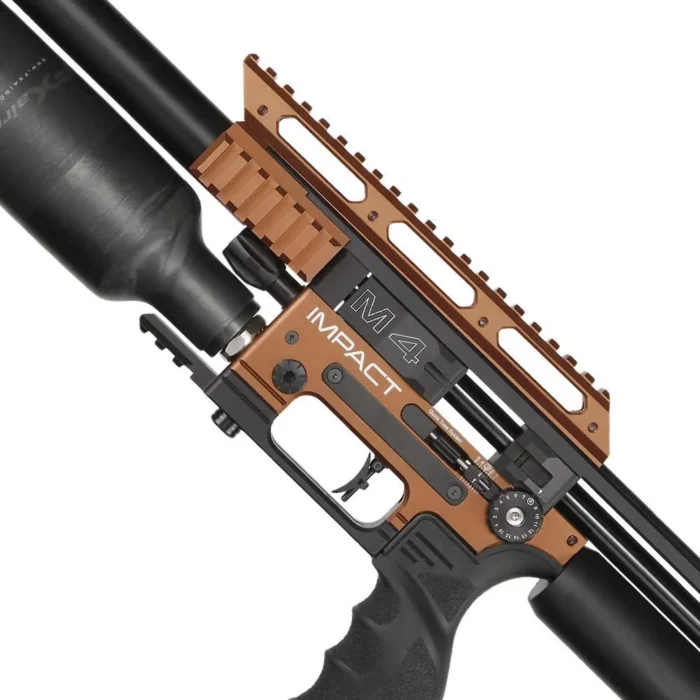
To further enhance the performance and shooting experience, FX have improved the overall rigidity of the Impact M4 by designing a new top plate that is much stronger and thicker which brings more strength and rigidity throughout the entire platform. The new QS trigger unit and top rail introduced have increased the comfort of shooting the Impact, as well as the all new FX grip that is more defined and comfortable to grip to.
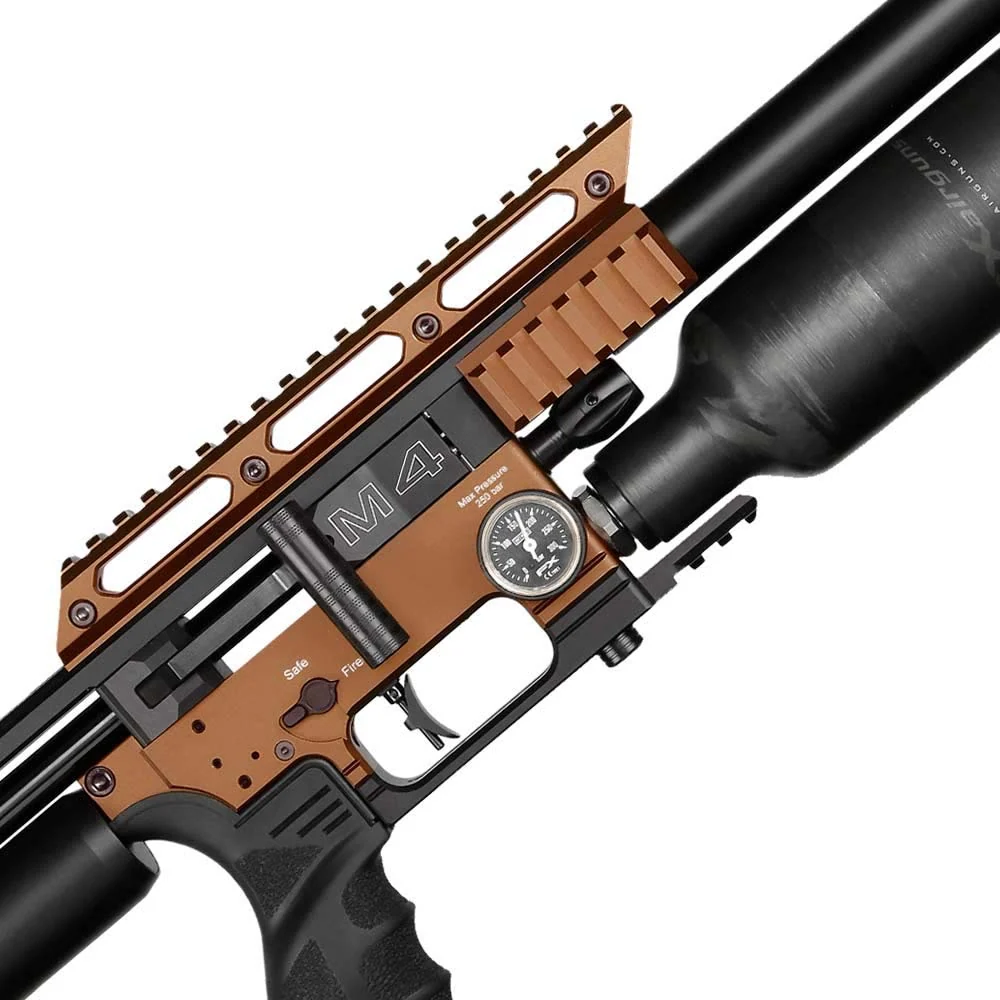
The first major upgrade to the Impact M4 is a completely new trigger system. The FX quick set trigger has been adjusted to allow the user to change from standard, hunter, or match-grade, all with the change of one screw.
Scopes not included,
Specifications
| Calibre | .177 .22 |
| Length | 640mm (25″) – Compact 860mm (34″) – Standard |
| Weight | 2.8kg (6.10lbs) – Compact 3.1kg (6.85lbs) – Standard |
| Barrel Length | 500mm – Compact 600mm – Standard |
| Barrel | Superior STX |
| Fill Pressure | 250 Bar |
| Air Capacity | 300cc – Compact 480cc – Standard |
| Plenum | Sub12 Limited Plenum |
| Regulator | Brass Piston AMP MKII |
| Trigger | Quick Set Trigger |
| Grip | FX UG1 Grip AR15 Style |
| Safety | Switch Style |
| Optics Rail | 30MOA Picatinny |
| Cocking System | Reversible Smooth Side Lever |
| Magazine | 34 Shots – .177 28 Shots – .22 |
| Shot Capacity | 475 Shots – .177 500 Shots – .22 |
| Energy | Up to 12ft/lbs |
FX Impact M4 Standard Copper PCP Air Rifle – Premium Swedish Engineering, Advanced Precision Technology and Exceptional Sporting Performance
FX Impact M4 Standard Copper – Advanced Swedish Engineering, Precision Manufacturing and Premium Sporting Technology
The FX Impact M4 Standard Copper represents a sophisticated combination of Swedish manufacturing, advanced pneumatic engineering, and contemporary sporting design. As the fourth generation of the renowned series, this premium rifle incorporates significant mechanical refinements while retaining its recognizable bullpup architecture.
Featuring a 600mm Superior Smooth Twist X barrel, a 480cc carbon-fiber air reservoir, and an improved aluminum chassis, the Standard configuration combines precision manufacturing with modern structural design.
Furthermore, the upgraded AMP MKII brass-piston regulator, Power Plenum 750, and Quick Set Trigger reflect the manufacturer’s continued investment in mechanical innovation.
The rifle measures approximately 860mm overall and weighs 3.1kg without additional accessories.
Additionally, the ergonomic UG1 pistol grip, reversible side lever, adjustable rear support, and redesigned rotary magazine contribute to its technical sophistication.
The distinctive Copper finish creates a premium visual contrast between the metallic chassis and darker mechanical components.
Consequently, this configuration appeals to experienced sporting enthusiasts who appreciate precision engineering, advanced materials, and contemporary industrial styling.
Its distinguishing features also make it relevant to customers researching professional target equipment, premium sporting technology, and modern compressed-air systems.
FX Airguns Sverige – Swedish Manufacturing Excellence
Searches for fx airguns sverige, fx airguns sweden, fx airguns, and fxairguns reflect widespread interest in the manufacturer’s Swedish engineering heritage.
Customers exploring fx air guns, fx air rifle, fx outdoors, fx usa, and fx airguns usa will encounter several different sporting configurations.
Meanwhile, the abbreviated brand name fx appears throughout the manufacturer’s international product range.
The company’s engineering approach combines specialized pneumatic technology with precision-manufactured components and modern exterior designs.
However, specifications differ between individual models and regional versions.
Therefore, customers should confirm the exact configuration before purchasing.
FX Impact M4 – Fourth-Generation Engineering and Mechanical Innovation
The search terms fx impact m4, impact m4, fx m4, impact m4 air rifle, and fx impact air rifle identify the manufacturer’s fourth-generation sporting platform.
The Standard Copper version incorporates a redesigned upper chassis, updated Quick Set Trigger, improved regulator, and modern ergonomic grip.
Furthermore, the manufacturer has refined the magazine construction and supporting components.
The search phrase impact m4 500mm generally concerns the shorter Compact configuration, whereas the Standard version uses a 600mm barrel.
Meanwhile, impact m4 ballistic coefficient concerns the aerodynamic properties of a projectile rather than a permanent specification of the rifle.
Customers researching fx impact m4 for sale should verify the exact caliber, factory configuration, and regional legal requirements.
FX Impact M3 – Comparing Previous-Generation Technology
The fx impact m3, f x impact m3, f x impact, fx impact, fx m3, and fx m3 airgun search expressions refer to earlier versions within the same product family.
Additional searches include fx impact m3 air rifle, fx impact m3 .22cal air rifle, and fx impact m3 .22cal air rifle. 600mm barrel.
Although the previous generation shares recognizable design characteristics, the newer configuration introduces revisions to the upper structure, trigger, regulator, and magazine.
Consequently, owners should not assume complete component compatibility between generations.
FX DRS Tactical, FX DRS Classic and FX DRS Pro
The fx drs, fx drs tactical, fx drs classic, and fx drs pro belong to a different sporting product family.
Customers researching the fx drs air rifle will encounter distinct exterior furniture and mechanical arrangements.
Unlike these alternatives, the Standard Copper model features a bullpup configuration with a carbon-fiber bottle and precision-machined chassis.
Furthermore, the two product families differ in dimensions and factory-approved specifications.
FX Panthera MkII, FX Leopard and Specialist Sporting Alternatives
The FX Panthera MkII, fx panthera, and fxpanthera searches relate to competition-oriented equipment within the manufacturer’s wider collection.
Similarly, fx leopard, fx leopard airgun, and fx leopard air rifle identify another specialized product family.
Additional expressions such as fx dynamic and fx dynamics appear during broader equipment research.
However, these models differ in their structural architecture, overall dimensions, and intended sporting characteristics.
Consequently, verified technical specifications should guide comparisons.
FX Wildcat, FX Maverick, FX Crown and FX Dreamline
The manufacturer’s wider collection includes fx wildcat, fx wildcat mk3, fx maverick, fx crown, fx crown mk2, fx crown mkii, and fx crown mkll.
Furthermore, fx dreamline and fx dreamline classic represent modular sporting designs with different exterior configurations.
The fx king search also appears among customers researching premium equipment.
Although these platforms share Swedish engineering heritage, their construction and approved specifications differ.
Therefore, buyers should distinguish the Standard Copper configuration from unrelated models.
PCP Airguns – Understanding Compressed-Air Sporting Technology
The expressions pcp airguns, pcp air gun, air rifle, air gun, air guns, and pellet gun describe a broad category of compressed-air sporting equipment.
The Scandinavian term luftgevær also refers to an air rifle.
Pre-charged pneumatic systems operate using compressed air stored inside a dedicated pressure reservoir.
The Standard Copper incorporates a 480cc carbon-fiber bottle rated for a maximum fill pressure of 250 bar.
Furthermore, the separate regulating system manages pressure within its manufacturer-approved operating limits.
However, reservoir pressure and regulator pressure represent different specifications and should never be confused.
FX Chronograph, FX Pocket Chronograph and Ammunition Information
The fx chronograph and fx pocket chronograph refer to instruments used for measuring projectile velocity during authorized sporting equipment testing.
Meanwhile, fx pellets and fx halo slugs concern ammunition-related searches.
Customers exploring high end air rifles should evaluate manufacturing quality, documentation, compatibility, and available technical support.
However, ammunition suitability depends on the factory configuration and applicable legal requirements.
Consequently, owners should consult official recommendations rather than assume universal compatibility.
FX Impact M4 Standard Copper – Important Technical Specifications
- Manufacturer: FX Airguns, Sweden
- Model: Impact M4 Standard
- Finish: Copper
- Operating system: Regulated pre-charged pneumatic
- Manufacturer-listed calibers: .177 (4.5mm), .22 (5.5mm), .25 (6.35mm), .30 (7.62mm), .35 (9mm), subject to regional availability
- Barrel: 600mm Superior Smooth Twist X
- Overall length: Approximately 860mm
- Unscoped weight: Approximately 3.1kg
- Air reservoir: 480cc carbon-fiber bottle
- Maximum bottle fill pressure: 250 bar
- Regulator: AMP MKII brass-piston design
- Maximum regulator working pressure: 170 bar
- Plenum: Power Plenum 750 in full-power configurations
- Trigger: Quick Set Trigger
- Action: Reversible side lever
- Magazine: Redesigned high-capacity rotary system
- Common magazine capacities: 34 (.177), 28 (.22), 25 (.25), 23 (.30), 18 (.35), subject to model version
- Grip: FX UG1 ergonomic AR-style
- Rear support: Height-adjustable recoil pad
- Safety: Manual switch-style
- Optics interface: Adjustable 30 MOA Picatinny rail
- Pressure monitoring: Dual WIKA gauges
- Air connection: Foster quick-disconnect
- Exterior construction: Precision-machined aluminum chassis
- Additional features: Integrated barrel shroud and accessory mounting interfaces
- Regional configuration: Full-power and restricted-power variants may have different internal specifications
Why Choose the FX Impact M4 Standard Copper?
The Standard Copper configuration combines sophisticated Swedish manufacturing, a 600mm precision barrel, modern pneumatic technology, and a strengthened fourth-generation chassis.
Its AMP MKII regulator, redesigned trigger, substantial carbon-fiber reservoir, and adjustable ergonomic components demonstrate the manufacturer’s emphasis on engineering refinement.
Furthermore, the distinctive Copper finish provides a recognizable alternative to conventional black sporting configurations.
For enthusiasts who appreciate contemporary industrial styling, precision manufacturing, and specialized mechanical technology, this model offers a premium combination of verified engineering features and long-term ownership considerations.
Ultimately, its appeal lies in the integration of structural quality, technical sophistication, modern materials, and refined Swedish industrial design.
Advanced Swedish Engineering, Premium Copper Construction, Precision Manufacturing, Ergonomic Comfort and Long-Term Ownership Value
2.1 Advanced Swedish Engineering and Manufacturing Excellence
The fourth-generation sporting platform demonstrates a sophisticated approach to Scandinavian engineering, modern industrial manufacturing, and precision mechanical construction. Its development reflects the manufacturer’s emphasis on structural integrity, refined component integration, and dependable material quality.
Rather than concentrating exclusively on exterior appearance, the design incorporates specialized pneumatic mechanisms within a carefully organized supporting structure. Every major assembly contributes to the overall mechanical architecture.
Furthermore, modern machining methods allow manufacturers to produce complex metallic components with consistent dimensions and accurately formed connection points. These manufacturing characteristics contribute to the intended relationship between interacting mechanical assemblies.
However, attractive exterior finishing cannot independently establish the quality of internal construction. Material properties, alignment, assembly standards, and long-term serviceability remain equally important.
The equipment combines contemporary engineering with recognizable industrial styling, creating a distinctive identity within the premium sporting category.
Additionally, its design reflects the manufacturer’s continued development of established mechanical technology through structural improvements and updated components.
For enthusiasts interested in technical craftsmanship, the construction offers an appealing combination of mechanical sophistication and modern manufacturing principles.
Ultimately, its value lies in the thoughtful integration of advanced materials, precision engineering, and practical design.
2.2 Reinforced Fourth-Generation Chassis and Structural Integrity
The redesigned chassis forms the structural foundation of the equipment. Its construction incorporates a strengthened upper section intended to provide additional rigidity compared with earlier generations.
Furthermore, the supporting framework accommodates the principal mechanical assemblies within a compact configuration.
From an engineering perspective, structural rigidity helps maintain appropriate relationships between interconnected components.
However, stiffness alone does not guarantee superior performance. Material quality, dimensional accuracy, manufacturing consistency, and correct assembly remain essential considerations.
The chassis also contributes to the equipment’s distinctive appearance through carefully defined geometric surfaces and precision-machined structural details.
Additionally, the updated construction reflects the manufacturer’s emphasis on continued mechanical refinement.
The framework must remain in appropriate condition throughout ownership.
Accidental damage, unsuitable modifications, and compromised connections may affect structural integrity.
Consequently, periodic visual inspection and professional assessment remain important whenever unusual wear or visible damage occurs.
The redesigned architecture demonstrates how manufacturers improve established sporting equipment through refinements in component arrangement, structural geometry, and manufacturing methods.
2.3 Premium Aluminum Construction and Material Durability
Aluminum alloys play an important role in contemporary mechanical manufacturing because they provide a favorable combination of strength, relatively low density, and machining versatility.
The supporting structure incorporates carefully manufactured metallic components intended to maintain the relationship between principal mechanical assemblies.
Furthermore, precision machining allows manufacturers to create complex shapes, connection interfaces, and structural surfaces within controlled dimensions.
However, material identification alone cannot establish overall durability.
Alloy composition, structural geometry, surface treatment, and manufacturing quality influence long-term reliability.
Consequently, buyers should consider the complete engineering design rather than assuming every aluminum component offers identical characteristics.
The exterior also requires appropriate maintenance.
Although protective finishing may reduce ordinary environmental deterioration, scratches, abrasion, and accidental impacts remain possible.
Routine cleaning and responsible storage help preserve the original appearance.
The combination of metallic construction and contemporary industrial styling contributes significantly to the platform’s recognizable mechanical identity.
2.4 Superior Barrel Construction and Precision Manufacturing
The specialized barrel system represents an essential component of the equipment’s mechanical architecture.
Its construction requires suitable materials, carefully controlled internal dimensions, and consistent manufacturing procedures.
Furthermore, the barrel must integrate correctly with the surrounding assemblies to maintain the manufacturer’s intended configuration.
The 600mm construction distinguishes this Standard version from shorter alternatives.
However, barrel length alone cannot establish a guaranteed accuracy figure.
Actual results depend on several interacting factors, including approved ammunition, equipment condition, environmental influences, and manufacturing quality.
Consequently, numerical performance claims should rely on controlled testing rather than assumptions based exclusively on barrel dimensions or proprietary technology.
Precision surfaces also require appropriate maintenance.
Unsuitable cleaning products or unauthorized modifications may compromise component condition.
Professional assessment should be obtained whenever suspected damage becomes apparent.
The barrel demonstrates the importance of specialized manufacturing and quality control within modern sporting equipment.
2.5 Carbon-Fiber Air Reservoir and Pressure Vessel Engineering
The carbon-fiber reservoir represents an important part of the pneumatic operating system.
Its construction combines modern composite materials with specialized pressure-vessel technology.
The Standard configuration commonly incorporates a 480cc bottle, although customers should confirm the specifications supplied with their particular equipment.
Furthermore, the reservoir connects to carefully manufactured pneumatic assemblies that must maintain appropriate pressure integrity.
However, reservoir capacity alone cannot establish the exact number of usable discharges.
Actual operating characteristics depend on the approved factory configuration, mechanical condition, and environmental circumstances.
Pressure-containing components require particular care throughout ownership.
Excessive heat exposure, accidental damage, unauthorized modification, and unsuitable repair methods can create serious hazards.
Consequently, any indication of leakage or compromised structural integrity requires qualified professional assessment.
The reservoir illustrates how advanced composite materials contribute to contemporary pneumatic engineering while emphasizing the responsibilities associated with high-pressure equipment.
2.6 AMP MKII Regulator and Internal Pressure Management
The redesigned regulating mechanism contributes significantly to the sophistication of the operating system.
Its purpose involves managing the relationship between stored reservoir pressure and the conditions established by the manufacturer.
Furthermore, the regulator operates alongside specialized valves, seals, and other carefully manufactured components.
These assemblies must function together within their intended mechanical tolerances.
However, regulated operation should not be described as guaranteeing perfectly identical results under every circumstance.
Temperature variation, normal component wear, and manufacturing differences may influence mechanical behavior.
Similarly, adjustable components should not receive unauthorized modifications.
High-pressure systems require specialized technical knowledge and appropriate servicing facilities.
Consequently, inspection and repairs should follow manufacturer-approved procedures.
The integration of these mechanisms reflects the importance of fluid dynamics, precision component manufacturing, and responsible mechanical engineering.
2.7 Power Plenum Architecture and Pneumatic Refinement
The enlarged internal plenum forms an important part of the full-power pneumatic configuration.
Its construction incorporates a specialized chamber integrated with the surrounding pressure-management system.
Furthermore, the assembly demonstrates the manufacturer’s continued development of sophisticated internal mechanisms.
However, regional configurations may incorporate different internal specifications.
Consequently, customers should verify the exact factory version rather than assuming every example contains identical components.
The presence of an enlarged chamber also cannot independently guarantee a particular performance result.
The complete operating system depends on several interacting mechanical elements.
Additionally, internal pressure-containing assemblies require professional servicing.
Unauthorized alterations may compromise structural integrity and introduce unnecessary safety hazards.
The plenum contributes to the technical complexity of the equipment while emphasizing the importance of manufacturer-approved maintenance.
2.8 Quick Set Trigger and Advanced Mechanical Refinement
The redesigned trigger represents an important feature of the fourth-generation mechanical architecture.
Its construction incorporates specialized interacting components intended to operate within the manufacturer’s established specifications.
Furthermore, appropriate material properties, accurate alignment, and consistent manufacturing quality contribute to the intended mechanical characteristics.
However, trigger assemblies remain safety-critical components.
Unauthorized alteration may compromise their operating condition and introduce serious hazards.
Individual preferences concerning mechanical feel also vary considerably.
Consequently, subjective impressions should not replace objective considerations such as safe function, appropriate maintenance, and reliable component condition.
Any unusual behavior requires qualified technical attention.
The trigger contributes to the platform’s overall sophistication while reinforcing the importance of responsible ownership.
2.9 Reversible Side-Lever Mechanism and Accessible Controls
The reversible side-lever arrangement demonstrates the manufacturer’s emphasis on adaptable mechanical construction.
Its design accommodates different user preferences while preserving the equipment’s distinctive exterior appearance.
Furthermore, the mechanism incorporates moving components that require suitable materials, accurate alignment, and consistent manufacturing quality.
However, no moving assembly remains permanently unaffected by wear or environmental contamination.
Dust, moisture, accidental damage, and unsuitable cleaning chemicals may affect exposed surfaces.
Consequently, periodic visual inspection remains valuable.
Unexpected resistance should never be ignored or overcome through excessive force.
Qualified servicing provides the appropriate response to suspected malfunction.
The mechanism illustrates how contemporary industrial design can integrate sophisticated operating controls within a compact structural framework.
2.10 Redesigned Magazine and Internal Mechanical Integration
The updated rotary magazine represents another element of the fourth-generation operating architecture.
Its construction incorporates carefully manufactured components intended to maintain the manufacturer’s specified configuration.
Furthermore, the assembly connects with surrounding mechanisms through accurately defined interfaces.
However, compatibility should not be assumed across different product generations.
Similar exterior appearances do not guarantee identical internal dimensions or attachment requirements.
Consequently, owners should verify compatibility through official documentation.
Damaged components require appropriate inspection rather than improvised repair.
The redesigned magazine demonstrates how manufacturers refine established mechanical platforms through continued development and improved component integration.
2.11 Ergonomic UG1 Grip and Human-Centered Design
The ergonomic grip contributes to the equipment’s distinctive contemporary appearance.
Its shape, surface characteristics, and material composition influence perceived comfort during ordinary handling.
Furthermore, the design complements the angular structure of the supporting chassis.
However, comfort remains subjective.
Hand dimensions, physical proportions, and personal preferences can influence the experience.
Consequently, no single grip arrangement can guarantee identical suitability for every individual.
The exterior material also benefits from appropriate care.
Routine cleaning removes ordinary surface contamination and helps preserve its original condition.
The grip demonstrates how human-centered design considerations can complement sophisticated mechanical engineering.
2.12 Adjustable Rear Support and Personalized Comfort
The rear assembly incorporates adjustable components intended to accommodate different physical requirements.
Its construction provides ergonomic flexibility while maintaining the equipment’s recognizable exterior appearance.
Furthermore, the supporting hardware must retain appropriate structural integrity.
However, adjustment mechanisms may experience wear or accidental damage.
Loose fasteners, visible defects, or abnormal movement can influence their intended condition.
Consequently, periodic visual inspection remains important.
Unauthorized structural modifications should be avoided.
Individual preferences also vary, making personal suitability an important consideration.
The rear support illustrates how contemporary engineering incorporates adaptable exterior features alongside specialized internal mechanisms.
2.13 Precision Optics Interface and Structural Mounting Design
The equipment incorporates a dedicated optics mounting interface within its exterior architecture.
From an engineering perspective, these systems require carefully controlled dimensions and suitable supporting materials.
Furthermore, the mounting arrangement must integrate securely with the surrounding chassis.
However, visual similarity does not guarantee universal compatibility.
Different accessory manufacturers may use particular fastening systems or dimensional requirements.
Consequently, compatibility should be verified through authoritative documentation.
Incorrectly fitted components may damage mounting surfaces and create unnecessary mechanical concerns.
The standardized interface demonstrates how modular engineering contributes to the construction of sophisticated sporting equipment.
2.14 Compact Bullpup Architecture and Physical Dimensions
The bullpup arrangement concentrates several major mechanical components within a comparatively short exterior.
Unlike traditional full-length sporting designs, this architecture positions important operating assemblies toward the rear of the structure.
Consequently, the manufacturer accommodates an extended barrel while maintaining manageable overall dimensions.
The approximately 860mm length distinguishes this Standard configuration from shorter and longer alternatives.
Furthermore, the concentrated layout creates a distinctive appearance.
However, compact construction does not automatically guarantee superior comfort for every individual.
Body proportions, posture, and personal preferences influence ergonomic suitability.
The architecture also introduces specific engineering considerations involving internal alignment and component integration.
The completed design demonstrates how spatial efficiency influences the construction of modern mechanical equipment.
2.15 Weight Distribution and Structural Balance
The equipment’s approximately 3.1kg unscoped weight reflects the combined mass of its chassis, barrel, reservoir, and specialized operating components.
However, total mass alone cannot fully describe perceived handling characteristics.
The distribution of heavier assemblies also influences physical balance.
Furthermore, the compact architecture concentrates substantial components within a carefully organized structural arrangement.
Individual preferences vary considerably.
Some enthusiasts prioritize minimum weight, while others appreciate substantial mechanical construction.
Consequently, physical suitability should be evaluated according to personal requirements rather than one numerical specification.
A realistic assessment considers the complete equipment configuration and its published dimensions.
2.16 Premium Copper Finish and Distinctive Industrial Styling
The Copper exterior creates a distinctive appearance that separates this configuration from conventional black alternatives.
Its warm metallic coloration contrasts with darker mechanical components, producing a recognizable contemporary aesthetic.
Furthermore, the finish highlights the geometric surfaces of the precision-machined chassis.
However, visual appeal should remain separate from objective manufacturing quality.
Material integrity, mechanical condition, and correct assembly remain more meaningful technical considerations.
Nevertheless, aesthetic preferences contribute to customer satisfaction.
Some enthusiasts appreciate traditional styling, while others prefer contemporary metallic finishes.
The distinctive coloration complements the fourth-generation architecture while preserving the manufacturer’s recognizable industrial design language.
Appropriate maintenance contributes to retaining the original appearance throughout ownership.
2.17 Protective Surface Treatments and Long-Term Preservation
Protective finishing contributes to the appearance and preservation of exposed metallic components.
Depending on the coating technology, surface treatments may reduce ordinary environmental deterioration.
Furthermore, consistent finishing creates a cohesive visual appearance across the structural assemblies.
However, no protective treatment offers unlimited resistance to scratching, abrasion, accidental impacts, or unsuitable chemicals.
Consequently, responsible maintenance remains important.
Ordinary fingerprints and light surface contamination can generally be removed using suitable nonabrasive materials.
Aggressive solvents should be avoided unless the manufacturer specifically approves them.
Humidity can also influence exposed components during extended storage.
For this reason, clean and dry conditions are preferable.
Routine care supports long-term exterior preservation.
2.18 Environmental Conditions and Temperature Sensitivity
Environmental conditions can influence the mechanical characteristics of sophisticated pneumatic equipment.
Compressed gas responds to temperature changes, while exposed metallic surfaces may experience condensation under particular circumstances.
Furthermore, airborne dust can accumulate around external moving components.
Appropriate storage therefore deserves careful attention.
The equipment should not be exposed to excessive heat, particularly inside enclosed vehicles under direct sunlight.
Similarly, prolonged moisture exposure may affect protective finishes and vulnerable assemblies.
However, specific weather-resistance ratings should not be assumed without manufacturer documentation.
Suitability for ordinary outdoor sporting activities does not automatically establish waterproof construction.
Responsible environmental care helps preserve mechanical integrity and exterior condition.
2.19 Manufacturing Tolerances and Component Alignment
Precision manufacturing depends on maintaining appropriate dimensional relationships between interconnected components.
Every manufactured part contains some degree of allowable variation.
The engineering challenge involves ensuring that these differences remain compatible throughout the completed assembly.
Furthermore, material properties influence how components respond to temperature changes and mechanical loading.
Manufacturers must consider these characteristics during product development.
However, precise internal quality cannot be established solely through promotional descriptions or exterior photographs.
Technical documentation, independent inspection, and long-term service experience provide more meaningful evidence.
Consequently, credible descriptions should avoid unsupported numerical tolerance claims.
A realistic evaluation considers verified construction details, material integrity, and appropriate assembly standards.
These factors help explain the importance of manufacturing consistency within precision sporting equipment.
2.20 Mechanical Reliability and Preventive Maintenance
Long-term reliability depends on the condition of multiple interacting mechanical assemblies.
Seals, valves, springs, structural elements, and pressure-containing components must remain within their intended operating conditions.
Furthermore, manufacturing quality provides only part of the foundation for dependable ownership.
Normal wear, environmental exposure, accidental damage, and unsuitable maintenance can influence mechanical behavior.
Consequently, periodic visual inspection remains valuable.
Owners should remain attentive to unexpected resistance, visible damage, or unusual changes in component condition.
However, internal inspection should never involve unauthorized dismantling of pressurized assemblies.
Qualified professional assistance is appropriate whenever a potential malfunction becomes apparent.
Responsible maintenance contributes to preserving the manufacturer’s intended mechanical characteristics.
2.21 Routine Cleaning and Equipment Maintenance
Routine maintenance helps preserve the appearance and condition of sophisticated sporting equipment.
Exposed metallic surfaces should remain free from excessive moisture, dirt, and unsuitable cleaning chemicals.
Furthermore, suitable nonabrasive materials can help protect exterior finishes.
However, aggressive solvents may damage coatings, seals, or other sensitive components.
Maintenance products should therefore follow manufacturer recommendations.
Visible moving assemblies also benefit from periodic inspection for contamination or physical damage.
The internal pneumatic system requires additional caution because it operates under substantial pressure.
Unauthorized disassembly can create serious hazards.
Consequently, specialized servicing should remain with qualified personnel.
Consistent preventive care supports long-term ownership without unnecessary interference with precision mechanisms.
2.22 High-Pressure Safety and Professional Servicing
The pressure-containing system represents an important safety consideration.
Its reservoir and connecting assemblies operate under substantial mechanical stress.
Therefore, the manufacturer’s published operating limits must always be respected.
Furthermore, pressure vessels should never be drilled, heated, structurally modified, or repaired using improvised techniques.
Replacement hardware must satisfy appropriate compatibility and pressure requirements.
A component that appears physically similar may not possess the necessary engineering characteristics.
Consequently, genuine manufacturer-approved parts and qualified servicing remain important.
Any indication of leakage, visible damage, or compromised structural integrity requires professional assessment.
The sophistication of the pneumatic system must always be accompanied by responsible ownership practices.
2.23 Secure Storage and Lawful Transportation
Secure storage forms an essential part of responsible sporting equipment ownership.
The equipment should remain inaccessible to unauthorized individuals when not in use.
A suitable locked cabinet or legally compliant storage arrangement can help meet this requirement.
Furthermore, protective cases may reduce ordinary transportation damage.
However, compact construction does not automatically make transportation legally unrestricted.
Local regulations may impose specific requirements concerning possession, licensing, storage, and movement between locations.
These conditions vary significantly between jurisdictions.
Consequently, customers should confirm applicable legislation before purchasing or transporting the equipment.
Responsible ownership combines physical security, appropriate documentation, and compliance with relevant legal requirements.
2.24 Manufacturer Documentation and Long-Term Ownership Value
Comprehensive documentation contributes to the long-term value of specialized mechanical equipment.
The official instruction manual provides important information concerning maintenance responsibilities, safety requirements, and authorized operating procedures.
Furthermore, qualified technical support may become necessary when specialized components require inspection or replacement.
The availability of genuine parts should therefore receive consideration.
Warranty conditions also deserve careful review.
Coverage may vary according to region, distributor, and the nature of the reported concern.
Unauthorized modifications, accidental damage, or unsuitable handling may fall outside applicable protection.
Consequently, owners should retain purchasing documentation and consult official support channels when necessary.
Long-term value depends on the relationship between manufacturing quality, service availability, maintenance requirements, and realistic ownership expectations.
2.25 Final Assessment of Engineering Quality, Durability and Ownership Experience
The FX Impact M4 Standard Copper combines contemporary Swedish manufacturing, sophisticated pneumatic technology, and premium structural design within a distinctive sporting platform.
Its reinforced chassis, specialized barrel system, upgraded regulator, composite reservoir, and adjustable ergonomic components demonstrate the manufacturer’s emphasis on mechanical refinement.
Furthermore, the redesigned trigger, updated magazine, and distinctive Copper finish contribute to its recognizable fourth-generation appearance.
The compact bullpup architecture accommodates substantial internal components while preserving a modern industrial identity.
However, responsible ownership remains essential.
High-pressure assemblies require qualified servicing, secure storage should always receive priority, and applicable legislation must be respected.
For enthusiasts who appreciate contemporary styling, precision manufacturing, and specialized mechanical construction, this configuration offers an interesting combination of technical characteristics and long-term ownership considerations.
Ultimately, its appeal lies in the integration of structural integrity, mechanical innovation, ergonomic adaptability, and sophisticated Swedish engineering within one premium sporting platform.
Be the first to review “FX Impact M4 Standard Copper”
Related products
FX Air Gun


FX Air Gun
FX Air Gun

FX Air Gun
FX Air Gun

FX Air Gun
FX Air Gun

FX Air Gun
Reviews
There are no reviews yet.